
Build Your Creator Kit From This Annotated Sample
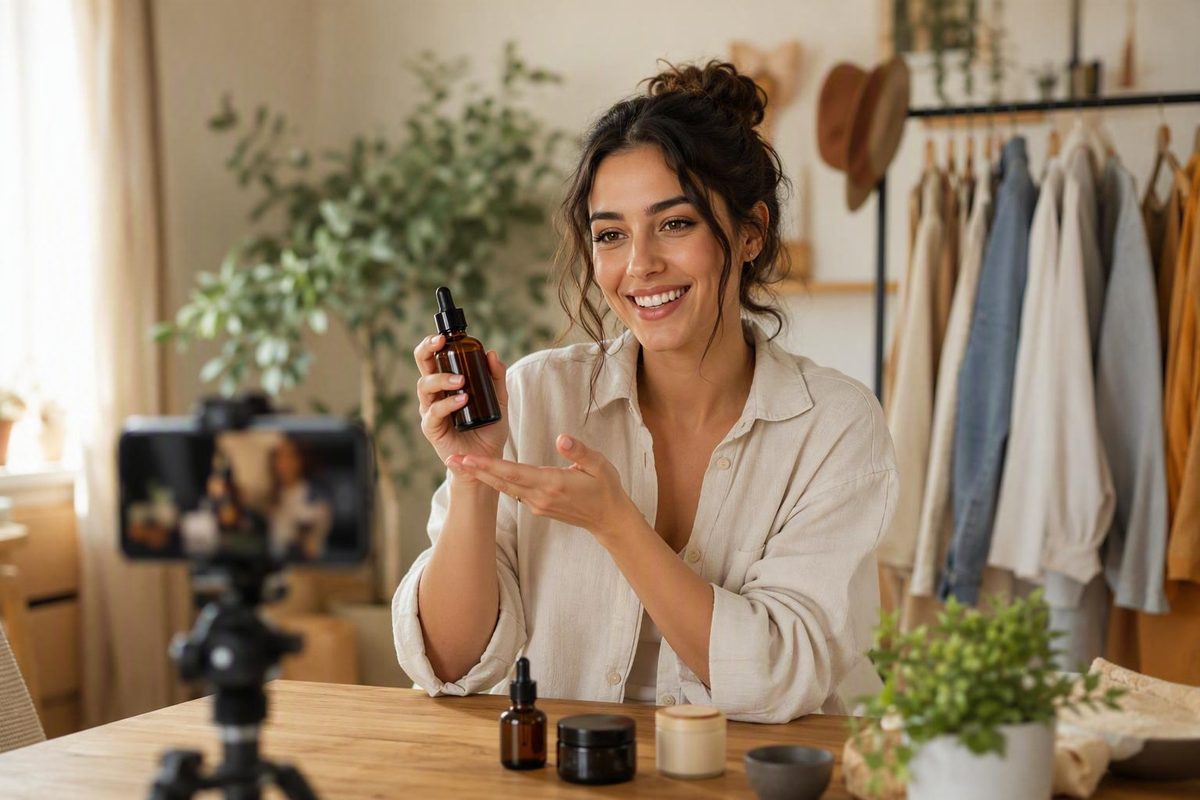
Use the one-page sample, replace every placeholder with verified information, remove irrelevant sections and adjust the order for the recipient.
A strong media kit gives a specific brand a concise, current view of who you are, who you reach, what you can create, what evidence supports your value, and how to contact you. Start with the fill-in-the-blank example below, replace every placeholder with verified information, remove irrelevant sections, and adjust the order for the recipient.
Copy this one-page creator media kit example
Fictional, illustrative template: Every name, metric, price, collaboration, and outcome below is a placeholder—not a real result or market benchmark.
[Creator name] — [primary niche]
Positioning I create [content type] for [audience or niche], with an emphasis on [distinctive strength or subject].
Introduction I’m [name], a [creator type] producing [short description of content] across [platforms]. My work helps [type of audience] discover, understand, or use [relevant products or topics]. I combine [skill one] with [skill two] to create content that feels [relevant style or quality].
Audience snapshot
- Primary platform: [Platform]
- Core age range: [Verified age range]
- Top location(s): [Verified country, region, or city]
- Relevant interests: [Interests supported by analytics or audience research]
- Audience size: [Current figure], as of [date]
Include only audience details you can verify and that matter to this recipient.
Platform performance
- [Engagement rate]% average across [number] posts, [date range]; source: platform analytics.
- [Average views or reach] across [number] posts, [date range]; source: platform analytics.
- [Other relevant metric], defined as [definition], for [scope and date range].
All figures above are placeholders, not recommended targets or benchmarks.
Selected work
- [Descriptive title and link] — [format, topic, and why it is relevant]
- [Descriptive title and link] — [format, topic, and why it is relevant]
- [Descriptive title and link] — [format, topic, and why it is relevant]
Available services
- [Organic social content]
- [UGC production]
- [Sponsored posts]
- [Product demonstrations]
- [Photography]
- [Other service you actually provide]
Selected proof
- [Campaign or content item]: [Qualified outcome, measurement window, and source]
- [Campaign or content item]: [Attributed clicks, sales, code uses, saves, watch time, engagement, or audience growth—only if available]
- Previous collaborations: [Verified brand names, if appropriate to publish]
Pricing approach—choose one
- Packages start at [verified price].
- Pricing is quoted after scope, usage, timeline, and deliverables are confirmed.
Testimonial
“[Approved testimonial from a named client or collaborator.]” — [Name, role, company]
Contact
Request availability, a tailored quote, or my full portfolio: [email address] Selected work: [portfolio link] · [platform link] · [platform link]
Not every creator needs every block. Keep the sections that help the recipient assess fit, capabilities, evidence, purchasing options, and the next step.
What each section helps a brand evaluate
Name, niche, and positioning answer the first screening question: “Is this creator relevant to our product and audience?” A precise description such as “short-form product education for first-time home cooks” is usually more useful than a broad label such as “passionate lifestyle creator.”
The introduction adds enough context to understand your creative approach. It should establish your niche, main formats, platforms, intended audience, and distinctive strengths without becoming a full biography.
The audience snapshot helps a campaign manager assess fit. For a regional launch, location may be especially relevant. For a category-specific campaign, audience interests or characteristics may be more useful. Include only information you can verify and explain where it came from if asked.
Platform metrics indicate scale and response, but they need context. Date the data, identify the platform and source, define calculated metrics, and state the sample used. For example: “4.8% average engagement across 24 Instagram posts, June–August [year]; source: platform analytics.” This is an illustrative formatting example only; 4.8% is not a benchmark or recommended target.
Selected work demonstrates execution. Choose a few samples resembling the prospect’s likely brief, product category, tone, or format. A concise product demonstration may tell a UGC buyer more than an unrelated post with higher reach.
Services clarify what the recipient can purchase. Distinguish between publishing content to your own audience and producing assets for a brand’s channels. List only services you are prepared to deliver.
Proof and outcomes support your claims. When the information is available, report qualified results such as attributed sales, code usage, clicks, saves, watch time, engagement, or audience growth. Identify the content, measurement period, and attribution source instead of suggesting your work caused every observed result.
Previous collaborations and testimonials may add credibility, but neither section is mandatory. Include only names, quotations, and project details that are accurate and appropriate to publish.
Pricing helps a prospect assess budget fit, while the contact call to action makes the next step obvious. That step might be requesting availability, obtaining a tailored quote, or viewing a complete portfolio.
A media kit supports evaluation; it does not guarantee a response, partnership, coverage, or revenue. It should complement rather than replace a concise pitch.
Choose the right example for your use case
“Media kit” and “press kit” are sometimes used interchangeably. Other sources use “media kit” more broadly for materials intended for creators, advertisers, affiliates, or media partners. The practical distinction is the recipient’s task rather than a universal label; HubSpot explains this broader media-kit framing.
| Kit type | Primary recipient | Essential information | Format and pricing approach |
|---|---|---|---|
| Creator or influencer | Brand or campaign manager | Audience demographics, dated platform performance, samples, services, collaborations or outcomes, contact | PDF or short deck; fixed price, starting price, rate card, or quote |
| UGC creator | Brand, agency, or content buyer | Production niche, examples, deliverables, relevant capabilities, workflow information, contact | PDF, portfolio page, or deck; usually quoted according to scope and rights |
| Publisher or blogger | Advertiser or sponsor | Reach, audience, advertising inventory, packages, rates or inquiry process, editorial calendar where relevant | Deck, PDF, or webpage; packages, rate card, or inquiry |
| Company press kit | Journalist or media professional | Background, product facts, leadership, press contact, logos, photos, video, brand-use guidance | Webpage, asset folder, PDF, or newsroom; pricing usually not applicable |
Make clear whether the offer covers asset creation, publication, or both.
Use caution when browsing design galleries. Search results can mix genuine media kits with social-media template bundles, brand presentations, mood boards, mockups, and asset packs. Those materials may provide visual ideas, but they are not necessarily complete media kits.
Should the media kit include rates?
Including rates is a choice, not a universal requirement. The best approach depends on how standardized the work is, how often prices change, and how much the eventual quote depends on campaign scope.
| Pricing option | Best suited to | Advantage | Limitation |
|---|---|---|---|
| Fixed package prices | Repeatable, clearly defined work | Helps prospects compare and self-qualify | Can mislead when the requested scope differs |
| Starting prices | Work with a consistent minimum and variable scope | Establishes an entry point | Must explain what the minimum includes |
| Separate rate card | Frequently changing prices or a dense main kit | Keeps the core kit focused | Creates another document to maintain |
| Pricing on request | Work materially affected by scope or campaign terms | Allows a tailored quote | Delays confirmation of budget fit |
Published prices may help filter mismatched inquiries. Pricing on request leaves room to account for deliverables, production demands, timing, and campaign-specific requirements. Creator media-kit guidance commonly treats rates as a possible section rather than proof that one pricing method suits every creator; Hootsuite’s influencer media-kit guide includes pricing among the elements creators can address.
Avoid compressing production and every commercial term into one unexplained number. Usage rights, paid amplification, whitelisting, exclusivity, revisions, licensing periods, and turnaround can be discussed in a tailored proposal or contract when they affect the scope.
These observations about rates and licensing are informational, not legal or financial advice. Review the actual agreement and consult a qualified professional when necessary, particularly before accepting usage-rights or exclusivity terms, as the site’s terms notice also advises.
Pick a format and practical length
| Format | Best use | Main consideration |
|---|---|---|
| Direct outreach and predictable presentation | Must be re-exported after updates | |
| Editable slide deck | Modular content and frequent revisions | Sharing permissions and fonts can affect presentation |
| Webpage | Easy access through one current URL | Requires web maintenance |
| Shared folder | Downloadable logos, photos, videos, and documents | Needs clear filenames and organization |
| Online newsroom | Extensive or frequently updated press material | Usually excessive for a focused creator pitch |
Maintain an editable master so you can update metrics, samples, services, and pricing without rebuilding the kit. PowerPoint and Google Slides are practical options for editable decks, as discussed in this media-kit example guide.
Canva also offers customizable media-kit templates for creators, influencers, companies, artists, and other niches. A template can speed up production, but its visual appeal does not establish its commercial effectiveness.
Export a PDF when you need a fixed presentation that is easy to attach or share. Before sending it, confirm that fonts, links, spacing, and images survived the export.
There is no universal page count. One page can suit a focused creator pitch. A publisher with several advertising products may need a longer deck, while a company with extensive press assets may be better served by a web hub, shared asset collection, or newsroom.
A dated third-party roundup of blogger kits includes both short sheets and substantially longer examples, illustrating that actual kits vary in length and complexity. Treat those examples as historical inspiration rather than current benchmarks, since some are older materials (Biz Mavens).
Prioritize relevance, readable type, clear hierarchy, and quick scanning over filling a predetermined number of pages.
Build credible proof when you are new
Do not invent clients, campaign outcomes, testimonials, or audience figures. If you lack paid partnership history, replace it with evidence of what you can currently make and measure:
Beginner proof block
Representative content
- [Sample link] — [format and relevant creative skill]
- [Sample link] — [format and relevant creative skill]
- [Sample link] — [format and relevant creative skill]
Current analytics [Metric and definition] across [number of posts], [start date–end date]; source: [platform analytics].
Production capabilities [Scripting] · [on-camera delivery] · [voiceover] · [editing] · [product photography] · [other verified skill]
Niche or audience fit [One sentence explaining relevant expertise, lived experience, audience interest, or subject familiarity.]
Concept work [Link to a clearly labeled self-initiated or speculative product demonstration or campaign concept.]
Recent organic posts can demonstrate hooks, framing, editing, storytelling, product explanation, or on-camera delivery even when a brand did not commission them. Label self-initiated and speculative work clearly so the sample does not imply a commercial relationship that did not exist.
Tailor the order of samples and services to each prospect. A skincare brand should encounter relevant demonstrations before unrelated lifestyle work; a publisher should see audience information and inventory before a long biography. Send the kit with a brief message explaining the fit and proposing a clear next step.
Run this pre-send media kit audit
- [ ] Metrics: Verify every figure, platform, definition, sample size, source, and date range.
- [ ] Claims: Confirm services, outcomes, collaborations, campaign details, and testimonial wording.
- [ ] Pricing: Check current rates, package inclusions, currency, and scope-dependent language.
- [ ] Identity: Proofread names, company names, handles, email addresses, and contact details.
- [ ] Links: Open every portfolio, platform, work-sample, email, and download link.
- [ ] Mobile: Test the PDF, deck, or page on a phone and desktop.
- [ ] Readability: Confirm legible type, useful contrast, clear hierarchy, and adequate spacing.
- [ ] Accessibility: Keep text selectable where possible, use descriptive link text, and label downloadable assets clearly.
- [ ] File quality: Check the final export and reduce unnecessary file size without making images unreadable.
- [ ] Freshness: Replace outdated work, expired prices, old branding, broken links, obsolete assets, and former contacts.
- [ ] Customization: Put the most relevant audience facts, samples, proof, and services first.
- [ ] Rights: Confirm that you are authorized to share the included images, logos, testimonials, layouts, and work samples.
- [ ] Version control: Keep one dated editable master and create prospect-specific copies so customization does not overwrite it.
Use example kits for analysis and inspiration rather than reproducing another creator’s wording, layout, photography, logos, or brand assets. The ownership warning accompanying the Biz Mavens roundup likewise says the featured works should not be copied or reused without permission.
Return to the fill-in-the-blank example, choose the version that matches your recipient, replace every placeholder with verified and dated information, and delete irrelevant sections. Then send the kit with a short personalized pitch. Clear positioning, credible proof, and an easy next step matter more than decorative complexity.