
Build an Off-Camera Channel That Still Shows Original Work
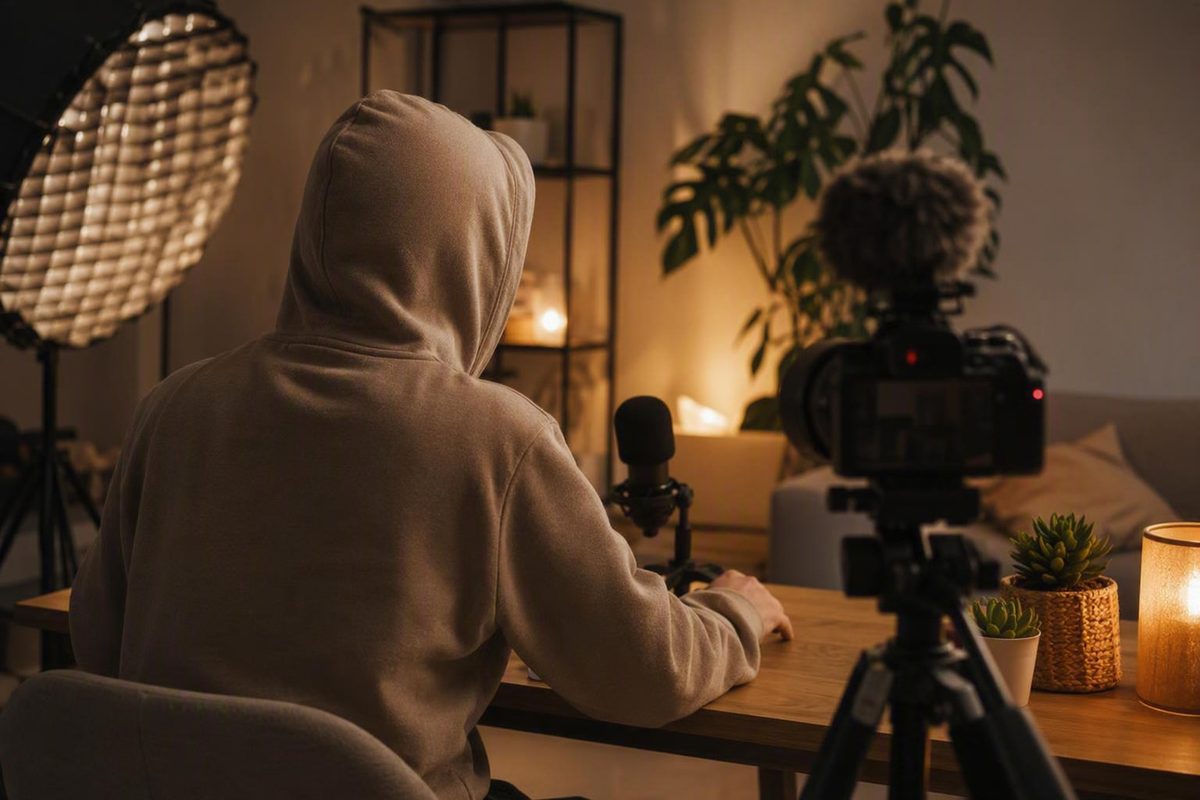
Being faceless neither guarantees nor prevents monetization. Learn the workflow, originality checks, policy risks, and YPP requirements that matter.
Yes, you can run and monetize a faceless YouTube channel without routinely appearing on camera. YouTube’s creator and monetization materials do not state that creators must show their faces. Eligibility instead depends on matters such as originality, viewer value, policy compliance, account readiness, audience thresholds, and a review of the channel as a whole.
Facelessness is therefore a presentation choice, not a passive-income model. You still need to research, script, direct visuals, edit, clear necessary rights, package videos accurately, study audience response, and improve the channel over time.
What a faceless YouTube channel is—and what it is not
A faceless YouTube channel is one whose creator does not routinely appear on camera. It is an editorial description, not an official YouTube channel category. The format can use voiceover, screen recordings, animation, diagrams, original photography, licensed footage, maps, text, data visualizations, or a combination of these elements.
YouTube’s general creator resources focus on creating, publishing, managing, and improving videos rather than imposing an on-camera requirement. They emphasize giving viewers content they want, representing videos accurately, and using performance information to guide future work.
Five distinctions are useful:
- Faceless means the creator remains off camera.
- Original means the creator makes a recognizable intellectual or creative contribution.
- Authentic means the channel is not dominated by mass-produced, repetitive, or minimally varied output.
- Rights-cleared means the creator has addressed applicable licenses, permissions, and ownership questions. This is separate from proving originality or qualifying for YPP.
- Monetization-ready means the channel meets the relevant account and audience requirements and is prepared for channel review.
Being faceless neither guarantees nor prevents monetization. A researched documentary with an original argument can be faceless, as can an automated slideshow that reads someone else’s article. Their presentation may be similar, but the underlying authorship and viewer value are not.
Nor does an off-camera channel become passive. Someone must select topics, verify claims, decide what the video will say, direct its visual treatment, respond to viewers, and determine what to improve. Those editorial decisions are the work.
Choose a format by viewer value and policy risk
Choose a format by asking two questions:
- What useful or entertaining experience will the viewer receive?
- How will the finished video make your contribution evident?
The following classifications are a practical risk assessment based on non-exhaustive policy examples. They are not official YouTube risk tiers or predictions of approval.
| Format | Evidence of authorship to add | Practical monetization risk |
|---|---|---|
| Original explainer or documentary | Custom research, original script, structured argument, narration, custom graphics, substantive editing | Lower when every video has distinct substance |
| Software or process tutorial | Original screen recordings, explanations, examples, tests, troubleshooting | Lower when it solves a real problem |
| Animated story or visual essay | Original narrative, characters, visual direction, dialogue, purposeful editing | Lower when the story and execution are genuinely original |
| Commentary or reaction | Sustained criticism, interpretation, rewritten context, or a new storyline | Variable; passive viewing with occasional remarks is high risk |
| Sports or media analysis | Selected excerpts, tactical annotations, supporting evidence, a clear analytical thesis | Variable; analysis must be central |
| Compilation | Editorial structure, narration, contextualization, meaningful transformation | High unless it creates a substantially different experience |
| Stock-footage video | Original argument, custom script, purposeful shot selection, graphics, narration | Variable; stock assets alone do not establish originality |
| Article or news-feed reading | Independent reporting, verification, analysis, substantial rewriting | High when it mainly reads third-party text |
| Slideshow or scrolling text | Strong narrative, custom visuals, educational or entertainment value | High when minimally narrated or template-driven |
| Repetitive AI story template | Distinct reporting, storytelling, visual direction, meaningful variation | Very high when only names, images, or minor wording change |
Original explainers and documentaries can show authorship through the relationship among research, argument, narration, graphics, and editing. Tutorials can demonstrate it through first-hand examples: record your own screen, explain why each step matters, test the process, show failure cases, and troubleshoot realistic problems.
Commentary, reactions, sports analysis, compilations, and transformed footage require more care. A brief introduction followed by a long third-party clip is not equivalent to sustained analysis. A stronger video uses borrowed material in service of a new argument, narrative, criticism, explanation, or entertainment experience.
Consistent branding is not the same as repetitive substance. You can reuse an intro, outro, color palette, recurring character, or graphic system if each video’s main content is materially different. The risk rises when one template generates nearly interchangeable scripts, stories, and visuals.
As a practical launch strategy—not a YouTube requirement—produce a small set of substantively different pilot videos before building a large backlog. If the concept only works when dozens of videos are generated from one template, reconsider it before committing more resources.
Use a production workflow that makes authorship visible
A strong faceless workflow leaves a clear creative trail from the initial idea to the published video:
- Define the audience and problem. Identify whom the video serves and what viewers should understand, feel, or be able to do afterward.
- Choose an original, repeatable format. Repeat the production system, not the substance of each video.
- Research and outline. Gather reliable material, test assumptions, and identify the argument or narrative.
- Write a custom script. Use your own structure and explanation instead of lightly paraphrasing a single source.
- Select or create rights-cleared visuals. Use original recordings, custom graphics, properly licensed assets, or material you are otherwise entitled to use.
- Record narration or establish another clear narrative. Voiceover is optional; visual sequencing, captions, animation, demonstrations, and sound design can also carry the story.
- Edit for meaning and pace. Remove repetition, clarify relationships, and make each visual support the explanation.
- Create accurate packaging. Ensure the title, thumbnail, and description represent what the video actually delivers.
- Publish and manage the response. Check processing, captions, comments, descriptions, and obvious packaging problems.
- Review analytics and revise the next video. Treat each upload as evidence for the next production decision.
Authorship does not require an on-screen face. It can be visible in research notes, original commentary, custom diagrams, screen recordings, recorded narration, source files, project timelines, edit decisions, and the coherent way those elements support one idea. Preserve useful working files, particularly when freelancers or automated tools contribute.
Maintain a simple rights ledger as well. For each asset, record:
- The footage, image, music, voice, likeness, font, template, or contractor deliverable used
- Its source and creator
- The license, permission, or ownership status
- Restrictions involving commercial use, editing, attribution, territory, or duration
- Where the relevant agreement, invoice, or license file is stored
A rights ledger is prudent documentation, not a guarantee of legal compliance or YouTube Partner Program approval. It helps reveal gaps before publication and provides an organized record if ownership questions arise.
For YouTube’s website workflow, the official creator resource describes signing in with a Google Account, opening Settings, selecting Create a new channel, and choosing a profile picture, name, and handle. Interfaces can change, so follow the current prompts on your device. YouTube Studio then serves as the main base for customization, publishing, video management, comments, and analytics. YouTube’s creator resources provide the current setup and Studio guidance.
Larping Agency’s catalog also includes related faceless-video material covering scripting, voiceover, visuals, editing, publishing, and quality checks. Those resources can provide production ideas, but they are not evidence that a workflow will generate growth or pass YouTube review.
Use AI as an aid, not an originality substitute
AI-assisted production is not categorically barred. It can help edit an original script, visualize an original character or narrative, or produce unique background visuals under a creator’s direction. The finished work must still reflect creative judgment and provide original educational or entertainment value.
Instead of asking whether AI touched a video, ask where the editorial decisions came from. Audit who:
- Selected the topic
- Defined the viewer’s problem
- Formed the argument or story
- Verified factual claims
- Chose what to include and exclude
- Structured the sequence
- Directed the visual style
- Evaluated generated material
- Made the final editorial decisions
If the honest answer to most of these questions is “the template decided,” the format is vulnerable. Generic scripts, mass-produced visuals, repeated structures, interchangeable videos, and output without authentic insight or meaningful variation create a high monetization risk.
Do not assume that a particular synthetic voice, avatar service, script generator, or editing tool is automatically safe. A natural-sounding voice cannot repair copied research. Attractive generated images cannot compensate for a repeated or empty narrative.
Sensitive subjects need particular caution. YouTube’s monetization guidance treats AI-generated personas presented as human experts in health, law, finance, or politics as ineligible, while also identifying generic, mass-produced AI output as a problem. Original AI-assisted narratives and visuals may be acceptable when they reflect creative direction and meaningful viewer value. Because examples and wording can change, check the live policy before building a format around an AI persona. Review YouTube’s current channel monetization policies.
Separate reused-content review from copyright clearance
Reused-content review and copyright clearance answer different questions.
Copyright clearance concerns whether you have the necessary ownership, license, permission, or other legal basis to use material. YouTube’s reused-content review concerns whether the channel adds enough original contribution and value to qualify for monetization. Resolving one question does not resolve the other.
Consider two faceless videos:
- High risk: Stock images accompany a synthetic voice reading a third-party article nearly verbatim. The images may be licensed, but the video still demonstrates little original reporting, commentary, or interpretation.
- Potentially eligible: Selected third-party footage is reorganized around an original thesis, with sustained analysis, annotations, contextual evidence, and an explanatory narrative. The borrowed footage supports the creator’s argument instead of replacing it.
Critical reviews, narrated reactions, explanatory sports footage, rewritten dialogue, and edited footage with a new storyline may qualify. Labels such as “reaction,” “commentary,” or “educational” do not decide the outcome, however. The meaningful difference must be evident in the finished video.
Permission from the original creator, a commercial asset license, a fair-use argument, or the absence of a copyright claim does not by itself satisfy reused-content policy. Reviewers consider the completed work and the channel around it. YouTube’s policy explains the distinction through reused- and inauthentic-content examples.
This is not legal advice. Address those obligations separately rather than treating YPP eligibility as legal clearance.
Grow through viewer satisfaction, not algorithm folklore
A face can be a hook, but it is not the only one. A faceless channel can become recognizable through a distinctive point of view, recurring question, narrative voice, visual identity, demonstration style, character, or standard of research.
YouTube identifies recommendation signals that include what viewers watch or avoid, watch time, likes, dislikes, “not interested” feedback, and satisfaction surveys. Those signals are more useful planning inputs than theories about a secret algorithm. YouTube’s creator guidance outlines these viewer and satisfaction signals.
Use a repeatable review routine after each upload:
- Inspect the packaging response. Did the title and thumbnail attract the intended audience, or might they be unclear or misdirected?
- Review the opening. Did viewers reach the promised value quickly, or did branding and setup delay it?
- Examine watch time and viewing patterns. Look for sections associated with exits, replays, or sustained attention.
- Read audience feedback. Consider comments, likes, dislikes, and recurring questions without allowing one loud response to dictate the strategy.
- Record two decisions. Choose one packaging change and one content change for the next upload.
A packaging change might replace an abstract title with a specific outcome. A content change might move the demonstration ahead of the background explanation.
The opening should establish the promised value quickly. That does not require shouting, rapid cuts, or manufactured suspense. A documentary can introduce its central question, a tutorial can show the result, and an analysis can state its conclusion before presenting the supporting case.
Avoid universal click-through, retention, upload-frequency, or growth targets. A technical tutorial, animated story, and investigative documentary create different expectations. Compare results within your own format, audience, traffic sources, and stage of development.
Titles, descriptions, and thumbnails should represent the video accurately rather than overpromise. Promotion may include relevant cards, end screens, Community Posts, playlists, collaborations, social channels, podcasts, newsletters, or genuinely aligned external communities.
Check YPP eligibility and the metrics that actually count
For full YPP ad-revenue eligibility, a channel must meet one of these audience routes:
| Route | Subscriber requirement | Qualifying viewing requirement |
|---|---|---|
| Public long-form video | 1,000 | 4,000 valid public watch hours in the preceding 12 months |
| Public Shorts | 1,000 | 10 million valid public Shorts Feed views in the preceding 90 days |
For the 4,000-hour route, qualifying watch hours come from public long-form videos. Watch time from private, unlisted, deleted, ad-campaign, and Shorts content does not count. For the Shorts route, qualifying views must come from public Shorts in the Shorts Feed; private, unlisted, deleted, ad-campaign, and Image Post views are excluded. YouTube’s YPP overview lists the current thresholds and exclusions.
Before applying, confirm that:
- YPP is available in your country or region.
- Your channel has no active Community Guidelines strikes.
- Two-Step Verification is enabled for the associated Google Account.
- The channel has access to advanced features.
- An active AdSense for YouTube account is linked, or you are ready to create one through YouTube Studio.
- The channel follows YouTube’s monetization policies.
Reaching the numerical thresholds only enables an application. It does not guarantee acceptance, revenue, or access to every monetization product.
Potential YPP products include Watch Page Ads, Shorts Feed Ads, Memberships, and Supers. Each product can carry additional terms or eligibility requirements.
External sponsorships, affiliate arrangements, services, and product sales are separate from YPP.
Run a channel-wide originality audit before applying
YouTube reviews the channel as a whole rather than approving it solely from subscriber and viewing totals. Automated systems and human reviewers may inspect its main theme, newest and most-viewed videos, largest watch-time sources, metadata, and About section.
Use this pre-application audit:
- Review recent uploads for distinct original substance.
- Inspect the most-viewed videos and the uploads generating the most watch time.
- Identify repeated scripts, visual sequences, story structures, and templates.
- Assess whether narration and commentary provide a sustained point of view.
- Check that titles, thumbnails, descriptions, and tags represent each video accurately.
- Rewrite vague or misleading About copy.
- Retain scripts, research notes, source files, recordings, edit projects, and contractor agreements.
- Check the rights ledger for missing licenses or unclear ownership.
- Confirm that outsourced work still reflects coherent channel-level editorial control.
- Recheck current eligibility and account requirements.
Prioritize videos responsible for substantial watch time because reviewers may examine the channel’s largest watch-time sources.
There is no guaranteed remediation formula for weak legacy content. Depending on the channel, a reasonable response may involve revising the format, making future uploads substantially more original, strengthening narration, correcting metadata, and evaluating whether older videos undermine a clear channel-wide signal of authorship. Do not delete or hide videos solely to chase a number without considering the effect on qualifying watch hours and the channel as a whole.
Reused-content findings can affect monetization across the entire channel when violations exist or reviewers cannot clearly determine that the creator made the content. The objective is not superficial variety; it is consistent evidence of original judgment and viewer value.
YouTube says application decisions typically take about one month, although reviews can take longer. A first rejection may be appealed within 21 days or followed by reapplication after 30 days; later reapplications may require a 90-day wait. Monetization may also be disabled after six months without a video upload or Posts-tab activity. The official overview currently announces updated YPP terms effective February 1, 2027, with a January 31, 2027 acceptance deadline for existing creators who want to continue fully monetizing. Because these dates and procedures are time-sensitive, verify them on the live YPP overview immediately before acting or publishing.
Frequently asked questions
Do I need to use my own voice on a faceless YouTube channel?
No stated rule requires your natural voice. Narration can demonstrate authorship, but so can original screen recordings, reporting, animation, custom graphics, annotations, demonstrations, writing, and substantive editing.
A synthetic or contracted voice does not automatically determine eligibility. The completed work still needs original direction and meaningful value rather than generic, mass-produced output.
Can a repeated intro, outro, or visual style cause a monetization rejection?
Not by itself. Recurring branding, characters, intros, outros, and visual systems can coexist with monetization when the main substance of each video is materially different.
The concern is repeated substance: nearly identical scripts, minimally changed stories, interchangeable visuals, or templates that produce little meaningful variation.
Does having permission to use someone else’s clips make the channel monetizable?
No. Permission may address part of the rights question, but it does not establish compliance with reused-content policy. The finished video still needs an evident original contribution, such as sustained commentary, substantive editing, a new narrative, or clear educational or entertainment value.
Does reaching 1,000 subscribers guarantee YouTube Partner Program approval?
No. The channel must also meet the applicable watch-hour or Shorts-view requirement, satisfy the account and regional conditions, follow monetization policies, and pass channel review. The thresholds permit an application; they do not guarantee acceptance.
A practical action plan
Choose one audience problem and one format that makes your contribution obvious. Produce a small set of distinct pilot videos, preserve source and rights records, and use YouTube Studio feedback to improve packaging and viewer value. Before applying to YPP, audit the entire channel against the live policies and eligibility requirements.
Staying off camera is compatible with YouTube’s stated rules. Making your authorship invisible is the greater risk.