
Can You Post a Photo of Yourself When Someone Else Owns It?
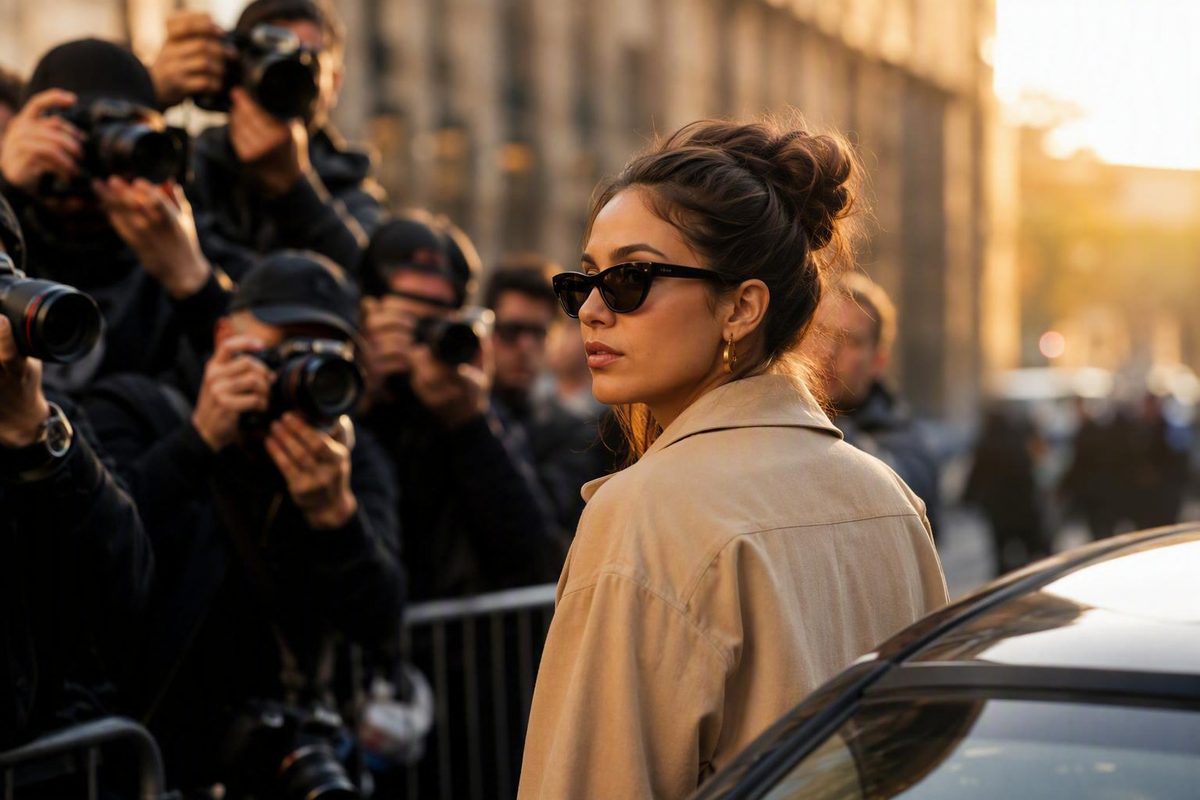
Being pictured is not permission. A record label may license a photo for its channels without covering the performer's personal account.
The short answer: your likeness is not the same as the photograph’s copyright
Under U.S. law, usually not merely because the photograph depicts you—even if you are famous.
An original photograph generally receives copyright protection when it is created and fixed, which ordinarily occurs when the picture is taken. The photographer is usually the author and initial copyright owner, although an employer, assignee, or another party may own the rights under a different legal arrangement. The copyright owner generally controls reproduction, distribution, adaptation, and public display of the image, according to the U.S. Copyright Office’s guidance for photographers.
Uploading another person’s photograph to a social account may involve making and publicly displaying a copy. Downloading, screenshotting, cropping, filtering, or placing the image in an advertisement can raise additional questions about the owner’s rights. That does not mean every unapproved post is necessarily unlawful: the person depicted may own the copyright, hold a suitable license, benefit from an assignment or work-made-for-hire arrangement, or have a defense such as fair use. Authorization, however, must come from something more than being the subject of the picture.
The result does not automatically change because:
- The person depicted is famous.
- The photograph is flattering, embarrassing, or intrusive.
- The subject cooperated with or posed for the photographer.
- The subject paid for the shoot.
- The post did not earn money directly.
- The photographer was credited or tagged.
- The image appeared only in a temporary post.
- The photograph was already publicly visible online.
Commercial purpose can affect risk, license scope, publicity rights, and fair-use analysis, but it is not the dividing line between protected and unprotected photographs. A personal social post may still reproduce copyrighted material, while a commercial use may be lawful if it is properly licensed or protected by a legal limitation.
This article provides general U.S. legal information, consistent with the site’s informational-content terms. It cannot determine the outcome for a particular image, contract, account, demand letter, state, or foreign jurisdiction. A specific assessment requires the photograph, ownership history, agreements, communications, intended use, procedural history, and applicable law.
Who owns the photograph? Start with the photographer, then check for exceptions
The practical starting point is the person who operated the camera and made the creative choices involved in the photograph. That is not always the endpoint. Ownership can vest in or move to an employer, agency, publisher, studio, archive, or other party through employment, a qualifying work-made-for-hire arrangement, or a transfer.
Employment can change initial ownership. If a staff photographer creates an image as an employee within the scope of employment, the employer may own it as a work made for hire. A newspaper, studio, production company, sports organization, or fashion house may therefore own a photograph even though an individual employee pressed the shutter.
An independent contractor presents a different question. Paying a freelance photographer to conduct a portrait session does not automatically make the client the copyright owner. A specially commissioned photograph must meet the applicable work-made-for-hire requirements, including the relevant statutory conditions and an appropriate agreement. Otherwise, the photographer may retain copyright while granting the client only specified usage rights. These ownership distinctions are summarized in the Copyright Alliance’s photography guidance.
Payment is not the same as ownership. A sitting fee, day rate, production budget, creative fee, or image-selection charge may purchase the photographer’s services and designated deliverables. It may or may not include social posting, paid promotion, advertising, merchandise, or a transfer of copyright. The agreement and surrounding circumstances matter more than the fact that money changed hands.
Copyright ownership is also distinct from possession of an object or file. Buying or holding a print, negative, memory card, high-resolution file, or hard drive does not necessarily transfer the right to reproduce or commercially distribute the photograph. Conversely, a photographer may retain the original files after transferring specified copyright rights to another party.
Participation in the shoot does not ordinarily resolve ownership either. Selecting clothing, applying makeup, smiling, turning toward the camera, or approving a pose may affect the resulting image, but those acts do not automatically make the subject a copyright owner. A joint-authorship argument requires more than routine participation as the person being photographed; the asserted contribution and the parties’ intentions would need to satisfy the applicable standard.
These common arrangements illustrate the starting points:
| Scenario | Likely ownership starting point | What the subject should verify |
|---|---|---|
| A paparazzo independently photographs a celebrity in public | The photographer, or an agency that later acquired the rights | Whether a license, defense, or other legal limitation permits the proposed use |
| A celebrity hires an independent photographer for portraits | Often the photographer unless the agreement changes ownership | Which personal, editorial, social, advertising, paid-media, or merchandise uses were included |
| A staff photographer takes an image within the employee’s duties | Potentially the employer | Whether the celebrity, label, team, or campaign partner has permission from that employer |
| A photographer transfers copyright to a photo agency | The agency or other transferee may control the transferred rights | Whether authorization must come from the agency rather than the photographer |
Ownership and permission can also be divided by right, medium, territory, purpose, or time. One party might own the copyright while another controls advertising uses for a particular campaign. A publisher might hold rights in one territory, or a brand might have campaign rights for a limited term.
As a result, the correct contact may be a label, employer, agency, production company, studio, publisher, archive, or photographer’s estate—not necessarily the person who delivered the file.
Permission depends on the contract and the exact scope of the license
Once ownership has been investigated, the next question is not simply, “Do we have permission?” It is: “What permission do we have for this image, account, format, and purpose?”
A copyright assignment transfers specified ownership rights. A license authorizes defined conduct while ownership may remain elsewhere. Either can be limited. Permission for magazine publication does not necessarily cover social advertising, while a properly drafted digital license may cover several platforms and uses.
An exclusive license generally gives the licensee exclusive control over the rights included within its scope. A non-exclusive license allows the owner to authorize the stated use without necessarily giving up the ability to make or license the same use elsewhere. The label alone does not establish which media, territories, accounts, or commercial activities are covered.
Collect all documents that may define the relationship:
- Shoot agreements, statements of work, and booking confirmations
- Estimates, invoices, purchase orders, and payment records
- Gallery terms, download notices, and image-delivery pages
- Emails, text messages, direct messages, and approval threads
- Talent-management, studio, label, team, and agency agreements
- Campaign briefs and brand-partnership documents
- Previous permissions, amendments, and renewal notices
- Stock-library or photo-agency terms associated with the image
Do not stop at a general phrase such as “social usage.” Determine whether the authorization covers:
- Named platforms and accounts
- Organic feed posts, short-form video, and temporary posts
- Paid social distribution and boosted posts
- Sponsored or affiliate content
- Advertiser access or brand whitelisting
- Websites, newsletters, press kits, and media distribution
- Cropping, retouching, filters, text overlays, and other edits
- Start dates, expiration dates, and archival display
- Countries or territories
- Sublicensing to brands, publishers, labels, or affiliates
- Advertising, packaging, merchandise, and out-of-home media
- Required attribution, links, or usage notices
Permission may belong to an organization rather than the individual depicted. A record label might license campaign photographs for its own channels without obtaining rights for a performer’s personal account. A brand might hold paid-ad rights but lack authority to sublicense the image to the celebrity. A management company might have secured permission on the client’s behalf, but only for a named campaign.
In some disputes, a user may argue that the parties’ words and conduct created an implied, non-exclusive permission. Delivery of social-ready files after a discussion about an expected post could be relevant to that argument. Delivery alone, however, should not be treated as unlimited authorization for advertising, merchandise, sublicensing, or indefinite reuse. The existence and scope of any implied permission depend on the actual communications and circumstances.
A model release addresses specified uses of the subject’s identity or likeness; it does not itself transfer the photographer’s copyright. Depending on the intended use and governing law, a production may need both permission from the copyright owner and appropriate consent concerning commercial exploitation of the recognizable person. The distinction between image ownership and likeness permission is explained in this overview of copyright and model releases.
Social media myths: credit, Stories, screenshots, and noncommercial posts
Social platforms make copying easy, but technical convenience is not legal authorization.
Crediting or tagging the photographer may be required by a license and may be good professional practice. It does not create a license where none exists. Lawyers answering a related online-use question likewise cautioned that attribution alone may not be sufficient and that posting without selling copies can still raise copyright concerns, although the outcome remains fact-specific (Justia’s copyright Q&A on attribution and noncommercial posting).
A temporary Story, disappearing post, or limited-audience upload should not be treated as categorically lawful. Duration and audience may affect practical exposure and the overall factual analysis, but a short lifespan does not itself supply permission.
It is also important to distinguish native sharing from making a new upload. A platform’s built-in share, repost, embed, or linking tool may operate differently from downloading a file, taking a screenshot, removing a watermark, cropping the image, and uploading a new copy. The answer depends on the current platform terms, the original uploader’s rights, and the sharing mechanism used.
When someone uploads content, the platform may receive rights needed to host and display that content. That does not necessarily give every other user an unrestricted right to download and republish it. Platform rules change, so they should be checked at the time of the proposed use.
Public visibility is not the same as public-domain status. An image can be freely viewable online while remaining protected by copyright and subject to licensing restrictions.
| Myth | Reality |
|---|---|
| “It is a photo of me.” | Being depicted does not itself make the subject the copyright owner. |
| “I paid for it.” | Payment may purchase services, files, prints, or limited usage rights without transferring copyright. |
| “I gave credit.” | Attribution acknowledges the creator but does not itself provide permission. |
| “I did not make money.” | Lack of direct revenue may be relevant, but noncommercial posting is not an automatic exception. |
| “I only used it in a Story.” | A temporary display is not categorically exempt from copyright law. |
| “It was already on social media.” | Public availability does not authorize unrestricted downloading, editing, or reuploading. |
For a celebrity, creator, publisher, or brand team, the safer operational question is not whether the proposed post feels informal. It is whether the current rights holder authorized that method of sharing, on that account, for that purpose.
Fair use may apply, but cropping or adding a caption is not a shortcut
Fair use can permit some uses of copyrighted photographs without advance permission. It is a fact-specific legal defense, not a status that a user creates simply by adding a caption or describing a post as commentary.
The analysis considers four statutory factors:
- The purpose and character of the challenged use, including its commercial context and how its specific purpose compares with the original use.
- The nature of the copyrighted work, including its creative or factual characteristics.
- The amount and substantiality used, both quantitatively and qualitatively.
- The effect on the potential market, including whether the use substitutes for a license or harms a legitimate licensing market.
No single factor automatically decides the issue. A personal or nonprofit purpose is not conclusive, and a commercial use is not automatically excluded from fair use. New meaning or a new message can be relevant, but it is not enough by itself. The analysis also asks what the challenged use is actually doing and whether it shares or competes with the purpose and market of the original image.
Compare two possible posts:
- Unchanged promotional repost: A celebrity uploads the entire professional photograph with “Great night!” and uses it to engage followers or promote an appearance. The post may add little beyond the original image and may substitute for a social-media license.
- Substantial critical commentary: The celebrity incorporates the image into a focused critique of paparazzi practices, explains the circumstances in which it was taken, and uses the photograph to illustrate that criticism. This may support a stronger argument that the new use has a materially different purpose.
The second use is not automatically fair. The amount copied, creativity of the photograph, necessity of using that particular image, commercial context, and effect on the licensing market still matter.
A crop, border, filter, sticker, meme phrase, color adjustment, or short caption may leave the essential purpose of the photograph unchanged. Likewise, using the full image for an audience that could otherwise receive a licensed copy can weigh against fair use when the post functions as a substitute for permission.
Newsworthiness and editorial context do not provide blanket immunity. A story may address a legitimate matter of public interest while the specific professional photograph remains separately licensable. Legal commentary on publisher use emphasizes that news reporting is a relevant purpose but does not automatically make copying a particular image fair, especially where the entire photograph is used and the use may affect its licensing market (Farella Braun + Martel’s discussion of copyright and publicity in photographs).
The reported Emily Ratajkowski dispute illustrates why context may matter. According to 2023 legal commentary, she placed the words “MOOD FOREVER” over a paparazzi photograph in an Instagram Story to comment on her relationship with paparazzi. The commentary reported that the added message was potentially relevant to transformation, but the case settled and therefore did not establish a categorical rule that text overlays, criticism, or Story posts are fair use (Trachtman & Poler’s review of celebrity photo disputes).
Other photography decisions have found some extensively altered uses sufficiently transformative. Those outcomes show that substantial transformation can matter in particular circumstances. They do not equate an ordinary repost with extensive artistic alteration, parody, or sustained criticism.
A person or team considering reliance on fair use should analyze the completed post—not merely count the number of edits made to the original image.
Copyright and the right of publicity can belong to different people
A celebrity photograph can involve at least two distinct legal interests:
- Federal copyright, which protects the photograph as a creative work.
- State right-of-publicity law, which may protect a person’s identity against specified forms of unauthorized commercial exploitation.
The photographer or an assignee may own copyright in the photograph while the celebrity separately holds rights concerning commercial uses of their name, likeness, voice, or other identifying attributes. Neither set of rights automatically absorbs the other.
A celebrity’s publicity rights do not transfer copyright in a photograph or automatically authorize the celebrity to reproduce it. The celebrity may object to certain commercial uses of their likeness and still need copyright permission to post the photographer’s image.
The inverse is also important. Copyright ownership does not necessarily authorize a photographer to use a celebrity’s likeness in every advertisement, endorsement, packaging design, or merchandise product. Commentary on photographer-publicity disputes explains that copyright and commercial identity rights can coexist, particularly when photographs are placed on products or used promotionally (Romano Law’s overview of publicity claims involving photographers).
Editorial, documentary, artistic, and news uses may receive different treatment from uses suggesting that a celebrity endorses an unrelated product. But “editorial” and “commercial” are not magic labels. The content, placement, medium, relationship to the surrounding message, jurisdiction, and expressive contribution may all matter.
Publicity law varies significantly by state. Protected attributes, exceptions, remedies, post-mortem treatment, and tests for expressive works are not uniform. First Amendment and newsworthiness issues are also context-dependent. A rights review may therefore require both a federal copyright analysis and an assessment of the relevant state law.
The distinctions can be summarized as follows:
| Concept | What it concerns | What it does not automatically provide |
|---|---|---|
| Copyright | Ownership and exclusive rights in the creative photograph | Ownership of the subject’s identity |
| Ownership of a physical copy | Possession of a print, negative, drive, or digital file | Copyright or unrestricted reproduction rights |
| Copyright license | Permission for uses covered by the license | Uses outside its platform, duration, territory, account, or purpose |
| Copyright assignment | Transfer of specified copyright ownership rights | The subject’s consent to every commercial likeness use |
| Model release | Permission concerning specified uses of the subject’s likeness | Transfer of copyright in the photograph |
| Right of publicity | State-law protection against certain exploitation of identity | Ownership of every photograph depicting that person |
Both sides therefore need an appropriate rights check. A celebrity’s team should not assume likeness rights authorize copying. A photographer or brand should not assume copyright ownership resolves every publicity, contractual, or endorsement-related issue.
What celebrity photo disputes actually show—and what they do not
Celebrity-photo disputes show that photographers and agencies may assert copyright claims against the person depicted. They do not establish that every celebrity repost is infringement.
Procedural labels matter. A complaint contains allegations, not established facts. A defense or counterclaim states a litigant’s position. A settlement does not prove liability, validate every defense, or create binding precedent. Parties may settle to control legal costs, publicity, operational disruption, or uncertainty, and confidential terms may conceal what permissions, payments, releases, or admissions were exchanged.
The available reports illustrate those limits:
- Lisa Rinna: A 2023 law-firm article reported that Backgrid sued after Rinna posted paparazzi photographs of herself. The article presented the parties’ competing positions: Rinna criticized the enforcement strategy, while Backgrid argued that an unlicensed social post could reduce licensing value.
- Gigi Hadid: The same article described arguments based on Hadid’s pose, clothing, smile, and cropping. Those were litigant arguments, not a universal holding that posing creates ownership or makes a repost fair.
- Emily Ratajkowski: The article reported that her added message could be relevant to the purpose of the use, but also reported that the dispute settled. The settlement prevented a definitive merits rule from emerging.
Those descriptions reflect the status reported in the 2023 commentary cited above, not an independent statement about any later docket activity.
A separate 2020 client alert reported claims involving Justin Bieber, Katy Perry, Khloe Kardashian, LeBron James, and other public figures:
- Justin Bieber: The alert reported an undisclosed settlement concerning a reposted image.
- Katy Perry and Khloe Kardashian: It described confidential settlements.
- LeBron James: It reported a state right-of-publicity counterclaim alongside the copyright dispute and described the matter as pending at that time.
Because that source was published in 2020, its description of a case as pending should be understood only as a dated procedural snapshot. The alert is useful as evidence of enforcement activity and the arguments being raised, not as proof of liability or a statement of current docket status (Vorys’ 2020 alert on celebrities and paparazzi copyright).
These examples also do not support treating every social-media view as a separate guaranteed damages award. Available remedies depend on the claim, ownership proof, registration and timing, evidence, statutory rules, and court proceedings. View counts may influence negotiations or arguments about exposure, but they should not be converted mechanically into a promised recovery.
The defensible takeaway is narrower: appearing in a photograph does not prevent a photographer or agency from asserting copyright. Whether the claimant owns the relevant rights, whether the celebrity had permission, and whether a defense applies must still be assessed case by case.
A practical rights-check before posting—or after receiving a complaint
Use a sequential review rather than relying on fame, payment, attribution, or social-media custom.
1. Identify who made the image. Look for the photographer’s name, embedded metadata, watermark, original publication, agency credit, delivery record, or commissioning documents. Do not assume the account that first posted the image owns it.
2. Determine who now owns the copyright. Ask whether the photographer was an employee acting within the scope of employment. Check for a transfer to an agency, publisher, employer, archive, studio, or production company. Confirm whether ownership changed after the shoot.
3. Review contracts and communications. Gather the booking agreement, invoice, purchase order, model release, license, assignment, delivery terms, emails, texts, direct messages, campaign brief, and management documents. Look for express permission and any evidence relevant to a claimed implied license.
4. Define the intended use precisely. “Post it online” is not specific enough. Identify the account, platform, format, audience, territory, duration, caption, edits, commercial relationship, and whether the post will be boosted, sponsored, sublicensed, placed in advertising, or printed on merchandise.
5. Match the use against the permission. Confirm that the license covers the particular image and intended conduct. Check dates, geographic limits, archival rights, attribution, editing, sublicensing, paid media, sponsored content, advertising, and merchandise.
A useful written license should identify the image and address:
- The current copyright owner
- The person or organization receiving permission
- Covered channels, platforms, and accounts
- Organic and paid distribution
- Sponsored content and advertiser access
- Permitted edits and derivative uses
- Duration and territory
- Archival treatment after expiration
- Attribution requirements
- Sublicensing and third-party brand use
- Advertising, packaging, and merchandise
- Fees, renewals, approvals, and termination
6. Check the sharing method and current platform terms. Determine whether the plan uses a native sharing function, embed, link, screenshot, download, or fresh upload. Verify what the platform’s current terms authorize rather than assuming that all sharing methods are equivalent.
7. Assess possible defenses and limitations. If there is no clear permission, consider whether the proposed use genuinely adds criticism, commentary, parody, or another distinct purpose; how much of the photograph is necessary; whether the post is commercial; and whether it could substitute for a license. Do not treat a crop or caption as a legal solution.
8. Analyze separate publicity issues. For advertising, endorsements, packaging, and merchandise, determine whether the subject’s consent or a suitable release may be required under the applicable state law. Copyright clearance addresses the photograph; it does not resolve every issue concerning the person shown.
Lower-risk alternatives include:
- Commissioning new photography under clear written terms
- Licensing the existing photograph for the required use
- Using approved press assets within their stated conditions
- Selecting public-domain or appropriately licensed material
For a new shoot, settle ownership and usage rights before production rather than negotiating after the campaign launches.
If a complaint, takedown notice, or demand arrives, preserve the relevant evidence before changing the records:
- The exact post and media file
- Captions, edits, tags, and credits
- The live URL and account name
- Posting, modification, and removal dates
- Reach, impressions, engagement, and advertising records
- Contracts, invoices, licenses, and releases
- Download and delivery records
- Emails, direct messages, and approval threads
- Platform notices and takedown communications
- Information showing where the image came from
Preservation does not necessarily mean leaving the post public. It means keeping reliable copies and records before deletion, replacement, or alteration. Avoid making admissions, accusing the claimant of fraud, or submitting a platform counter-notice without understanding the legal and procedural consequences.
Copyright protection generally arises without registration. For a U.S. work, however, registration is generally required before an infringement action may be filed in federal court, and registration timing can affect eligibility for statutory damages and attorney fees. The Copyright Claims Board is a voluntary forum for qualifying claims, with total monetary recovery capped at $30,000, provided the applicable registration requirements—including filing a registration application—have been addressed, as explained by the U.S. Copyright Office.
Anyone responding to a demand, considering a counterclaim, relying on fair use, or launching a sponsored campaign with uncertain image rights should consult qualified counsel familiar with copyright, contracts, platform use, and the relevant state’s publicity law.
Can a celebrity repost a paparazzi photo of themselves on Instagram?
Not merely because they are the person pictured. The photographer, employer, agency, or assignee may own the copyright, and making a new Instagram upload may implicate the owner’s reproduction and public-display rights.
The repost may nevertheless be lawful if the celebrity owns the copyright, has permission covering that post, uses an authorized sharing method, or has a valid defense. The account, caption, edits, commercial context, licensing market, and existing agreements all matter. The prudent approach is to identify the current owner and document permission before reposting.
If the famous person paid the photographer, do they own the copyright?
Not automatically. Payment may purchase a session, selected files, prints, or defined usage rights while copyright remains with the photographer.
The client may own the copyright if an employment relationship, qualifying work-made-for-hire arrangement, or transfer applies. That conclusion must come from the governing arrangement, not the amount shown on the invoice.
Review the signed agreement, booking terms, invoice, delivery notice, and communications. Permission for personal social use should not be assumed to include paid advertising, sponsored posts, brand sublicensing, or merchandise.
Is tagging or crediting the photographer enough permission?
No. A credit identifies or acknowledges the creator; it does not itself grant a copyright license.
Attribution may still be required under an existing license, so omitting it could create a separate contractual issue. But adding a tag cannot cure the absence of permission. Authorization should come from the current rights holder and follow any conditions imposed by the license.
Does adding text, cropping the photo, or posting it in a Story make the use fair?
Not automatically. Fair use considers the purpose and character of the challenged use, the nature of the photograph, the amount used, and market effects.
A crop, filter, sticker, short caption, or temporary format may make little difference if the post still performs essentially the same function as the original photograph. Substantial criticism or commentary may support a stronger argument, but the remaining factors still apply. Fair use should not be treated as an automatic consequence of editing.
Can the celebrity stop the photographer from using the image commercially?
Sometimes, depending on the agreement, intended use, applicable state law, and First Amendment considerations. A photographer’s copyright does not necessarily authorize every endorsement-like advertisement, product campaign, or merchandise use of a celebrity’s likeness.
At the same time, a celebrity cannot assume that every editorial, documentary, artistic, or news-related use is prohibited. Publicity law varies by state, and expressive or newsworthy uses may receive protection depending on their content and context.
The operational rule works in both directions: being in the photograph is not the same as owning it. Before a famous person or their team posts, edits, sponsors, advertises with, or merchandises an image, they should identify the copyright owner and document permission for that exact use. If authorization is unclear—or a complaint has already arrived—preserve the records and obtain advice based on the actual photograph, contract, post, jurisdiction, and commercial context.