
Become a Golf Creator if Your Audience Golfs
Each model serves different audience needs and monetization paths. Brands often choose by format fit and audience overlap, not follower count alone.
Overview
A golf content creator is someone who publishes golf-focused media—such as instruction, entertainment, equipment reviews, course vlogs, and challenges—across social platforms to build an audience. The role overlaps with golf influencer, coach, and media personality labels, but typically emphasizes publishing skill and audience engagement rather than exclusive expertise or tour credentials.
The term “golf content creator” has broadened as social platforms become the primary way golfers discover entertainment, learn, and find inspiration. Unlike traditional golf media, which centers on broadcasts and publications, golf creators build followings by publishing frequently and directly engaging their audiences across Instagram, TikTok, YouTube, podcasts, and newsletters. Some creators monetize through sponsorships, affiliate links, and brand partnerships; others use their platforms to support coaching practices, merchandise, or events.
The creator landscape includes instructional coaches, entertainment-first personalities, equipment reviewers, lifestyle and travel channels, and tour-adjacent competitors. Each model serves different audience needs and monetization paths, and brands often choose creators based on format fit and audience overlap rather than follower count alone.
What is a golf content creator?
A golf content creator produces and publishes golf-related video, audio, or written content with the goal of building an audience and keeping them engaged. That content might be a swing tip, a course vlog, a challenge match, a product review, a comedy bit, or a behind-the-scenes tournament update. The defining characteristics are that the creator owns the publishing workflow, maintains a consistent presence, and typically relies on personality, expertise, or entertainment value to attract and retain viewers.
Golf creators differ from traditional golf media (like ESPN golf coverage or golf magazines) in three ways: they publish directly to their audiences without editorial gatekeeping, they often cover non-elite golf (recreational play, amateur events, personal improvement) alongside high-level content, and they typically monetize through direct audience relationships (sponsorships, affiliate links, subscriptions, lessons) rather than through traditional advertising and distribution. Golf creators also differ from one-off content producers or casual social media users because they maintain a regular publishing schedule, build repeatable formats, and often invest in production quality.
Golf content creator vs golf influencer vs golf coach
These terms overlap but serve different purposes. A golf influencer is someone with an established audience who can persuade that audience to take action, such as buying a product or watching an event. A golf creator may or may not have significant influence; the focus is on publishing. A golf coach is a person with technical expertise in golf instruction, regardless of whether they publish content. Coaches may create content as a secondary channel to reach clients or grow their business, but coaching is the primary skill.
An athlete-creator is a professional or elite golfer who publishes content in addition to competing; they bring credibility from their playing ability but may not be strong storytellers or editors. A media personality works for an established golf media brand (a tour, a broadcaster, a publication) and creates content as part of an employment arrangement. A brand ambassador is someone who represents a golf brand or company, often through sponsored content and partnerships.
In practice, a single person can hold multiple labels. Rick Shiels and Peter Finch were among the first golf influencers on YouTube, building large audiences through consistent content publishing—they are creators and influencers simultaneously. A PGA professional might create instructional content as a coach-creator. A brand executive might be hired as an ambassador to produce content for that brand.
The practical distinction for brands and aspiring creators is this: if you want to understand how to publish consistently and build an audience, focus on the creator framework. If you want to evaluate whether someone can persuade your audience, measure their influencer metrics (engagement, reach, comment sentiment). If you want technical golf instruction, check coaching credentials.
The main types of golf content creators
Golf creators fall into three broad content models, each with different audience expectations, production needs, and revenue potential.
Instruction and coaching creators
Instructional creators focus on swing tips, short-game lessons, beginner advice, drills, and improvement-focused content. Their audience typically seeks to lower their handicap or fix a specific issue. Content might include slow-motion swing breakdowns, range practice routines, equipment analysis, or fitness tips.
Instructional creators benefit from transparent credentials or demonstrated expertise. If a creator is offering technical swing advice without a PGA professional credential, disclosing that context builds trust—for example, stating “I’m a 4-handicap golfer sharing what works for me” or “I’m a golf instructor with 10 years of teaching experience” sets clear expectations. Creators without formal certifications can still build credible instruction channels, but they should avoid overstating their qualifications or making medical claims about injury prevention without appropriate disclaimers.
Instruction content tends to perform well on YouTube for long-form deep dives and on TikTok or Instagram Reels for quick tips. Many instructional creators build engaged audiences and sustain them through paid lessons, subscriptions, affiliate links to golf equipment, and sponsorships from teaching aids or golf clubs.
Entertainment, challenge, and personality-led creators
Entertainment creators prioritize fun, competition, and humor over technical instruction. Content might include challenge matches (head-to-head play against other creators), trick shots, comedy, creator groups, or high-stakes betting formats. These formats rely heavily on personality, chemistry between participants, and editing pace.
The Creator Classic Series is a season-long set of events featuring top YouTube golf creators, and 12 of YouTube’s top golf creators teed it up at East Lake Golf Club on the eve of the TOUR Championship, competing for a $100,000 prize, illustrating how entertainment-led creator content has become a mainstream distribution channel and not just a side format. Challenge and entertainment formats drive high engagement and shareability, which can attract sponsors and brand partnerships.
Entertainment creators often build audiences faster than instructional creators because the format prioritizes retention and viral potential. However, monetization can be more variable because sponsors may be selective about tone and brand safety, and subscription revenue may be lower if the audience expects free entertainment.
Equipment, travel, course, and lifestyle creators
Equipment reviewers test clubs, balls, apparel, and golf tech, typically targeting golfers interested in gear. Travel creators document courses and golf trips. Course architecture or design creators explore the history and strategy of famous holes and layouts. Fashion and lifestyle creators blend golf with style, travel, or wellness content. Women’s golf and beginner golf creators serve underserved niches with content tailored to those audiences.
These formats build loyal, niche audiences and often attract sponsorships from equipment brands, travel companies, apparel makers, and golf resorts. Monetization can include affiliate links (linking to equipment retailers), brand partnerships, travel sponsorships, and affiliate revenue-sharing with equipment retailers. The barrier to entry is lower for lifestyle and travel content than for technical instruction, but building a distinctive voice or angle is essential to stand out.
How to become a golf content creator
Starting as a golf content creator requires clarity on niche, platform, and repeatable format before investing heavily in production or chasing every social channel. The following roadmap serves creators at any skill level but emphasizes sustainable early steps rather than viral shortcuts.
Choose a niche before choosing a platform
Begin by answering three questions: Who is your primary audience? (beginner golfers, equipment enthusiasts, competitive players, casual fans). What is your content promise? (instruction, entertainment, reviews, lifestyle). What can you produce consistently? (weekly YouTube videos, daily TikToks, twice-weekly podcast episodes).
Your niche determines platform fit better than the reverse. If your goal is to teach short-game drills to beginners, YouTube and Instagram might be better than TikTok, because your audience may be older and searching for in-depth content. If you’re focused on entertaining golfers through challenges and comedy, TikTok and YouTube Shorts can help test hooks and build reach. If you want to build a subscription or coaching business, YouTube or a personal website gives you more control over audience relationship and monetization.
Avoid the temptation to be everywhere at first. Picking one primary platform and mastering the format—posting frequency, editing style, audience engagement rhythm—will yield better results than spreading thin across five platforms.
Build repeatable content pillars
Define three to five core content formats you can produce repeatedly without burning out. Examples include:
- Range practice breakdowns: Film yourself (or a student or friend) at the range, narrating specific drills or swing thoughts
- Course vlogs: Play a local course and capture hole-by-hole insights, challenges, or commentary
- Equipment tests: Compare two clubs or products side-by-side through shots and brief review
- Match play or challenges: Compete in a format with clear stakes—first to reach the green, nine-hole match, or betting game
- Beginner mistakes or lessons: Demonstrate common errors and how to fix them
- Behind-the-scenes or event coverage: Film local tournaments, club championships, or creator meetups
Pick formats that play to your strengths and fit your platform. A range-breakdown works well as a YouTube long-form video or a series of TikTok Shorts. A course vlog suits YouTube or podcasts. A challenge match works for YouTube and TikTok as short highlights plus long-form recap.
Start with a simple filming and publishing workflow
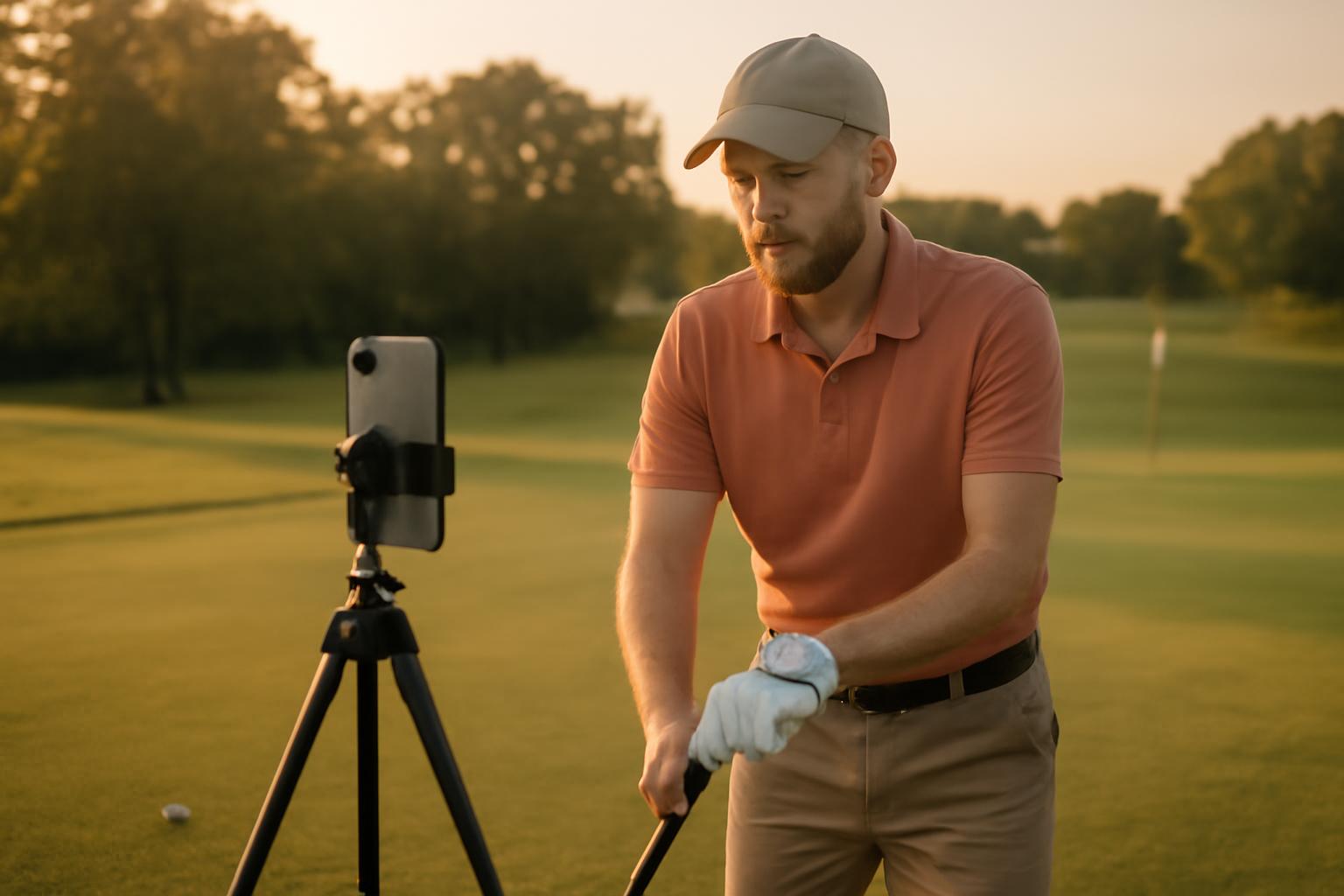
You do not need expensive gear to start. A smartphone with clean audio capture (external microphone or lavalier), natural lighting when possible, and permission from the course to film is sufficient for early content. Respect pace of play by filming during quieter times (early morning, late afternoon, or when the course is empty) and keeping filming sessions brief so you do not slow other players.
Basic editing can be done on your phone (Capcut, CapCut for desktop) or free software (DaVinci Resolve). Consistency matters more than production polish early on—publishing regularly (even weekly) teaches you what resonates faster than waiting three months to produce a premium video.
Worked Example: A golf instructor starting a TikTok and YouTube channel.
Sarah is a PGA professional considering a content channel to promote her lessons. She decides to focus on beginners and posts a 60-second TikTok daily showing one common mistake (like grip pressure or posture) and a 30-second fix. On Wednesday evenings, she posts a 12-minute YouTube video with three interconnected drills for short-game improvement, filmed at her range during off-peak hours.
After six weeks, her TikToks average 500–2,000 views and attract inquiries from local golfers interested in lessons. Her YouTube channel has 80 subscribers and 15,000 cumulative views, with two viewers converting to in-person lessons per month. She’s not yet monetizing through ads or sponsorships because her audience is too small, but the channel is driving lesson revenue. She avoids filming every day, which would overwhelm her schedule; instead, she films once a week in batches and schedules posts.
The key decision Sarah made was niche (beginner instruction) before platform (TikTok for reach, YouTube for depth). She also chose repeatable, simple formats (one-minute mistake fixes, three-drill deep dives) that she could sustain alongside her in-person coaching business.
Which platform is best for golf content creators?
There is no single best platform for all creators. Platform choice depends on your audience, content format, and business goal.
Short-form video is useful for reach and testing ideas
TikTok, Instagram Reels, and YouTube Shorts prioritize algorithmic discovery and can reach viewers who are not following you yet. These platforms reward consistency and rapid publishing (often daily or several times per week). Short-form video works well for testing hooks—demonstrating whether a drill, joke, or challenge captures attention in the first 3 seconds. If you succeed, you can expand the concept into long-form YouTube or podcast content.
Short-form video also has lower production friction: you can film a 30-second drill demonstration on your phone in one take and publish it without heavy editing. The tradeoff is that individual videos generate less revenue per view than long-form content, and building a sustainable income from short-form alone is harder. However, short-form followers often migrate to your long-form or owned channels if you link consistently.
Long-form and owned channels are better for depth
YouTube long-form videos (10 minutes and up), podcasts, newsletters, and personal websites give you more control over pacing, monetization, and audience relationship. YouTube’s ad revenue and partnership programs can generate income at moderate view levels (100,000+ views per month). Podcasts can attract sponsorships and premium subscription tiers. Newsletters let you communicate directly with subscribers. Personal websites support merchandise, online lessons, and coaching bookings.
Long-form content also builds deeper audience trust because viewers spend more time with you and your ideas. Instructional content especially benefits from long-form because learners need time to understand concepts. A 2-minute TikTok can spark interest, but a 12-minute YouTube video is where real learning happens.
Many successful creators use a hybrid model: daily TikToks or Reels to reach new people, weekly YouTube videos to build depth, and a newsletter or podcast to nurture loyal followers.
How golf content creators make money
Monetization paths vary by creator stage and content type. Early-stage creators typically earn little or nothing; established creators generate income through multiple streams. No universal rates exist—actual income depends on audience size, engagement quality, content rights negotiated, and sponsor priorities.
Early-stage revenue paths
When you have fewer than 10,000 followers and are still building audience:
- Affiliate links: Share links to golf equipment, books, or courses and earn commission on purchases. Low effort, but requires audience trust and relevant products
- User-generated content (UGC): Create short ads or testimonials for brands in exchange for a flat fee (typically $100–$500 per video, though rates vary widely)
- Small sponsorships: Reach out to local golf brands, instructors, or retailers who might pay $100–$500 to sponsor a video or mention
- Lesson inquiries: If you’re an instructor, your channel can drive interest in paid lessons, which is often the primary income stream early on
- Local partnerships: Partner with your home course, a golf shop, or a local brand for cross-promotion and small payments
Established creator revenue paths
When you have 50,000+ followers and consistent engagement:
- YouTube Partner Program revenue: YouTube shares ad revenue with creators (roughly 55% of ad spend); income depends on view count and audience location
- Sponsorships and brand partnerships: Brands pay for product placement, sponsored videos, or series; packages range from $1,000–$10,000+ per video depending on reach and audience fit
- Ambassador roles: Some creators become official ambassadors for brands, receiving a monthly retainer plus free products
- Paid subscriptions: YouTube memberships and Patreon allow audience members to pay monthly for exclusive content (often $3–$20/month)
- Online lessons or courses: Instructional creators can sell pre-recorded courses or coaching packages directly
- Merchandise: T-shirts, hats, and branded apparel drive both revenue and brand identity
- Events: Creator-hosted tournaments, meetups, or experiences can generate ticket sales and sponsorship
- Media appearances: Established creators may be invited to appear on podcasts, broadcasts, or streams, sometimes for a fee
Content creators with more than 1,000 followers across all platforms are eligible to apply to be included in creator competitions, which can include prize pools and exposure; winning or placing in a creator event can boost visibility and attract sponsorships.
None of these paths is guaranteed. Actual income is shaped by audience demographics (larger US audiences earn more than equivalent international audiences due to ad rates), content category (equipment reviews attract different sponsors than comedy), and the creator’s negotiating skill. A creator with 50,000 highly engaged followers in the 25–55 age range may earn more through sponsorships than a creator with 200,000 casual followers.
How brands should choose a golf content creator
Choosing the right golf creator for a sponsorship or partnership requires evaluation beyond follower count. This section provides a practical framework for brands, golf companies, and agencies.
Creator selection decision matrix
The following table compares creator types against common campaign goals, highlighting strengths and important evaluation signals for each:
| Creator Type | Best For | Strengths | Watch For | Key Signals |
|---|---|---|---|---|
| Instruction/Coaching | Product credibility, lesson leads, education content | Trusted authority, high engagement on technical content | Overconfident claims without credentials, narrow audience | Credentials/transparency, comment sentiment, lesson conversion rate |
| Entertainment/Challenge | Reach, brand awareness, viral potential | High shareability, fast growth, entertainment value | Audience may be broad (not golf-specific), brand safety concerns if tone is edgy | Engagement rate, comment quality, brand fit with tone |
| Equipment Review | Product launches, reviews, affiliate revenue | Niche audience of gear enthusiasts, detailed product analysis | Limited reach outside enthusiasts, potential affiliate bias if not disclosed | Engagement on equipment posts, affiliate transparency, audience golf handicap range |
| Travel/Lifestyle | Destination promotion, luxury brand fit, aspirational content | Strong visuals, engaged followers, lifestyle appeal | Smaller niche, followers may not convert to purchase | Audience location, engagement on travel/lifestyle vs. swing tips |
| Athlete-Creator | Prestige, credibility, competitive events | Credibility from playing ability, media appeal | Personality may not translate to publishing, limited production skill | Playing record, content consistency, audience growth rate |
Follower count is only one signal
Brands often default to follower count as the main evaluation metric, but it is an incomplete signal. Consider also:
- Engagement rate: Divide total comments and likes by number of followers. Rates above 5–10% suggest an active audience; below 1% suggests inflated follower counts or low interest
- Audience concentration and quality: Are followers truly golfers, or are they general sports fans? Check if followers are concentrated in relevant geographies (if you’re promoting a US resort) or if the audience skews toward an age group that matches your customer
- Comment sentiment and quality: Read through recent comments. Authentic comments (“This drill really helped my swing”) signal a real audience; generic praise or bot-like comments signal problems
- Content consistency: Does the creator publish regularly and maintain similar audience size across videos, or does performance vary wildly? Consistency suggests authentic growth
- Platform fit: A creator with 100,000 TikTok followers may not perform well in a YouTube sponsorship, and vice versa
Mark Crossfield has amassed a following of 600,000 across YouTube, Instagram, TikTok, Facebook and Twitter, illustrating that large creators span multiple platforms. However, the relevant metric for your campaign is performance on the specific platform where your sponsorship will run, not total follower count across all platforms.
Brief the creator around the format, not just the deliverable
A creator brief goes beyond “make a 60-second Instagram Reels video featuring our new putter.” It should also specify:
- Creative freedom vs. messaging: How much can the creator customize the content versus the messaging you need delivered?
- Content rights and usage windows: Will the brand repost the creator’s content to your own channels? For how long? (Broader rights typically cost more.)
- Sponsor integration approach: Should the product feature prominently or naturally in the content? (Natural integration usually performs better but is harder to guarantee.)
- Disclosure and compliance: Make clear that the creator must disclose the sponsorship (legal requirement in most countries)
- Realistic production constraints: Acknowledge that golf filming has inherent challenges: weather, pace of play, daylight limits, and course access restrictions. Unrealistic timelines set both parties up for failure
- Performance expectations: If you’re providing a target (e.g., “we expect 100,000 views”), make that explicit and agree upfront on what happens if performance falls short
Creators appreciate briefs that recognize the constraints of golf content (slow weather days, limited filming windows, editing time) rather than treating creator content like standard advertising production.
Trust, compliance, and operational risks
Instruction content needs extra care
When a creator offers swing instruction or coaching advice, especially on technical topics like posture, grip, or swing plane, viewers may follow that advice to prevent or fix injury. Creators without formal certifications should:
- Clearly state their credentials or experience level (“I’m a 2-handicap amateur sharing my experience” or “I’m a PGA professional”)
- Avoid medical claims (e.g., “This exercise will fix your shoulder pain”) without appropriate disclaimers and professional credentials
- Recommend that viewers consult a qualified instructor or medical professional for persistent issues
- Disclose affiliate relationships if recommending specific products or coaches
Instructional credibility also affects sponsor value. Brands evaluating an instructional creator should verify that claims are transparent and that the creator’s audience trusts their expertise. Misleading instruction claims can damage both the creator’s audience and your brand’s reputation.
Course and event filming can break the plan
Golf filming has operational constraints that can derail timelines and expectations:
- Weather and daylight: Rain, overcast skies, and short winter days reduce filming windows and limit quality footage
- Pace of play: Filming slows down a golfer’s pace, and most courses restrict filming during peak hours to protect other players’ experiences
- Access and permissions: Not all courses allow drone footage, and some restrict filming in certain areas. Courses may revoke filming privileges if impact on operations is high
- Music and audio rights: Using popular songs in golf videos requires proper licensing or royalty payments, which can be complex and costly
- Drone restrictions: Many courses prohibit drones, and FAA drone regulations apply in the US
- Sponsor integration: When a brand is paying for a video at a specific course, weather or access issues can make delivery impossible
For creator events or sponsored filming days, build in contingency days or flexibility on deliverables. A brief that assumes perfect weather and unobstructed filming access is setting expectations that are likely to fail. Experienced creator partners will acknowledge these constraints upfront and build realistic timelines.
A simple starter plan for creators and brands
If you want to become a creator
- Week 1–2: Choose your niche (instruction vs. entertainment vs. equipment vs. lifestyle) and identify one primary platform
- Week 3–4: Define three repeatable content pillars you can sustain (e.g., range drills, course vlogs, product reviews)
- Week 5+: Film and post your first video. Shoot one video per week for the first month, track which formats get the best engagement, and adjust
- Month 2–3: Build a simple filmmaking workflow (phone + microphone, editing software, batch filming) and commit to consistent posting
- Month 3+: Track meaningful metrics—comment quality, viewer retention, audience growth—rather than just view count. Identify early revenue opportunities (affiliate links, lesson inquiries, UGC work)
If you want to work with a creator
- Step 1: Define your campaign goal (brand awareness, product launch, lead generation, event promotion) and budget
- Step 2: Identify creator types that match your goal (refer to the decision matrix above) and shortlist 5–10 creators based on audience fit and content quality
- Step 3: Review engagement rates, comment sentiment, and recent sponsorships to verify audience quality and brand safety
- Step 4: Reach out with a straightforward brief that specifies deliverables, timeline, creative freedom, and compensation
- Step 5: Agree on content rights, usage windows, and realistic timelines (build in 1–2 contingency days for golf-specific constraints)
- Step 6: Require disclosure of the sponsorship and confirm compliance with ad disclosure regulations in your market