
Build a Hireable UGC Portfolio and Start Pitching Brands
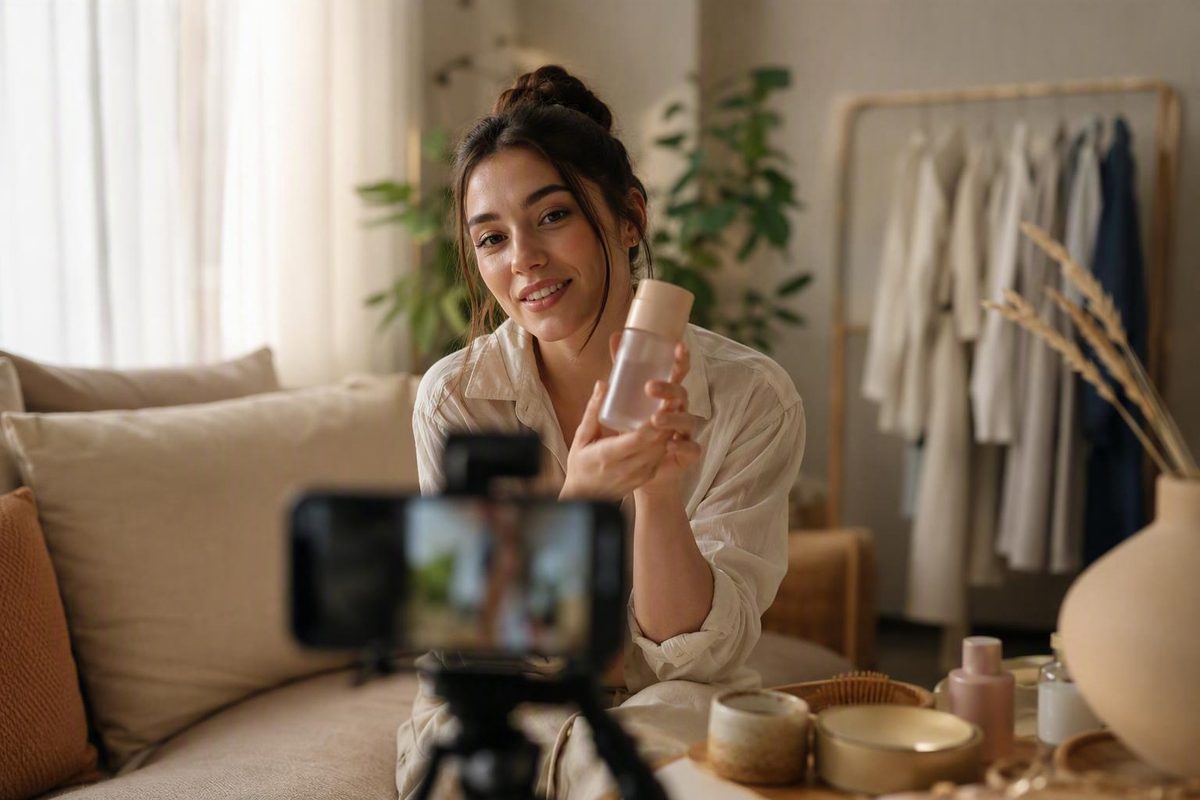
Create three to five focused samples, then pursue opportunities through several channels. Settle payment and usage rights before filming.
Becoming a user-generated content creator is not primarily a follower-building exercise. It is a freelance production business: you learn to turn a brief into clear, credible photos or videos that a brand can publish through its marketing channels.
You can begin with products you already own, a capable phone, accessible editing software, and a small speculative portfolio. You do not need to wait for a brand to send free products, and you do not have to appear on camera if your strengths are product footage, voice-over, hands-only demonstrations, or screen recordings.
None of that guarantees paid work. A portfolio proves that you can create; it does not guarantee that a client will choose you. The practical route is to develop useful production skills, create three to five focused samples, pursue opportunities through several channels, quote the actual scope, and settle payment and usage rights before filming.
What a paid UGC creator actually sells
A paid UGC creator produces marketing assets for brands. Those assets might include:
- Short-form videos
- Product photos
- Testimonials
- Tutorials and walkthroughs
- Product demonstrations
- Unboxings
- Reviews and reactions
- Problem-solution advertisements
- Website or app screen recordings
- Voice-over product footage
The creator may handle concept development, scripting, filming, presentation, voice-over, editing, captions, and delivery. The precise role depends on the brief.
The central distinction between a UGC creator and an influencer is what the client is buying. With content-only UGC, the brand is generally buying production: the finished asset and defined permission to use it. With influencer marketing, the brand is paying partly or primarily for access to the creator’s audience. Hybrid arrangements exist, but they should be scoped as such. Coursera’s overview of the role similarly distinguishes brand-focused content production from promotion to a creator’s following.
Commissioned UGC can appear on a brand’s:
- Organic social accounts
- Website or product pages
- Landing pages
- Email campaigns
- Paid social advertisements
- Other agreed marketing channels
You do not necessarily post the work on your own account. If a client wants both the content asset and publication to your audience, define those as separate services.
Because the brand is buying an asset rather than guaranteed distribution, a large personal following is generally unnecessary for content-only UGC. That does not mean followers are irrelevant to every opportunity. A marketplace, agency, or individual campaign may impose location, demographic, social-profile, portfolio, follower, or other eligibility requirements. If distribution through your account is included, audience size and engagement may also affect the arrangement.
“No followers required” should not be confused with “no proof required.” Clients can still assess whether you:
- Present the product clearly
- Fit the intended customer profile or campaign concept
- Produce suitable image and audio quality
- Follow instructions accurately
- Meet deadlines
- Communicate professionally
- Deliver the promised files
- Handle agreed changes reliably
Paid creator-made UGC is also different from unsolicited organic customer content. An ordinary customer may independently publish a review or product photo. A paid creator accepts a commercial assignment, agrees on deliverables and compensation, and grants or transfers specifically defined rights. It is a business transaction even when the finished content is designed to feel informal.
Choose a starting niche, format, and creator style
A niche gives potential clients a quick way to understand where you fit, but it does not have to become a permanent identity. Treat your first niche as a working hypothesis.
Evaluate possible categories using four questions:
- What products can you already film? Starting with products you own removes the need to wait for gifted items.
- What do you understand well? Familiarity makes it easier to explain features, demonstrate use, and speak naturally.
- What can you discuss credibly? You should be comfortable with the category and avoid exaggerated or unsupported statements.
- What can you show clearly? Some products are easier to demonstrate visually or through a screen recording than others.
Possible categories include beauty, technology and apps, fitness, finance, food, lifestyle, travel, gaming, pets, parenting, fashion, home, and wellness. These are examples, not a ranking of the most profitable niches.
A beginner could test two or three adjacent categories, such as:
- Skincare, beauty tools, and personal care
- Home organization, cleaning, and kitchen products
- Apps, software, and consumer technology
- Fitness equipment, activewear, and wellness products
- Pet products, home products, and everyday lifestyle items
Produce a small number of samples, then observe where your work looks strongest and which pitches receive relevant responses. Narrow your positioning when you have evidence from portfolio quality, client interest, repeat inquiries, or production efficiency—not because a generic guide says you must choose one category forever.
On-camera formats
If you are comfortable appearing on camera, common formats include:
- Testimonial: Explain an honest experience or reaction.
- Unboxing: Open the product and highlight its presentation or initial features.
- Tutorial: Teach the viewer how to complete a task.
- Demonstration: Show the product working in a realistic setting.
- Review: Discuss relevant strengths, limitations, or use cases.
- Reaction: Capture a genuine first impression or response.
- Problem-solution video: Introduce a recognizable problem, then demonstrate how the product may help address it.
On-camera work does not require a theatrical personality. Calm, precise delivery can be as useful as high-energy presentation when it fits the product and brief.
Faceless formats
Faceless UGC is a genuine production option, not a fallback. It can include:
- Hands-only demonstrations
- Close-up product footage
- Voice-over videos
- App or website screen recordings
- Text-led edits
- Point-of-view footage
- Stop-motion or process sequences
- Overhead tutorials
For example, a faceless app video might open with a text hook, show the user completing a task in the app, narrate three relevant features, and end with a concise next step. A kitchen-product video might show only the creator’s hands, product setup, use, cleanup, and finished result.
Do not assume one platform or video style is universally best. Choose an initial format based on your strengths and the deliverables you want to sell. A software walkthrough requires different skills from a beauty testimonial; a product-page demonstration may differ from a fast vertical advertisement.
Describe your portfolio in terms of capabilities rather than relying only on a broad label such as “lifestyle creator.” Useful positioning statements include:
- Short-form home and kitchen product demonstrations
- Faceless app walkthroughs with voice-over and captions
- On-camera beauty testimonials and tutorials
- Hands-only unboxings and product-detail videos
- Direct-response vertical videos with multiple hooks
Specific capabilities help a client picture what it can commission.
Learn the production skills and start with equipment you already have
A commercially useful UGC asset must do more than look attractive. It needs to communicate a product, problem, benefit, experience, or next action clearly.
Prioritize these skills:
- Writing concise hooks
- Turning a brief into a simple script
- Structuring a beginning, middle, and end
- Understanding the intended audience
- Presenting products naturally
- Demonstrating use clearly
- Delivering understandable speech or voice-over
- Framing shots deliberately
- Recording usable audio
- Editing for clarity and pace
- Writing an appropriate call to action
- Following brand instructions accurately
A polished montage can show visual taste, but it may not prove that you can explain a product. Conversely, a clear demonstration with modest production can be commercially useful even if it is not cinematic.
A minimum viable setup
You can begin practicing with:
- A capable smartphone
- A tripod, stand, or stable household surface
- Window light or usable artificial light
- A reasonably quiet recording space
- Intelligible audio
- Accessible editing software
- Enough device or cloud storage to organize your files
CapCut, Adobe Premiere, and Final Cut Pro are examples of editing tools, not required purchases. Choose software you can access and use consistently.
A phone microphone may work in a quiet, soft-furnished room when the phone is close to the speaker. It may perform poorly outdoors, in an echoing kitchen, near traffic, or when the phone is far away. Test the actual environment rather than assuming either that phone audio is always sufficient or that an external microphone is immediately necessary.
Tripods, microphones, dedicated lights, backdrops, storage drives, teleprompters, and advanced software are optional upgrades. Delay purchases until practice identifies a constraint. Upgrade because your footage is unstable, your audio is unclear, your lighting changes unpredictably, or your editing workflow is too slow—not because an equipment list makes every item sound compulsory.
A repeatable practice routine
Use one familiar product and repeat this exercise:
- Write five hooks aimed at different viewer concerns.
- Select one hook and draft a short script.
- Film a wide shot, medium shot, close-up, and detail shot.
- Record product use from at least two angles.
- Edit a short version with a clear progression.
- Watch it once without sound to assess visual clarity.
- Listen without watching to assess speech and pacing.
- Remove repetition and unnecessary pauses.
- Check whether the benefit is understandable and honest.
- Reshoot weak sections rather than trying to hide every problem in the edit.
Possible hooks for the same product might use curiosity, a common mistake, a practical benefit, a before-and-after process, or a specific use case. This teaches you to vary the creative concept without changing the product.
Professional skills matter too. Learn to acknowledge messages, ask concise questions, manage deadlines, name files consistently, retain source footage, and execute the approved brief. Keep separate folders for the brief, script, raw footage, project files, drafts, final exports, agreement, and invoice.
Advertising disclosure, copyright, music, privacy, and product-claim obligations can differ by platform and jurisdiction. Treat a client-supplied script as a draft to review, not as proof that every statement is cleared for use. Where a campaign involves regulated or consequential claims, ask the client what substantiation and approvals apply and obtain qualified advice when necessary.
Build a three-to-five-piece portfolio without waiting for a client
Three to five strong samples are a practical starting portfolio, not a universal acceptance standard. Some clients may hire from one outstanding example; others may expect more work, a particular demographic fit, or previous commissioned projects. Commercial beginner guidance commonly recommends this compact starting range, but it does not establish a hiring rule. Fueler’s creator comparison is one such commercial reference.
You can make speculative samples with products you already own and genuinely understand. You do not need to pretend the brand hired you.
Label each piece clearly:
Speculative UGC sample created independently; not sponsored or commissioned by the brand.
Place the label beside the sample in your portfolio. If you publish it socially, present the relationship accurately. Do not use wording such as “my latest brand collaboration” when no collaboration occurred.
A varied starter portfolio
A useful five-piece set might contain:
- A testimonial demonstrating natural on-camera delivery
- A tutorial or product demonstration showing instruction and coverage
- A problem-solution advertisement showing scripting and persuasive structure
- An unboxing or short review showing product presentation
- A faceless voice-over or screen-recording piece showing range
If you want only three pieces, select formats that collectively show presentation, demonstration, editing, and scripting. Avoid creating three nearly identical talking-head reviews.
A simple structure for each video is:
- Opening hook: Give the viewer a reason to continue.
- Problem or context: Establish when or why the product is relevant.
- Visible use: Show what the product does.
- Features or benefits: Explain specific details you can support.
- Honest experience or proof: State only what you genuinely know.
- Next step: End with an appropriate action or conclusion.
Do not invent personal results, customer status, product performance, or a relationship with the brand. If you have not used a product long enough to evaluate long-term results, focus on observable features, setup, application, interface, or first-use experience. A speculative advertisement can demonstrate creative skill without becoming a false testimonial.
What each sample should prove
Assess every piece against a commercial question:
- Are the visuals clean and intentional?
- Is the audio understandable?
- Can the viewer identify the product quickly?
- Does the edit move without feeling rushed?
- Is the delivery believable?
- Are important product details visible?
- Does the format match the intended placement?
- Are dimensions and orientation appropriate?
- Does the video have a specific purpose?
- Does it demonstrate a skill not already shown elsewhere?
An attractive highlight reel can introduce your work, but it should not replace complete samples. Clients need enough context to see whether you can sustain a hook, explain a product, follow a structure, and finish an asset.
Your portfolio should also include:
- Your name or professional creator name
- Niche or practical capabilities
- Contact method
- General location or service region
- Languages, where relevant
- On-camera and faceless formats offered
- Links to individual samples
- Accurate labels for speculative work
Keep navigation simple. A client should be able to reach the most relevant sample in one or two clicks without requesting access.
Replace weaker samples as your work improves. When you complete commissioned work, check the agreement before adding it to your portfolio. If portfolio use is not already covered, ask the client for written permission, particularly when the content has not launched or contains confidential campaign information. Written agreements can define deliverables, payment, usage, portfolio display, and likeness permissions. The Boutique Lawyer’s creator guidance provides a commercial legal overview of those terms.
Find opportunities through more than one channel
Relying on one marketplace or one viral post makes client acquisition fragile. Use several routes and compare them by control, competition, selectivity, fees, payment process, and rights terms.
The four principal routes are:
- Direct brand outreach
- UGC agencies or dedicated creator platforms
- Freelance marketplaces
- Creator communities and referrals
Direct brand outreach
Direct outreach gives you more control over whom you contact, what you propose, and how you negotiate. It also requires prospecting and follow-up.
Start with brands that fit your portfolio and already publish the kind of content you can produce. Review their website, social channels, visible advertisements, and current product positioning. Look for a specific opportunity rather than sending a generic declaration that you “love the brand.”
A concise pitch can include:
- Personalized opening: Mention a relevant product, campaign, or content observation.
- One concept: Propose a usable video idea.
- Evidence of fit: Link one or two closely related samples.
- Availability: State when you could begin.
- Clear next step: Ask for the brief, deliverables, budget, and intended usage.
For example:
Hi [Name] — I noticed that your current product videos explain the ingredients clearly but show relatively little of the application process. I’d like to propose a short hands-only demonstration built around “[specific viewer problem],” with close-up texture shots and a voice-over explaining two supported product features. Here are two relevant samples: [links]. If this fits an upcoming campaign, could you share the deliverables, timeline, budget, and intended usage?
Do not attach an entire library when two relevant examples will do.
Agencies and UGC platforms
Agencies and dedicated platforms may ask for contact details, social profiles, niche, location, rates, demographic information, and a portfolio. Applying does not guarantee acceptance, campaign access, approval, or earnings.
As checked in August 2026, Twirl describes a selective workflow in which applications are reviewed, accepted creators view campaign briefs and compensation, and creators apply separately to campaigns. Twirl’s creator page explains that platform’s stated process; it is not an endorsement or guarantee.
The UGC Agency requests creator information such as niche, location, social profiles, follower range, rate, and portfolio. It says it has no follower minimum and places more emphasis on content quality, but matching still depends on available briefs and client selection. These are The UGC Agency’s own application terms and claims, checked in August 2026, rather than market-wide rules.
Review the current eligibility, campaign, fee, dispute, payment, and content-rights policies of any service before applying. Platform rules can change, and availability may differ by country.
Freelance marketplaces, communities, and referrals
General freelance marketplaces can connect creators with clients, but they may charge fees and impose communication, contracting, or payment rules. Review each service’s terms instead of assuming every marketplace provides the same process or protection.
Creator communities, professional groups, social forums, and referrals can also surface opportunities. They can be useful for networking, feedback, and discovery, but a listing or direct message is not proof that a buyer is legitimate.
Before accepting work, verify the client’s identity through its official business channels and request written terms covering the deliverables, compensation, payment process, and usage. Avoid sending custom final files or unnecessary personal information before you understand who is contracting with you. This is a general precaution, not a complete fraud-screening procedure; consult relevant consumer-protection or financial guidance in your jurisdiction if a request appears suspicious.
Track your outreach
Use a spreadsheet or project board with these fields:
- Brand or client
- Contact name and channel
- Pitch date
- Concept proposed
- Sample sent
- Follow-up date
- Requested deliverables
- Budget or quote
- Rights discussed
- Response
- Current status
A tracker helps you follow up professionally and identify patterns. If relevant brands repeatedly view your portfolio but do not respond, your positioning may be unclear. If they ask for a format you do not show, add a sample. If price discussions stall, examine whether the scope and rights are being communicated precisely.
Joining a platform or sending pitches does not guarantee work. Acquisition may require sustained outreach, better samples, different positioning, and repeated rejection.
Understand the workflow from brief to payment
A common project sequence is:
- Application, referral, or pitch
- Scope and compensation review
- Written agreement
- Product delivery, if required
- Concept or script approval, if applicable
- Production
- Draft submission
- Agreed revisions
- Approval
- Final delivery
- Invoice
- Payment
The order can vary, but the critical point is that scope, payment, and rights should be clear before production.
Review the brief before accepting
Check:
- The required concept
- Mandatory or prohibited language
- Script requirements
- Number of assets
- Length of each asset
- Orientation, resolution, and file format
- Raw-footage requests
- Required hooks or alternate openings
- Caption or subtitle requirements
- Product-claim instructions
- Draft and final deadlines
- Intended publication channels
- Organic versus paid use
- Revision allowance
Ask questions before agreeing if the brief is ambiguous. A vague request for “one UGC video” can conceal multiple hooks, raw footage, several aspect ratios, paid advertising, or extensive revisions.
Distinguish a correction from a scope change. If you omitted a required scene from the accepted brief, correcting it may reasonably fall within the original fee. If the client changes the concept, supplies a new script after filming, adds a deliverable, or requests another location, that may require a new fee and deadline.
Agree in advance on:
- Number of included revision rounds
- What a revision can cover
- Whether reshoots are included
- How consolidated feedback will be provided
- What happens if the client changes the brief
- How additional work is authorized and priced
Understand approval-dependent payment
Some platforms state that they release payment only after content approval. As checked in August 2026, Twirl says payment is released after approval and received within 10 days, while The UGC Agency says it pays by bank transfer after brand approval. These are platform-specific procedures described on their own pages, not universal protections.
Inspect approval criteria, dispute procedures, payment timing, and rejection rules before accepting a campaign. Approval-dependent workflows can produce delays or disputes, and the supplied evidence does not establish a universally risk-free payment process.
Retain:
- The original brief
- The signed agreement or written terms
- Concept and script approvals
- Client feedback
- Submitted drafts
- Final files
- Invoice
- Payment record
- License start and expiration dates
Professional habits can support repeat work: meet deadlines, communicate foreseeable delays early, use clear filenames, follow the approved scope, and document requested changes. Excellent creative work can still become difficult to manage when files, feedback, and terms are disorganized.
Set an initial rate without treating promotional figures as promises
There is no universal beginner rate or dependable monthly income. A sustainable quote begins with the project, not with a promotional earnings claim.
Account for:
- Concept development
- Research and scripting
- Setup and product preparation
- Filming
- Voice-over or on-camera performance
- Editing and captions
- Number and length of deliverables
- Production complexity
- Communication and administration
- Deadline and rush requirements
- Included revisions
- Props, travel, or approved expenses
- Platform fees
- Requested usage rights
For content-only work, follower count is generally not the main pricing basis. The client is buying deliverables, production skill, time, complexity, and permitted use. Audience metrics become more relevant when publication or distribution through your own account is included.
Backstage reports an indicative range of $100 to $500 per UGC video, while also noting that actual rates vary with the asset and arrangement. Treat the Backstage pricing reference as a commercial data point—not a minimum, average, standard, or guaranteed rate.
Actual quotes can vary with country, currency, niche, experience, production demands, client type, platform fees, contract terms, and rights. A simple 15-second hands-only organic asset and a scripted advertisement with three hooks, raw footage, paid-media rights, and exclusivity are not the same product.
Separate the base fee from expanded scope
Your quote can distinguish:
- Base creation fee
- Additional hooks or alternate openings
- Extra aspect ratios or cut-downs
- Raw files
- Additional revision rounds
- Reshoots caused by a changed brief
- Rush delivery
- Paid-ad licensing
- Extended license duration
- Broader territory
- Category exclusivity
- Ownership transfer
- Expanded face, voice, name, or likeness use
A rate card can help explain your services, but it cannot anticipate every assignment. Quote the defined project after you know what the client wants.
Evaluate product-only offers
Gifted products and discounts are compensation in kind. They are not automatically equivalent to cash.
Before accepting a product-only proposal, compare:
- The product’s genuine value to you
- The time required
- Any shipping, travel, or production expenses
- Number of requested assets
- Revision expectations
- Usage channels and duration
- Paid-ad use
- Exclusivity
- Ownership request
A product you would not otherwise buy does not become full-value compensation merely because its retail price is high. A low-effort organic mention involving a useful product may be acceptable to you; a multi-video paid-ad package with broad rights may not be.
Revenue is not take-home income. Prospecting, administration, software, equipment, platform fees, expenses, and taxes all affect what remains. Avoid building financial plans around claims that a new creator should earn a particular amount within a few weeks or months.
Read the contract before you film: rights, revisions, payment, and likeness
Every paid UGC assignment is a business transaction. Put the terms in writing before production begins.
Your checklist should cover:
- Number and format of deliverables
- Draft and final deadlines
- Delivery method
- Included revision rounds
- Reshoot conditions
- Project fee
- Approved expenses
- Payment method and date
- Late-payment terms
- Cancellation or kill fee
- Approval criteria
- Organic and paid usage
- License duration and territory
- Editing and repurposing
- Exclusivity
- Ownership
- Face, name, voice, and likeness permissions
- Portfolio permission
A contract cannot guarantee timely payment or eliminate every dispute, but it gives both parties a shared record. Written creator agreements commonly address deliverables, deadlines, revisions, payment, usage, and likeness terms, although the exact legal effect depends on the agreement and applicable law.
Ownership is not the same as permission to use
Copyright ownership and permission to use a work are different concepts. A license can give a client defined permission to use content without transferring ownership. An ownership transfer gives the client broader control. Employment status, contract language, work-for-hire provisions, and jurisdiction may affect the outcome, so neither “the brand always owns it” nor “the creator always keeps it” is a safe universal rule. FADEL’s commercial rights overview likewise distinguishes temporary licensing from ownership transfer and notes that transfers can require more extensive negotiation. See its usage-rights explanation.
A limited license might permit six months of organic publication on specified brand accounts in an agreed territory. The written terms should address:
- Channel: Social accounts, websites, email, product pages, advertisements, or other placements
- Purpose: Organic publication, paid promotion, internal use, or another defined purpose
- Duration: When permission starts and expires
- Territory: Where the content may be used
- Editing: Whether the client may crop, subtitle, remix, dub, or substantially alter it
- Renewal: How extended use will be requested and priced
- Expiration: What happens to active publication or campaigns when permission ends
- Transfer: Whether the client may pass rights to agencies, retailers, or other parties
Organic social use, paid-media use, perpetual use, ownership transfer, and exclusivity can have different commercial consequences. A limited organic-social license is not equivalent to unrestricted global advertising forever.
Commercial guides sometimes suggest six-to-twelve-month licenses or percentage-based usage premiums. These are negotiating illustrations, not legal requirements or binding industry standards. Influee’s usage-rights guide presents variable terms and pricing examples rather than a rule every project must follow.
Exclusivity and likeness
Exclusivity may restrict your ability to work with competing brands. Define:
- The restricted product category
- Named competitors, where appropriate
- Territory
- Start and end dates
- Prohibited activities
- Additional compensation, if agreed
A restriction covering all beauty, technology, food, or wellness brands may be much broader than one covering a narrow product category for a short campaign.
The agreement should also state how the client may use your face, name, voice, and likeness, including whether it may edit, translate, repurpose, or otherwise extend the original asset. If a client proposes AI-generated or synthetic alterations, do not assume a settled default: ask for the proposed use to be described expressly and obtain qualified advice where appropriate.
Public posting, tagging, or featuring a product does not by itself settle whether a company has permission for broad reuse. Exact outcomes can depend on applicable law, platform terms, third-party materials, and the parties’ agreement. A commercial rights-management overview from Showcase similarly recommends explicit written permission covering channels, duration, edits, regions, and expiration rather than relying on public visibility or tags.
Disclosure, copyright, music, privacy, product-claim, tax, invoicing, and business rules vary by platform and jurisdiction. General guidance and templates cannot replace advice from a qualified lawyer, accountant, regulator, or other relevant professional. Larping Agency describes its coverage as focused on the working economics of UGC, including contracts, briefs, pricing, and usage rights, but its informational-use terms appropriately advise readers to examine contracts and seek professional advice before accepting usage-rights or exclusivity provisions.
A realistic 30-day launch plan
This 30-day schedule is an editorial planning exercise designed to help you establish a working system. It is not an evidence-based time-to-client benchmark and does not promise a client or particular income by day 30.
Days 1–5: Choose and practice
- Study testimonial, demonstration, tutorial, unboxing, problem-solution, and faceless formats.
- Choose one or two initial categories.
- List products you already own and can discuss honestly.
- Select an accessible editing tool.
- Practice hooks, framing, lighting, and audio.
- Review each practice video for clarity rather than posting everything immediately.
The goal is to identify your strongest presentation style and most obvious production weakness.
Days 6–15: Produce portfolio samples
Script, film, edit, and reshoot three to five varied samples. Include at least:
- One product demonstration
- One testimonial or review-style piece
- One faceless or screen-recording piece
Add a problem-solution advertisement or unboxing if you are creating four or five samples.
Label every piece:
Speculative UGC sample created independently; not sponsored or commissioned by the brand.
Do not imply that a brand approved, sponsored, or requested the work. Review each claim and remove anything you cannot state honestly.
Days 16–18: Assemble the portfolio
Create a concise portfolio containing:
- Contact information
- Capabilities
- General location or service region
- On-camera and faceless services
- Three to five relevant samples
- Clear speculative-work labels
Test every link on desktop and mobile. Ask someone unfamiliar with your work whether they can understand what you offer within a minute.
Days 19–21: Prepare your project checklist
Before approaching clients, create a question sheet covering:
- Deliverables
- Length and format
- Deadline
- Revision limit
- Compensation
- Approved expenses
- Payment method and timing
- Usage channels
- Organic or paid use
- License duration
- Territory
- Exclusivity
- Ownership
- Portfolio permission
This keeps enthusiasm from pushing you into an undefined assignment.
Days 22–27: Begin targeted outreach
Identify suitable:
- Brands
- UGC agencies
- Dedicated platforms
- Freelance marketplaces
- Creator communities
- Referral contacts
Tailor every pitch or application. Mention one relevant observation, offer one concept, and send only the strongest related samples. Record the activity in your outreach tracker.
Do not send a mass message claiming to love every brand. Specificity is evidence that you understand the potential client.
Days 28–30: Follow up and improve
- Follow up where appropriate.
- Record responses and nonresponses.
- Identify recurring questions or objections.
- Replace your weakest portfolio piece.
- Refine your positioning.
- Add a missing format if clients repeatedly request it.
- Check whether your pitch clearly asks for the brief, budget, and usage.
Success in the first month means completing a credible operating system: production practice, accurately labeled samples, a usable portfolio, a terms checklist, and an outreach process. Portfolio creation can happen relatively quickly; paid client acquisition remains uncertain and may require continued pitching, rejection, revision, and experimentation.
Frequently asked questions
Do you need followers to become a UGC creator?
Generally, no—not for content-only UGC. In that arrangement, the brand is buying an asset rather than access to your audience. Your portfolio, production quality, suitability for the brief, and reliability are more important.
Individual agencies, marketplaces, and campaigns can still impose follower, location, demographic, social-profile, or other eligibility requirements. Followers may also matter when the assignment includes posting to your account.
Can you become a UGC creator without showing your face?
Yes. Faceless UGC can include hands-only demonstrations, product footage, voice-over videos, screen recordings, app walkthroughs, text-led edits, and point-of-view sequences.
Build your portfolio around that capability rather than apologizing for it. For example, position yourself as a creator of “faceless software walkthroughs with voice-over” or “hands-only home-product demonstrations.”
How many videos should a beginner put in a UGC portfolio?
Three to five strong, varied videos are a practical starting point, not an acceptance requirement. Each should demonstrate a distinct skill, such as on-camera delivery, product demonstration, scripting, voice-over, screen recording, or direct-response editing.
Quality and range matter more than filling a portfolio with repetitive clips.
How much do UGC creators charge per video?
There is no universal per-video rate. Backstage reports approximately $100 to $500 per video, but that is an indicative commercial reference rather than a guaranteed minimum, average, standard, or beginner rate.
Quote according to concepting, scripting, filming, editing, complexity, deliverables, revisions, deadline, expenses, platform fees, and usage rights. Price expanded scope—such as extra hooks, raw files, paid advertising, exclusivity, or ownership transfer—separately where appropriate.
Who owns UGC after a brand pays for it?
Payment alone does not provide a universal answer. Ownership can depend on the written agreement, applicable law, employment status, work-for-hire provisions, and whether the creator granted a license or transferred ownership.
The contract should state whether the brand receives ownership or a license. If it is a license, define the channels, purpose, territory, duration, editing rights, renewal, and expiration. Obtain qualified legal advice when a contract requests perpetual use, broad exclusivity, ownership transfer, or extensive use of your face, name, voice, or likeness.
The practical path forward
As commissioned work arrives, replace speculative pieces with stronger examples you have permission to display. Ask satisfied clients for useful feedback or a testimonial, pursue repeat assignments, track license expirations, and improve how you discuss scope and usage.
The route can be reduced to five actions:
- Learn to make clear, brand-ready content.
- Produce three to five accurately labeled samples.
- Assemble a concise portfolio.
- Pitch relevant opportunities consistently.
- Define scope, payment, and usage rights before filming.
Followers and expensive equipment are not the principal entry barriers for content-only UGC. But neither a portfolio nor a platform application guarantees work. The sustainable objective is demonstrable production skill supported by a repeatable business process—not a promise of quick income.