
Run Creator Campaigns Through TikTok's Official Marketplace
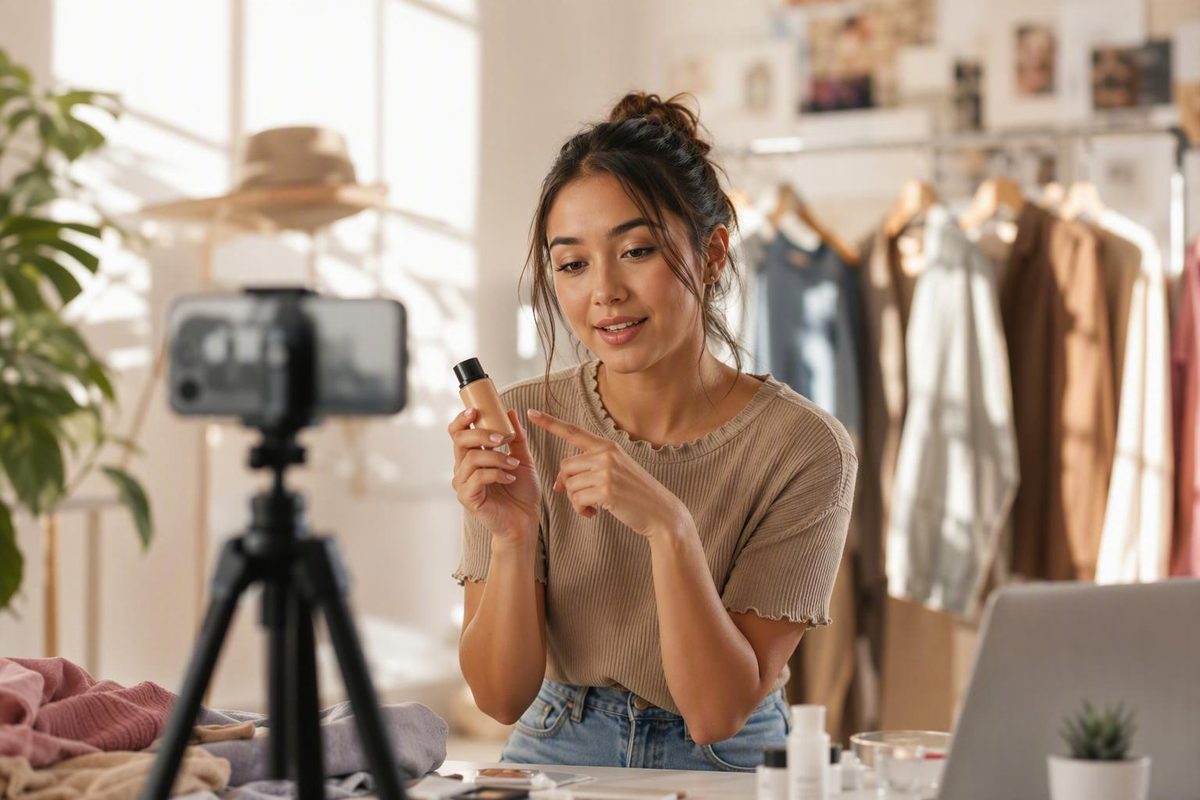
For site purchases, app installs or CRM leads, TikTok metrics alone can mislead on ROI. Goal, budget and cross-channel data determine the right workflow.
Overview
This TikTok Creator Marketplace guide explains what the marketplace is, who can use it, and how to run a defensible creator campaign from access check to measurement. In short: TikTok Creator Marketplace is TikTok’s official environment for connecting brands with creators for paid collaborations. The deciding factor for whether it fits you is your campaign goal, budget, and how much you rely on cross-channel attribution.
The rest of this guide is built for a practical reader: a brand marketer, social media manager, commerce lead, or creator partnership coordinator who needs to decide whether to use the marketplace, pick the right adjacent workflow if it isn’t the best fit, and execute without avoidable mistakes. A secondary audience is the creator weighing brand offers, deliverables, and revisions.
Because TikTok’s tools and thresholds have changed over time, treat specific numbers here as directional and verify current requirements in TikTok’s own resources before you plan a campaign. The core decisions this guide walks through are access and eligibility, workflow fit, creator selection, campaign setup, rights and disclosure, and measurement.
What TikTok Creator Marketplace is
TikTok Creator Marketplace is TikTok’s native platform for discovering creators, contacting them, coordinating collaborations, and tracking campaign performance inside the TikTok ecosystem. According to Popular Pays, it launched in 2019 as TikTok’s official way for businesses to find creators, manage campaigns, and review results in one place. In practice, it acts as a matchmaking and coordination layer rather than a full replacement for contracts, briefs, and external analytics.
The value proposition is straightforward: instead of cold-searching creators across the app, a brand can filter by criteria, send structured invitations, and keep collaboration activity in a single workspace. The Stackmatix guide describes it as streamlining influencer discovery, campaign management, and collaboration within TikTok. That convenience is real, but it is bounded by what TikTok exposes — most notably TikTok-only performance visibility, which matters for any brand that sells or advertises across multiple channels.
A useful mental model is to treat the marketplace as a discovery and communication layer you plug into your own operating system. You still decide the goal, define the brief, agree on rights, and connect results to business outcomes. Keeping that framing prevents the common mistake of assuming the platform handles everything from vetting to legal compliance on your behalf.
How it fits into TikTok’s wider creator and ads ecosystem
TikTok Creator Marketplace is one piece of a larger toolkit, and the naming has shifted, so it is easy to confuse related products. Stackmatix notes that TikTok consolidated its brand tools under TikTok One in 2024, which means the marketplace is often accessed alongside other brand features rather than as a fully standalone product. Because of this consolidation, “TikTok Creator Marketplace” and “TikTok One” are not competing alternatives — TikTok One is the broader brand hub, and the marketplace is the creator-collaboration function within that ecosystem. Always confirm current naming and entry points in TikTok’s official resources before you build a workflow around them.
The other adjacent tools serve different jobs. TikTok Ads Manager is where you run and target paid media, and Spark Ads let you amplify organic or creator posts as ads. TikTok Shop creator tools are commerce-led, oriented around affiliate selling and product-linked content rather than managed brand briefs. The marketplace is best understood as the place where you find and coordinate creators; Ads Manager and Spark Ads are where you pay to amplify what performs; and TikTok Shop creator tools are where creators drive product sales directly. Many brands use several of these together — for example, sourcing a creator in the marketplace, then authorizing their video for Spark Ads amplification.
Who can use TikTok Creator Marketplace
Both brands and creators can use TikTok Creator Marketplace, but each side faces its own access considerations, and those requirements have changed over time. On the brand side, the recurring prerequisite reported by SARAL is a TikTok Business Account with verification, not a personal profile. On the creator side, sources point to follower and activity thresholds, though the exact numbers differ across guides and years.
Creator thresholds are the clearest example of why you should verify before planning. Popular Pays and Stackmatix both cite a typical minimum of 10,000+ followers and note creators must be 18+, and Stackmatix adds a benchmark of 100,000 video likes in the last 28 days. An older Galactic Fed guide from 2022 lists a higher bar of more than 100,000 followers plus at least three videos in 28 days. That spread tells you two things: eligibility signals cluster around audience size and recent activity, and the precise cutoffs shift, so treat any single figure as provisional.
Availability is also regional. Stackmatix reports the marketplace was available in approximately 24 countries as of 2026, which means a creator or brand in an unsupported market may need to run discovery in the marketplace but handle contracting and payment through parallel, off-platform flows. Confirm your own country’s status before committing to a launch timeline.
Worked example. A skincare brand with a verified TikTok Business Account wants to test creator content for a new cleanser. Constraints: a modest first-campaign budget, a 6-week window, and no cross-channel attribution set up yet. Inputs: campaign goal is UGC production plus a small awareness lift; target is five mid-sized creators in a supported country. Outcome logic: because the goal is content and reach (not directly attributed sales), TikTok-native metrics like views, engagement, and video completion are acceptable primary KPIs, and the brand plans to authorize the two best-performing videos for Spark Ads afterward. If the goal had been measurable revenue, the brand would first stand up UTM links or a discount code, because marketplace reporting alone would not prove the sales impact. This pilot fits the marketplace well; a revenue-attribution campaign would need external tracking added before launch.
Brand access and account readiness
Before you open the marketplace, prepare the operational pieces that determine whether a campaign runs smoothly. A verified TikTok Business Account is the baseline, per SARAL, but the readiness that actually prevents bottlenecks is organizational.
- Verified TikTok Business Account with your business information complete, since a thin or new profile can make you look less legitimate to creators.
- A single clear campaign goal (awareness, UGC, commerce, app installs, or lead generation) that will drive creator criteria and KPIs.
- A working budget assumption, including whether you will pay for content, gifting, and any paid amplification separately.
- A named approval owner with authority to review drafts and respond quickly.
- A measurement plan, including any external tracking (UTMs, shop analytics, discount codes) you need beyond TikTok’s built-in reporting.
- A policy and category check, since regulated or restricted categories may face campaign rejections and require off-platform compliance handling.
Prepare these before outreach, not after a creator says yes. The most common avoidable delay is discovering mid-campaign that no one is empowered to approve content on time.
Creator eligibility and offer readiness
For creators, eligibility is about account quality and recent activity, and offer readiness is about being easy to work with. As Kynship notes, creators can be invited or apply if they meet criteria such as more than 10,000 followers, but meeting the threshold is only the entry point. Brands increasingly evaluate audience fit, content style, and consistency, not just raw follower counts.
Beyond the numbers, keep your account presentable and current: post regularly, keep your niche legible, and make it obvious what kinds of brands you fit. When an invitation arrives, being responsive and clear about your deliverables, turnaround, and content style protects both your rate and your authenticity. Because eligibility rules and country availability change, confirm your current status directly in TikTok’s creator tools rather than relying on a guide’s stated threshold. Creators near the eligibility line especially should expect that access can change if their metrics or region status shift.
Which TikTok creator workflow should you use?
The marketplace is one option among several, and the right choice depends on your goal, budget, operational capacity, and how much cross-channel data you need. Choosing well before you start saves you from forcing a workflow that fights your objective. Below is a plain-language comparison of the main routes and where each tends to fit best.
- TikTok Creator Marketplace — best for structured, managed brand collaborations and pilot creator cohorts inside TikTok. Strengths are native discovery, messaging, and coordination; the main limitation is TikTok-only performance visibility and the need to handle contracts and cross-channel measurement yourself.
- TikTok Shop creator tools — best for commerce-led affiliate selling where creators drive product sales directly. Fit is strongest when the goal is measurable in-app purchases rather than managed brand content.
- TikTok Ads Manager and Spark Ads — best for paid amplification of organic or creator content. Use these to scale what already performs, not as a discovery layer for finding creators.
- Manual outreach — best for niche creators, low budgets, or micro-creators who may not meet marketplace thresholds. It is more labor-intensive but gives you direct control over terms.
- Influencer agencies — best when you need managed execution, legal support, and operational capacity you do not have in-house, typically at higher cost.
- Third-party influencer platforms — best for broader creator databases or cross-platform campaigns; some, like Popular Pays, advertise access to over 160,000 vetted creators beyond TikTok’s own pool.
Most mature programs blend these rather than pick one. A common pattern is to use the marketplace for discovery and coordination, keep contracts and reporting in your own systems, and route winning content into Spark Ads.
When Creator Marketplace is a strong fit
Creator Marketplace is a strong fit when you want structured discovery, in-platform creator messaging, and campaign coordination for managed collaborations. It works especially well as a controlled pilot lab: you can test a new cohort of creators, see how they produce TikTok-native content, and identify which ones to invest in before committing to longer ambassadorships or paid amplification. For brands that want to keep discovery, outreach, and basic reporting in one place, the convenience is genuine.
It also suits teams that primarily care about TikTok-surface outcomes — views, engagement, and content production — where the platform’s own metrics are sufficient. If your goal is generating a batch of authentic UGC or testing creative archetypes (hooks, durations, formats) before scaling winners into Spark Ads, the marketplace gives you a repeatable, low-friction starting point.
When another workflow may be better
Another workflow is often better when the marketplace’s boundaries collide with your goal. If you have a very small budget or want niche and micro-creators who may not meet the follower thresholds, manual outreach usually gives you more reach and flexibility. If your objective is direct commerce, TikTok Shop creator tools align the incentive with product sales more cleanly than a managed content brief.
Multi-platform brands that need unified attribution frequently outgrow TikTok-only reporting, and they may keep the marketplace only for sourcing while running measurement elsewhere. Brands in regulated or restricted categories that face frequent campaign rejections often need off-platform contracting and manual compliance review. And teams without the internal capacity for briefs, approvals, and legal terms may be better served by an agency that provides managed execution. In each of these cases, the marketplace can still play a discovery role even when it is not the primary campaign system.
How to launch a TikTok Creator Marketplace campaign
Launching a campaign is a sequence, not a single action, and the discipline is front-loaded. The reader’s main risk here is starting outreach before the goal, criteria, and measurement are set, which leads to mismatched creators and unclear results. The compact sequence below moves from readiness through reporting and follow-up.
At a high level: confirm access and goal, search and shortlist creators, send a clear brief, agree on terms and rights, manage approvals and posting, then report and decide on renewal. Keep in mind that TikTok’s application and review steps can take time — Stackmatix notes applications are typically reviewed within 2 to 4 weeks — so build that lead time into your calendar. The steps below expand the parts that most often go wrong.
Step 1: Define the campaign goal and measurement plan
Start by naming one primary goal, because different goals demand different creators, deliverables, and metrics. An awareness campaign values reach and view completion; a UGC-production campaign values content volume and quality; a paid creative test values which hooks and formats survive amplification; a TikTok Shop sales campaign values conversions; an app-install campaign values downloads; and a lead-generation campaign values form completions or qualified inquiries. Trying to serve all of these at once usually produces weak signals on every axis.
Set the measurement plan in the same step, not after results arrive. If the goal is a TikTok-surface outcome, native metrics may suffice; if it is a business outcome like revenue or installs, decide now what external tracking you will add. This single decision — what “success” is measured against — should shape your creator criteria and brief. Write it down before you search for a single creator.
Step 2: Shortlist creators beyond follower count
Follower count is a starting filter, not a selection criterion. Strong shortlists weigh fit and evidence of performance over raw audience size, since micro and niche creators often convert better than large, polished accounts. Use a consistent set of signals so you compare creators fairly.
- Audience overlap with your target customer, not just the creator’s total reach.
- Content style fit, so the collaboration feels native rather than bolted on.
- Engagement quality (comments and saves, not just likes) rather than a single headline rate.
- Posting cadence and consistency, which signal reliability and current activity.
- Prior partnership quality, including whether past sponsored content performed and stayed on-brand.
- Any available conversion history where the platform or the creator can show it.
- Brand-safety review of off-platform behavior and past content, since TikTok’s own checks do not replace your own vetting.
Rank against these before you message anyone. A structured shortlist reduces the risk of paying for reach that never reaches your actual buyer.
Step 3: Send a brief that protects clarity without killing authenticity
A good brief is specific about outcomes and loose about execution. Give creators clear deliverables, must-hit talking points, deadlines, and hard boundaries (claims to avoid, disclosure requirements), but leave the creative approach to them — over-scripted, brand-directed content tends to underperform looser, TikTok-native storytelling. The goal is to protect clarity on the non-negotiables while preserving the voice that made the creator worth hiring.
Spell out the things that cause disputes later: number of videos, revision limits, posting window, usage rights, disclosure, and how success will be judged. Then stop. If your feedback loop starts rewriting the creator’s style, you are trading authenticity for control, and on TikTok that trade usually costs performance. The full field list to prepare appears in the campaign brief checklist below.
Step 4: Manage approvals, revisions, posting, and follow-up
The operational flow after a creator agrees typically runs concept or draft review, revisions, posting confirmation, reporting, and a renewal decision. The two biggest failure points are slow approvals and endless revision loops, both of which frustrate creators and can push you past posting windows. Assign a single approval owner and give them a response deadline — an internal service level, such as one business day per review round, keeps momentum without micromanaging.
Cap revisions explicitly (for example, one or two rounds) so the scope stays predictable for both sides. Confirm posting details in writing, capture results against your Step 1 plan, and only then decide whether to renew, scale, or drop the creator. Treat that renewal decision as data-driven: strong pilots become candidates for longer partnerships or Spark Ads amplification, while weak ones inform your next shortlist.
Campaign brief checklist
Prepare these fields before you contact a single creator; a complete brief prevents most mid-campaign confusion. Use it as a working template and adapt fields to your goal and category.
- Objective — the single primary goal (awareness, UGC, commerce, installs, leads).
- Audience — who the content should reach and resonate with.
- Creator fit criteria — the shortlist signals you will evaluate against.
- Deliverables — number of videos, format, and posting platform.
- Talking points — must-mention messages and product truths.
- Creative boundaries — claims to avoid, tone limits, and required disclosures.
- Deadlines — draft, revision, and posting dates, with review turnaround built in.
- Approval owner — the named person responsible for timely sign-off.
- Disclosure — paid partnership labeling requirements.
- Usage rights — where and how long you may reuse the content.
- Spark Ads permissions — whether the creator authorizes their post for paid amplification.
- Compensation model — flat fee, gifting, affiliate, or a combination.
- Reporting expectations — which metrics you will collect and share.
Fill every field, even briefly. Blank fields are where scope creep and disputes start.
Pricing, compensation, and budget planning
There is no single reliable rate for creator collaborations, so plan around models and variables rather than a fixed price. Reliable rate ranges require current market data or your own campaign history, and this guide will not invent them. What you can plan confidently is the structure of compensation and the cost drivers that move it.
Common models include flat content fees, product gifting or seeding, affiliate or TikTok Shop commission arrangements, usage or licensing fees for reusing content, and separate budgets for paid amplification through Spark Ads. These are not mutually exclusive — a single deal might combine a flat fee, a defined usage window, and Spark Ads authorization. On the cost of access itself, some sources describe the marketplace as a free resource for brands to find and connect with creators, but “free to browse” is not “free to run,” because creator fees, product costs, and amplification budgets are separate line items. Confirm current access terms with TikTok directly, since platform policies change.
The practical takeaway is to budget for the whole collaboration, not just the creator’s headline fee. A campaign that looks cheap on content can become expensive once usage rights, revisions, and amplification are added.
What affects creator pricing
Pricing varies with the work and the rights involved, not just audience size. Understanding the drivers helps you negotiate fairly and avoid surprises.
- Niche and category, since specialized or high-demand verticals command more.
- Audience quality and overlap with your target buyer, not just follower count.
- Deliverable scope — number of videos, length, and complexity.
- Timeline — rush turnarounds typically cost more.
- Content usage rights — longer or broader reuse windows raise the price.
- Exclusivity — asking a creator not to work with competitors carries a premium.
- Production complexity — scripted concepts, props, or locations add cost.
- Paid amplification rights — Spark Ads authorization is a distinct value the creator may price separately.
Match the price you expect to the rights and effort you are actually asking for. Paying a content-only rate but expecting perpetual ad usage is a common and avoidable friction point.
How to avoid budget surprises
Budget surprises almost always come from terms that were never confirmed in writing. Before launch, agree explicitly on the usage window, revision limits, and cancellation terms, so a change of plans does not turn into a dispute. Confirm payment timing and method up front, especially for cross-border collaborations where marketplace payment may not be supported and you will need a parallel process.
Also account for costs beyond the creator fee: product samples, shipping, any paid amplification budget, and the external tracking you may need to prove business impact. If your goal is revenue or installs, the cost of setting up UTMs, shop analytics, or discount codes is part of the campaign, not an afterthought. Lock these details before money moves, and your reported cost will match your actual cost.
Rights, disclosure, and brand safety checks
Treat rights and compliance as a campaign step, not a cleanup task. The items below are the ones that most often cause problems if left vague, and several sit outside what TikTok’s built-in tools handle for you. Where legal exposure is significant, have qualified counsel or your compliance team review terms before you publish.
- Paid partnership disclosure — confirm the content is labeled as sponsored per platform and applicable advertising rules.
- Usage-rights scope — define exactly where, how, and for how long you may reuse the creator’s content.
- Spark Ads authorization — get explicit permission if you plan to amplify the post as an ad.
- Commercial music and sound restrictions — verify that any audio is cleared for commercial use, since sounds available for organic posts are not always licensed for ads.
- Exclusivity — state whether the creator may work with competitors during a defined window.
- Review and revision rights — agree how many rounds and what you may request.
- Off-platform brand-safety vetting — review the creator’s history yourself, since TikTok’s checks do not guarantee reputational fit.
The recurring theme is that the marketplace is a coordination layer, not a legal system. Keep contracts, disclosures, and usage terms in your own records so nothing depends solely on in-app messaging.
How to measure TikTok Creator Marketplace results
Measure against the goal you set in Step 1, and be honest about what TikTok-native reporting can and cannot prove. The marketplace gives you performance visibility inside TikTok, which is enough for awareness, engagement, and content-production goals, but it does not show a cross-channel view. For any outcome that happens off TikTok — a purchase on your site, an app install, a lead in your CRM — platform metrics alone can mislead you about true ROI.
The practical discipline is to separate surface metrics from business outcomes. Use TikTok’s numbers to judge whether the content performed on the platform, and use external tools to judge whether it moved the business. Overinterpreting TikTok-only data is one of the most common measurement mistakes, especially for multi-platform brands with multi-touch buyer journeys. Set a realistic review cadence for your team size — for a small team, a per-drop or monthly review is usually more sustainable than daily monitoring.
Metrics by campaign goal
Match metrics to intent so you are not judging a UGC campaign by sales it was never designed to produce. The pairings below are a starting framework, not a rigid rule.
- Awareness — views, reach, and video completion rate.
- Engagement — comments, shares, and saves alongside likes.
- Content production (UGC) — volume, quality, and reusability of the assets created.
- Paid creative testing — which hooks, durations, and formats survive into Spark Ads.
- Commerce — clicks, add-to-carts, and conversions (typically tracked partly outside the marketplace).
- App installs — downloads attributed via your measurement setup.
- Lead generation — form completions or qualified inquiries.
- Relationship-building — reliability, responsiveness, and repeat-collaboration potential.
Pick the two or three metrics that map to your goal and ignore the vanity numbers that do not. Clear metric selection also makes your renewal decisions defensible.
What to track outside TikTok
Track outside TikTok whenever the outcome you care about happens off the platform. UTM-tagged links let you attribute site traffic and conversions in your web analytics; shop or site analytics show what happened after the click; pixel-based tracking can connect on-platform exposure to off-platform action where relevant. For commerce, unique discount or coupon codes per creator are a simple, durable way to attribute sales without complex setup.
Beyond automated tracking, keep manual creator performance notes — reliability, content quality, and audience response — because those qualitative signals inform who you renew or scale. CRM or sales data closes the loop for lead- and revenue-focused campaigns. The point is not to instrument everything, but to add exactly the external tracking your goal requires so the marketplace’s TikTok-only view does not become your only view.
Common problems and how to handle them
Most campaign problems fall into two buckets: you cannot get in, or the collaboration stalls after it starts. Both are common, and both usually trace back to a small number of causes rather than a mysterious platform failure. The subsections below walk through the likely culprits without pretending any single cause is universal.
The general remedy is the same across most issues: verify current requirements, confirm terms in writing, and assign clear ownership for approvals and payments. When something breaks mid-flight, check whether an eligibility, region, or policy change is the real cause before assuming a bug.
Why you may not be able to access the marketplace
If you cannot access TikTok Creator Marketplace, start with the most common, checkable causes rather than assuming your account is broken. On the brand side, access typically requires a verified TikTok Business Account, so an unverified or personal profile is a frequent blocker, per SARAL. On the creator side, you may not meet current eligibility signals — recall that thresholds cited across guides range from 10,000+ followers to older figures above 100,000, along with recent-activity and age requirements.
Region is another common reason: with the marketplace reported in roughly 24 countries as of 2026, an unsupported country will limit access regardless of account quality. Incomplete business verification, category or policy restrictions, and periodic platform changes can also close a door that was previously open. Work through these one at a time, and confirm each against TikTok’s current requirements — the honest answer is that access rules shift, so a cause that applied last year may not apply today.
Why campaigns stall after creators agree
When a campaign stalls after a creator says yes, the cause is usually operational rather than technical. The most frequent culprits are unclear briefs, slow internal approvals, and too many revision rounds, all of which push against posting windows and erode goodwill. Product delays and last-minute changes clash with TikTok’s staged review flow, sometimes causing missed launch dates.
Other recurring causes include unclear usage rights that surface late, payment uncertainty that makes creators cautious, and mismatched creative expectations where the brand wants more control than the creator’s authentic style allows. The fix is preventive: a complete brief, a named approval owner with a response deadline, capped revisions, and written terms on rights and payment. Address these before launch and most stalls never happen.
Creator guidance: accepting and managing brand offers
For creators, a good collaboration starts with evaluating fit before saying yes. Look at whether the brand matches your niche and audience, whether the ask suits your content style, and whether the deliverables and timeline are realistic for your schedule. A polished-looking offer from a brand with a thin or brand-new profile is worth extra scrutiny, since legitimacy cuts both ways.
Once you engage, get clarity in writing on the things that protect you: exact deliverables, revision limits, usage rights, exclusivity, disclosure requirements, and payment timing and method. If the brand wants to reuse your content as ads, that Spark Ads authorization is a distinct grant you can price and time-limit. Keep communication professional and responsive — clear response times and a tidy deliverable checklist reduce misalignment and scope creep.
Finally, protect the authenticity that earned you the invitation. If a brief drifts toward over-scripted, brand-directed content, push back constructively, because looser, native storytelling tends to perform better for both sides. Confirm your own current eligibility and payout process in TikTok’s creator tools rather than relying on a third-party guide, since thresholds and payment support vary by region and change over time.
Final action plan
Use this sequence to move from evaluation to a defensible campaign without avoidable mistakes.
- Verify current access — confirm your account type, eligibility, and country availability against TikTok’s own resources, since thresholds and regions change.
- Choose the right workflow — decide whether the marketplace fits your goal, or whether TikTok Shop tools, Ads Manager and Spark Ads, manual outreach, an agency, or a third-party platform is a better route.
- Prepare the brief — complete every field in the campaign brief checklist before any outreach.
- Shortlist creators — rank on audience overlap, content fit, engagement quality, and brand safety, not follower count alone.
- Confirm rights and measurement — lock disclosure, usage rights, Spark Ads permissions, and the external tracking your goal requires.
- Launch a pilot — run a small, time-boxed campaign with clear approval ownership and capped revisions, allowing for a review window of a few weeks.
- Review results — judge performance against your Step 1 metrics, adding off-platform data for any business outcome.
- Decide to renew or scale — keep and grow the creators that performed, amplify winners through Spark Ads if it fits, and feed the rest back into your next shortlist.
Treat the marketplace as one dependable layer in your creator program, not the whole system. The brands that get the most from it pair TikTok’s native discovery and coordination with their own briefs, contracts, and measurement.