
A Fitness Content Creator Needs a Clear Work Model, Not Just Workouts
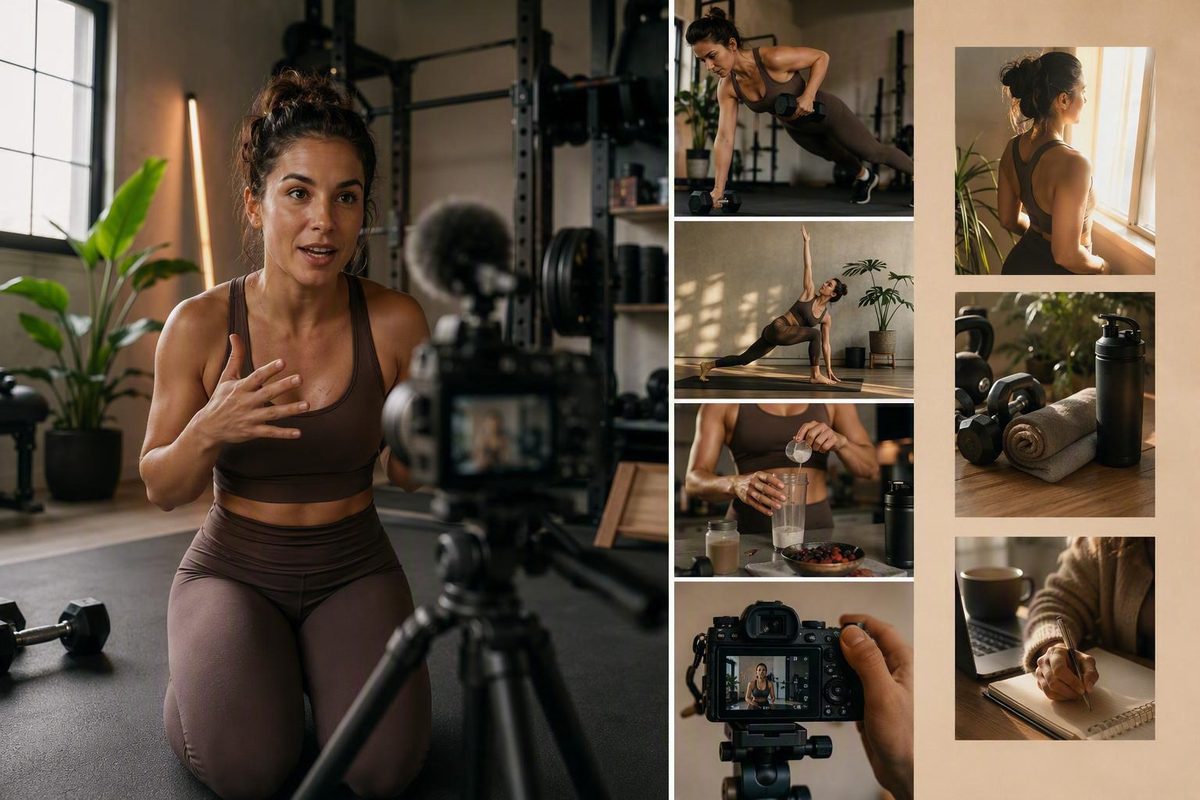
Choose a fitness creator business model, build a six-piece portfolio, price production separately from rights, and control health claims and disclosures.
A fitness content creator produces exercise, training, recovery or fitness-lifestyle media. That can mean building an audience, making UGC for brands, producing content for a gym or combining content with coaching. These are different businesses: they have different buyers, deliverables, liabilities and ways of getting paid.
Before buying equipment or posting daily workouts, decide what the content is meant to sell.
Choose the work model first
| Model | What the buyer pays for | Typical deliverables | Commercial question to settle |
|---|---|---|---|
| Audience-led creator | Access to the creator’s audience and credibility | Sponsored posts, integrations, affiliate content | Where will it be posted, and what performance is actually promised? |
| Fitness UGC creator | Production of customer-style assets | Demonstrations, testimonials, hooks, voiceovers, vertical ads | Can the brand use the content only organically, or in paid ads too? |
| Freelance producer | A defined production service | Gym Reels, trainer interviews, event coverage, editing | Who develops concepts, supplies talent and publishes? |
| Coach-creator | Content plus a coaching or programming offer | Educational posts, lead magnets, member videos | Where does general education end and individualized advice begin? |
| In-house creator | Ongoing production for one employer | Content calendar, shoots, edits, reporting | Which duties belong to the creator versus the social media manager? |
A creator can operate in more than one model, but each proposal should identify one. A brand asking for three videos for its ad account is buying production and usage rights, not automatically a post to the creator’s followers. The distinction is explained further in content creator vs influencer and what a UGC creator sells.
Pick a narrow production promise
“Fitness” is a subject, not yet a useful offer. Narrow it by audience, format and buyer:
- beginner strength demonstrations for home-equipment brands;
- running-app tutorials filmed outdoors;
- member stories and class previews for local gyms;
- mobility explainers for desk workers;
- product-led UGC for activewear or recovery tools;
- long-form technique education for a coach’s YouTube channel.
A workable positioning line is: “I make [format] for [buyer] aimed at [audience].” For example: “I make concise vertical demonstrations for home-fitness brands aimed at first-time lifters.” This is more useful than claiming to cover all health and wellness.
Credentials should match the promise. A production-only creator can show skill through scripting, movement visibility, sound and editing. A person selling individualized training should separately establish the qualifications, insurance and permissions appropriate to that service and jurisdiction. A certificate is not a substitute for a clear content brief, and production ability is not evidence of clinical expertise.
Build six portfolio pieces that answer buying questions
A starter portfolio does not need six brands. Use products, spaces and exercises you can film legitimately, and label speculative work as a concept rather than implying a commission.
Create:
- A movement demonstration: wide enough to show the complete action, with short on-screen cues.
- A follow-along clip: timed intervals, readable transitions and an explicit equipment level.
- A product demonstration: show setup, use and one limitation without inventing a result.
- A gym or app walkthrough: prove you can explain a service, not only perform exercises.
- A 20–30 second ad concept: hook, problem, demonstration and call to action.
- A talking-head explainer: demonstrate authority without hiding behind workout montage.
Label each sample with format, runtime, intended platform, your role and whether you wrote, filmed and edited it. A recent phone is usually enough to test this workflow; upgrade only when a brief exposes a specific limitation. See how to buy a content creator camera.
Make fitness content legible and safe to review
For every video, write a one-sentence viewer outcome before the hook. Then capture enough angles to show the movement or product clearly. Avoid fast cutting when it hides setup, range of motion or how equipment is secured.
Send brands a review cut with claims marked in the script. Fitness ads can imply more than their spoken words: before-and-after imagery, lab-style graphics and dramatic demonstrations all contribute to the overall message. FTC health-products guidance says marketers are responsible for express and reasonably implied claims and must consider the ad’s complete “net impression” (FTC).
That makes a claims sheet useful. For each factual product claim, record:
- the exact approved wording;
- the source supplied by the brand;
- any condition or limitation that must remain visible;
- who approved it and when.
Do not convert a personal experience into a general promise. “I found this easy to assemble” describes an experience; “this fixes back pain” is a health claim requiring substantiation. In the US, objective health-benefit and safety claims generally require competent and reliable scientific evidence (FTC). Platform rules can add another layer: YouTube prohibits harmful medical misinformation that contradicts local health-authority guidance, including across videos, descriptions, comments, live streams and external links (YouTube).
Price the asset separately from its use
A clean quote separates four things:
- Production: concepting, scripting, filming and editing the agreed deliverables.
- Extras: additional hooks, aspect ratios, cutdowns, raw footage, travel, props or talent.
- Usage: where, how long and in which territories the brand may use the finished work.
- Distribution: a separate fee if the creator must publish to their own audience or authorize advertising through their account.
For example, an illustrative quote might show a production fee for two edited vertical videos, a separate fee for three additional hooks, and a six-month paid-social license. The numbers should come from the creator’s workload, costs and negotiating position—not from treating “one video” as a standard unit.
Put these terms in writing:
- number, length and format of deliverables;
- concept and claim-approval stages;
- included revision rounds and what counts as a revision;
- delivery dates and client feedback deadlines;
- organic and paid-media rights, channels, territory and duration;
- whether raw footage, editable project files or cutdowns are included;
- exclusivity category and term;
- creator-handle advertising or account access;
- payment schedule, cancellation and reshoot terms;
- permission to show the work in a portfolio.
“Full usage” is not precise. Replace it with named media, a start date and an end date. Do not hand over raw footage by accident; it can enable many more ads than the edited deliverable priced in the original scope.
Disclose the commercial relationship in the content
A free supplement, gym membership, clothing discount or affiliate commission can create a material connection. FTC guidance says a relationship may be financial, employment-based, personal or familial, and that free or discounted products can also require disclosure (FTC).
Put a plain disclosure with the endorsement where people can notice it. For video, the FTC advises putting the disclosure in the video rather than relying only on the description; using both audio and visual disclosure makes it more likely to be noticed (FTC). “Ad,” “advertisement” or “sponsored” is clearer than burying “collab” among hashtags. Use the platform’s branded-content setting when required, but do not assume the tool replaces a clear disclosure.
Exceptional transformation stories need particular care. If an advertiser cannot prove that the endorser’s result is generally representative, FTC guidance says the ad must clearly communicate the results people can generally expect from the represented regimen (FTC). A small “results may vary” caption does not turn an unrepresentative transformation into a sound brief.
Use a brief that protects both sides
Before accepting or commissioning fitness content, answer these questions:
- What exact asset is being bought: production, audience distribution or both?
- Who is the intended viewer, and what should they do next?
- Which spoken, written and visual claims are approved?
- Does the demonstration need a qualified reviewer or safety check?
- Who supplies the product, location, music and other permissions?
- Which platforms and ad accounts will use the work?
- How will success be measured: delivery quality, watch time, clicks, leads or sales?
- What happens if the product, script or shoot date changes?
This turns “make an engaging workout video” into an agreement that can be priced, produced and reviewed. The creator knows what to deliver; the brand knows what it may publish; neither side has to infer rights from a folder of finished clips.