
Create Social Content That Drives Engagement
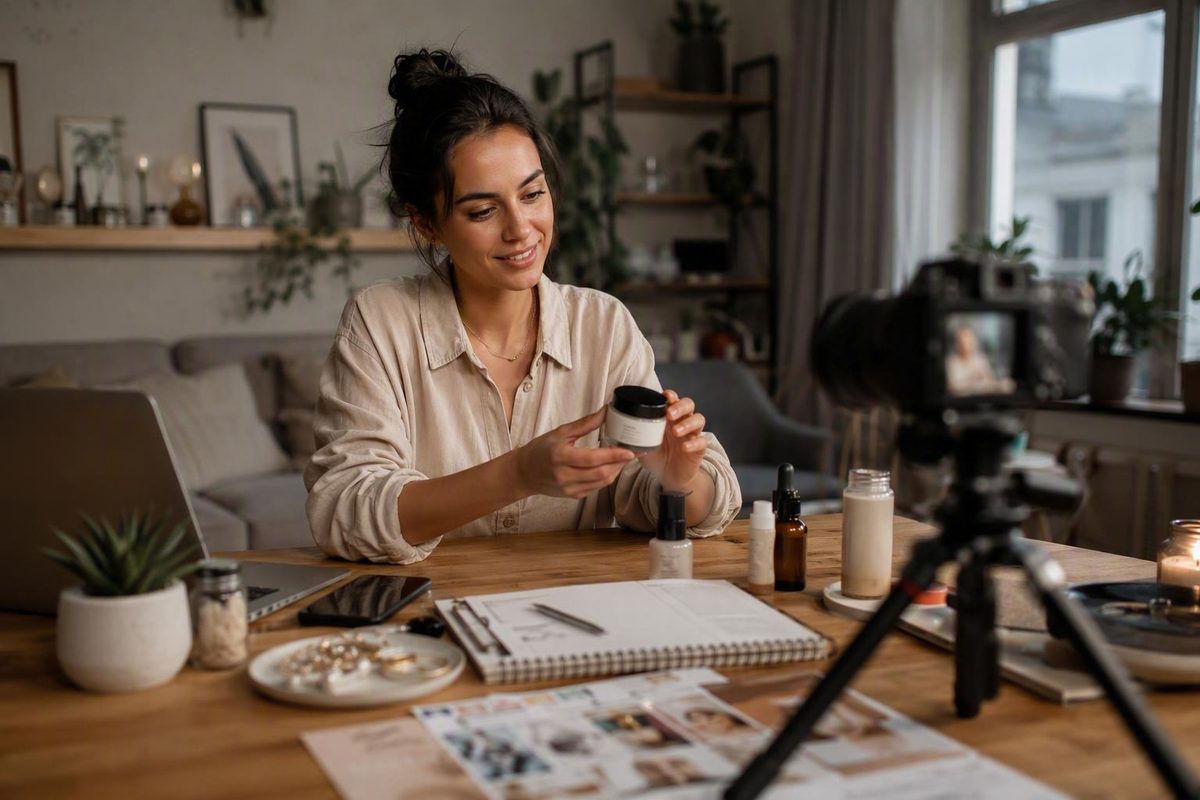
Work moves from briefing and ideation to publishing and analysis. Clarify deliverables, usage rights, decision authority and measurement expectations upfront.
Overview
A social content creator is someone who plans, produces, and publishes platform-native content—primarily short-form videos, photos, captions, and posts—designed for social media channels like TikTok, Instagram, YouTube, and Facebook. Unlike a general content creator (who might produce essays, podcasts, or long-form video), a social content creator focuses on content built specifically for social platforms, where format, pacing, and audience interaction are optimized for those channels. This article covers both the business-side perspective (deciding whether to hire one) and the creator-side path (building the skills to become one).
What a social content creator does
A social content creator’s core job is turning strategic direction—whether a marketing goal, product launch, or brand message—into fast, platform-native creative that drives engagement, awareness, or community. They don’t just film; they think through audience expectations, platform affordances, editing pacing, and caption tone to make content feel native rather than repurposed or forced.
The work typically moves through distinct phases: briefing, ideation, scripting or shot-list planning, filming or design, editing, review, publishing, and post-performance analysis. A creator might batch weeks of evergreen content to build a backlog, or they might stay close to real-time trends and react quickly to what’s trending or what the audience responds to. The balance between these approaches is one of the biggest workflow decisions a creator makes, and it has real operational consequences. When a creator over-batches content, they risk posting work that feels stale or dated by the time it goes live. Conversely, over-reacting to every trend can cause burnout and weak editorial judgment, leading to approvals that slip or content quality that degrades.
Common deliverables
A social content creator’s typical output includes:
- Short-form videos (15–60 seconds) for TikTok, Instagram Reels, YouTube Shorts
- User-generated content (UGC) style clips for product demos or testimonials
- Still photos, thumbnails, and cover images optimized for platform feed displays
- Captions, hooks, and on-screen text that create context or call action
- Social posts (text, polls, stickers) that seed conversation or complement video content
- Platform-specific adaptations of the same concept (vertical video for TikTok, square for Instagram Feed, landscape for YouTube)
- Content calendar inputs, hashtag suggestions, and posting schedules
- Analytics summaries showing which formats, themes, or posting times drove engagement
Not every creator produces all of these—scope depends on the agreement. Some creators focus solely on video production; others handle full-cycle work from concept through reporting.
Skills that matter most
The most useful skills a social content creator brings are:
- Audience understanding: knowing what keeps viewers watching past the first three seconds, what questions they have, and what language resonates without feeling corporate or inauthentic.
- Storytelling and structure: ability to build a narrative hook, sustain interest, and land a clear payoff or call-to-action within strict time limits.
- Platform fluency: knowing the norms and expectations of TikTok versus Instagram versus YouTube, and how algorithm signals and audience behavior differ across channels.
- Basic production and editing judgment: ability to film in varied lighting, sound-check, and make quick editing decisions that improve pacing without over-processing.
- Brand judgment: knowing when a trend fits the brand voice and when it risks brand safety; understanding when to say “no” to a viral format that doesn’t serve the goal.
- Analytics literacy: ability to read performance data, spot patterns (which hooks work, which topics convert, which times perform), and apply learning to the next batch.
- Collaboration and communication: skill in taking feedback, clarifying ambiguous briefs, and documenting decisions so approvals and revisions stay fast.
Social content creator vs. similar roles
Several roles touch social content, but they serve different jobs and have different ownership and decision-making authority. The table below shows how social content creator differs from adjacent roles:
| Role | Primary Deliverables | Ownership & Rights | Decision Authority | Typical KPIs | Best Fit For |
|---|---|---|---|---|---|
| Social Content Creator | Platform-native videos, UGC clips, photos, captions, posts | Creator or brand owns usage rights (clarified per agreement) | Creator owns creative decisions; brand owns brand safety and messaging | Watch time, engagement rate, shares, saves, reach, community growth | Producing high-velocity, platform-specific creative |
| UGC Creator | Unscripted or loosely scripted demo videos, testimonials, product unboxings | Brand owns all footage and usage rights; creator has no ongoing claims | Creator proposes; brand approves; creator executes within constraints | Conversion rate (when video supports a sales page), cost-per-acquisition | Generating authentic-feeling product demo content for ads or landing pages |
| Influencer | Own-channel content, collaborations, sponsored posts, product placements | Influencer owns their channel; brand licenses usage of mentions/appearance | Influencer controls posting schedule and presentation; brand negotiates terms | Follower count, engagement rate, swipe-up traffic, affiliate sales | Reaching an existing audience and borrowing credibility or reach |
| Social Media Manager | Content calendars, community management, brand voice, audience engagement, real-time response | Brand owns all work product | Manager owns day-to-day social strategy, posting, and community decisions | Follower growth, reply rate, sentiment, click-through rate | Strategic oversight, audience management, and brand voice consistency |
| Videographer | Polished, longer-form videos, event coverage, branded documentary-style content | Typically brand owns footage; videographer may retain portfolio rights | Videographer owns visual style and production quality; brand owns messaging | Production quality, shot variety, storytelling depth | Creating evergreen brand videos or event documentation |
| Content Strategist | Content pillars, audience research, messaging frameworks, editorial calendars | Brand owns strategy work product | Strategist owns research and positioning; brand executes | Audience insights, brand positioning clarity, content performance alignment | Defining what content should be made and why |
| Community Manager | Direct response, moderation, engagement replies, event coordination | Brand owns | Community manager owns day-to-day tone and speed of response | Response time, sentiment, retention rate, community health | Managing audience conversation and building community culture |
Where the roles overlap
In small teams and freelance work, titles blur significantly. A creator might double as a community manager, handling both video production and replying to comments. A social media manager might occasionally shoot and edit their own short-form video. An influencer might collaborate with a brand on a UGC-style clip that looks like native content. What matters most is clarity: define deliverables, usage rights, decision authority, and measurement expectations in writing before work begins. A job title is less important than knowing who owns the creative, who approves, who can repurpose the content, and what success looks like.
How social content creators work with brands and teams
A smooth collaboration between a creator and a brand follows a predictable workflow, though details vary by project scope, team size, and approval complexity.
A brief-to-publish workflow
Here’s a typical sequence:
-
Brief and context: Brand provides goals (awareness, engagement, sales support, creative testing), audience insights (who watches, what they care about), platform focus (TikTok, Instagram, multiple platforms), and any constraints (brand guidelines, no-go topics, regulatory limits).
-
Creator research and ideation: Creator reviews brief, asks clarifying questions, and proposes 2–5 concept directions. For a product-focused example, a cosmetics brand might want demo videos for a new mascara. The brief specifies: “Show the 3-second application, emphasize the brush shape as the differentiator, target women aged 18–35 on TikTok and Instagram.” The creator might propose: (A) a before-and-after quick demo, (B) a “get-ready” lifestyle scene where the mascara is a hero step, (C) a side-by-side comparison with a competitor’s brush.
-
Scripting or shot list: Once a direction is approved, creator writes a short script or shot-list outline showing what will be filmed, in what order, and with what voiceover, music, or on-screen text. This is where revision and approval usually happen, because fixing a concept in a script takes minutes; fixing it after filming takes hours.
-
Production: Creator films or designs the asset. Depending on agreement, they might handle their own equipment, or work in a studio provided by the brand. This is where batching often happens—shooting 5–10 assets in one session rather than one at a time.
-
Edit and rough review: Creator edits, adds captions, music, and graphics, then shares a rough cut or final draft with the brand. This is usually where the brand reviews and requests revisions (pacing, caption clarity, sound mix, color correction).
-
Approval and final export: Once revisions are complete, the creator exports final files in the formats the brand needs (vertical for mobile, square for feed, landscape for YouTube, etc.).
-
Publishing or handoff: The creator either publishes directly to the brand’s account (if they have access) or delivers files and the brand publishes. Sometimes the brand handles paid promotion, while the creator handles organic posting.
-
Repurposing and reporting: After publishing, the creator may recut the same footage for other platforms (a 30-second TikTok becomes a 15-second Instagram Reel, becomes a 60-second YouTube version). After a week or two, they deliver analytics showing watch time, engagement rate, shares, and any patterns worth noting for the next batch.
Batching content vs. staying close to live trends
The tradeoff between planning ahead and staying responsive is one of the most important operational decisions a creator makes. Batching—filming 4–8 weeks of content in advance—gives you breathing room, improves consistency, and reduces stress. But if you batch too heavily, your content can feel outdated by publication date, especially if trends shift or the audience’s interests move. Over-reacting to trends, on the other hand, keeps content feeling fresh and relevant, but it can cause burnout, weak approvals, and the risk that you jump on a trend that doesn’t actually fit the brand.
A practical approach for many creators is a hybrid: batch 60% of content (evergreen product demos, brand stories, educational pieces that stay relevant for weeks) and reserve 40% of production capacity for real-time or near-term trends. This way, you have a steady backlog to buffer against unexpected delays or creative blocks, but you’re not so locked into a schedule that you miss timely opportunities. It also gives you space to respond if a comment or audience question reveals a gap in your content—you can shoot a quick response without derailing the entire plan.
When to hire a social content creator
Deciding whether to hire a dedicated social content creator depends on a few signals. If you’re experiencing consistent production bottlenecks—your social media manager has ideas but no time to film and edit, or your brand’s social feeds lag behind competitors in posting frequency and quality—a creator can fill that gap. If your platform-native content feels corporate or over-edited compared to what your audience engages with, a creator’s eye for authentic storytelling and platform norms can shift that perception. If you’re testing new formats (short-form video on TikTok, for example) and need someone who knows those platforms deeply, a specialized creator is often faster than retraining existing staff.
You might also hire if you’re scaling—moving from 2–3 posts per week to 10+ across multiple platforms—or if you want to increase creative testing (trying different hooks, topics, or visual styles to learn what resonates). Many companies invest hundreds of thousands of dollars into content creation annually, and those budgets often go toward agencies, freelancers, and in-house teams. A single creator rarely costs as much as a full agency, but their output is often higher quality and faster than asking a generalist marketer to produce social content alongside their other duties.
When another role may be a better fit
A social content creator isn’t always the answer. If your brand lacks a clear positioning or messaging framework, hiring a creator won’t fix that—you need a content strategist first. If your target audience isn’t on social media, or if your product sells better through long-form content (email, guides, case studies), social content may not be worth the investment. If you have a strong social media manager who just needs budget for editing tools or outsourced editing, you might not need a dedicated creator—just better workflow support.
If you want to borrow someone else’s audience or credibility, an influencer is a better fit than a creator. If you need unscripted product demos for ad landing pages (not social feeds), a UGC creator is often more cost-effective. If your content needs to be polished, longer-form, and evergreen (brand videos, event documentation), a videographer serves you better. And if you’re not ready to publish consistently (at least once per week per platform), or you lack the approval authority to move fast, a creator’s time will be wasted waiting.
How to evaluate a social content creator
Hiring the right creator matters, because misalignment on creative judgment or workflow can slow everything down. Here are practical ways to assess fit before you commit.
Portfolio review criteria
When reviewing a creator’s portfolio, look for:
- Platform-native execution: Do their videos feel like they belong on the platform, or do they look like they were shot for elsewhere and then cropped to fit? Are hooks and pacing tuned to platform-specific expectations?
- Storytelling and structure: Can they grab attention in the first 1–3 seconds? Do they sustain interest and land a clear payoff or call-to-action?
- Editing and pacing: Is the edit rhythm too slow, too frantic, or just right for the content? Do graphics and text support the story or distract from it?
- Audience fit: Do the topics, tone, and format match your target demographic? If your audience is Gen Z on TikTok, does the creator’s work feel authentic to that audience, or does it feel like an adult trying to sound like a Gen Z person?
- Consistency: Can they maintain quality across multiple pieces, or does one excellent video suggest an outlier they might not be able to repeat?
- Caption quality: Are captions clear, keyword-aware (for discoverability), and grammatically sound? Do they set up the video hook effectively?
- Brand judgment: In their portfolio, do they avoid pitfalls (jumping on trends that don’t fit, making claims they can’t back up, using copyright-infringing music)? Do they show thoughtful restraint alongside creativity?
- Evidence of learning: Do they seem to adapt based on performance? If they describe why a piece performed well or what they’d change next time, that’s a signal they’re reflective and data-aware.
Trial project and interview prompts
A portfolio alone doesn’t always predict how someone will work with you. Consider a paid trial project—usually a short assignment (1–3 pieces) that tests your working relationship before a bigger contract. Good trial prompts include:
- “Concept this product into three platform-specific video ideas for TikTok, Instagram, and YouTube Shorts. Explain your creative choices for each platform and what you’d need from us to execute.”
- “Here’s a real customer question from a recent post. Create a 30-second response video that answers it and stays in brand voice.”
- “Walk me through how you’d approach a sensitive topic (e.g., a product claim, a trending sound with baggage). What would you flag for brand safety before publishing?”
- “Show me your editing process. Can you walk through a rough cut and explain your pacing choices?”
During interviews, ask about their workflow and how they handle feedback. Do they see revision as collaboration or as criticism? How do they balance creative vision with brand constraints? How do they manage idea capture and batching? Strong creators can articulate their process, show flexibility, and ask clarifying questions about your goals before jumping to solutions.
Budget, rights, and approval basics
Cost and governance often come up early, and it’s worth clarifying expectations before negotiations stall. Pricing varies widely based on experience, platform, usage rights, and scope (concept-only vs. full production). A single short-form video might cost anywhere from a few hundred dollars (for a newer freelancer) to several thousand (for an established creator or agency), depending on complexity and usage rights. Many companies invest hundreds of thousands of dollars into content creation annually, but that often spans multiple creators, platforms, and content types.
Beyond cost, clarify rights and ownership. Who owns the footage after it’s published? Can the brand repurpose it in ads, on other channels, or in evergreen collections? Can the creator use it in their portfolio? Can either party sublicense it? These details should be in a written agreement, because misalignment later causes friction and potential legal disputes.
Questions to clarify before work starts
Before signing a contract or starting production, discuss and document:
- Deliverables: What exactly will the creator produce each month or per project? (E.g., “4 TikToks, 2 Instagram Reels, 3 carousel posts”)
- Deadlines and publishing schedule: When do you need drafts ready for review, and when do they go live?
- Usage rights: Can you use the content in paid ads, in email, on your website, or is it social-only? For how long?
- Revision limits: How many rounds of feedback are included before additional fees apply?
- Review owners: Who at your organization approves, and what’s their turnaround time?
- No-go topics: Are there subjects (politics, health claims, competitor comparisons) the creator should avoid?
- Music and asset permissions: Who clears music rights, and who pays for licensed sounds or stock footage?
- Disclosure and compliance: If the content includes affiliate links or sponsorships, how will those be disclosed?
- Escalation: What happens if the creator misses a deadline or the brand changes direction mid-project?
How to measure social content creator performance
Measuring a creator’s impact is more nuanced than counting followers or views. The metrics that matter depend on what the content is designed to do. A piece designed to build awareness might prioritize reach and impressions. A piece designed to drive community engagement might prioritize saves, shares, and comments. A piece designed to support sales might track click-through rate or conversion support.
One exceptional piece of content can resonate with audiences far more than a dozen mediocre ones, so consistency of output matters less than quality and relevance. Set goals first, then pick metrics that reflect those goals.
Match metrics to the job the content is doing
Common metrics and what they signal:
- Watch time and completion rate: How much of the video did people actually watch? A high completion rate signals strong hook and pacing. A low completion rate suggests the opening didn’t hook viewers or the premise felt misleading.
- Engagement rate (likes, comments, shares per post): Shows how much the audience connected and wanted to amplify or discuss. This is often more meaningful than raw view count, because it suggests active interest, not passive scrolling.
- Saves: Viewers saved your content for later—a strong signal of utility or inspiration. Platforms often weight saves highly in their algorithms.
- Shares and reposts: Viewers felt your content was valuable enough to pass along. This signals trust and resonance.
- Traffic and click-through rate: If the goal is to drive traffic (to a website, product page, or landing page), track clicks and where they lead.
- Conversion support: Did viewers who clicked end up purchasing, signing up, or taking another action? This requires tracking pixels or UTM parameters to connect the content to the outcome.
- Audience growth: If the goal is community building, track follower gain and new subscriber quality (not just count).
- Learning and iteration speed: Over time, do creators apply what they learned from performance data? Are their monthly posts higher quality, higher engagement, and better-aligned to audience preferences than their earlier work?
Don’t rely on one metric. A viral video with high views but low engagement might feel successful on the surface but actually indicate weak audience connection. Conversely, a video with modest reach but very high saves and shares might be quietly building a loyal, engaged community.
How to become a social content creator
If you’re considering this as a career path, the entry barrier is lower than many creative fields because you don’t need credentials, degrees, or expensive equipment to start. You need a smartphone, basic editing software (many free options exist), an idea about what you want to create, and an audience to practice with.
The practical steps are:
-
Pick a niche or problem space: What do you want to create content about? (e.g., productivity tips, small business advice, DIY fashion, tech reviews, cooking). This focus helps you build an audience and improve faster than jumping between topics.
-
Study platform norms: Spend time on TikTok, Instagram, YouTube, and other platforms you plan to create for. What hooks work? What pacing feels native? What topics trend?
-
Build a small portfolio: Create and publish 5–10 pieces across your chosen platforms. These don’t need to be perfect, but they should show you understand the platform and your audience. Title, caption, hook, and pacing all matter more than production budget.
-
Learn basic editing: Use free tools (CapCut, DaVinci Resolve, even TikTok’s native editor) to get comfortable with pacing, transitions, color grading, and adding text or music. Editing is where a lot of social creators’ impact comes from, so skill here matters.
-
Document your workflow: Keep templates, swipe files, and idea lists so you can repeat what works. Consistency in creation (weekly or biweekly publishing) matters more than sporadic, polished posts. Many communities emphasize batching or time-blocking (e.g., “production day is Tuesday, editing day is Wednesday”).
-
Track performance and iterate: Use platform analytics to see what hooks, topics, and posting times work. Adjust your next batch based on what you learn.
What to put in a beginner portfolio
When you’re starting out and don’t have client work, you can still build a portfolio that shows capability:
- Sample video concepts: Write out 3–5 ideas with a short description of the hook, audience, and why it fits a niche. You don’t need to film everything—conceptual clarity matters.
- Polished short-form videos (even if you made them for your own audience): Include 3–5 best pieces showing different formats or topics.
- Before-and-after edits: Show a rough clip alongside the finished edit, explaining your pacing and caption choices.
- Platform-specific adaptations: Take one concept and show how you’d execute it differently for TikTok, Instagram, and YouTube. This demonstrates platform fluency.
- Analytics screenshot: If you’ve published, include a screenshot showing engagement metrics and what worked.
- Written rationale: For each piece, briefly explain the hook, who it’s for, and what you were testing. This shows you’re thoughtful, not just chaotic.
You can host this portfolio on a simple website, in a PDF, or as a collection of short videos in a private YouTube or TikTok folder. Prospective clients care less about follower count and more about creative judgment and platform understanding.
FAQ
What’s the difference between a social content creator and a UGC creator?
A social content creator produces content designed for an existing audience on a brand’s own social channels—TikTok, Instagram, YouTube, etc. They’re building community and awareness over time. A UGC (user-generated content) creator produces short, authentic-looking demo videos or testimonials typically designed for brands to use in ads or on landing pages. UGC creators don’t usually post to their own channels; they create content the brand owns and controls. UGC work is often transactional (one piece, one project, one fee), while social content creation is usually ongoing and relationship-based.
Is a social content creator the same as an influencer?
No. An influencer has their own existing audience and provides access to that audience through sponsored posts, collaborations, or product placement. An influencer’s power comes from their follower count and credibility. A social content creator produces content for a brand’s account (not their own) and is measured by how well that content performs on that specific channel. An influencer might make a cameo in a brand’s TikTok, but a social content creator is the person producing that TikTok’s ongoing feed.
Should I hire an in-house social content creator or a freelancer?
In-house creators offer reliability, deeper brand understanding over time, and the ability to stay close to your brand voice and strategy. They’re best if you have consistent, high-volume output needs (10+ pieces per week) and want someone embedded in your team. Freelancers offer flexibility, specialization (you can hire a TikTok expert without committing salary), and lower overhead costs. Freelancers are best if you have project-based needs, variable output demands, or you’re testing a new platform before committing budget. Many companies use a hybrid: one in-house creator plus 1–2 freelancers for overflow or specialized work.
When is a social media manager enough instead of hiring a social content creator?
A social media manager handles strategy, community engagement, brand voice, and posting schedules. If you only need 2–3 posts per week and your manager has time to create content, you might not need a separate creator. But if you need consistent high-quality video content, fast publishing cadence (5–10+ posts per week), or platform-specific optimization, your manager’s time will be stretched and quality will suffer. A creator frees up your manager to focus on strategy and community, while the creator focuses on production.
What should a creative brief for a social content creator include?
A strong brief answers: What’s the goal (awareness, engagement, sales support)? Who’s the audience (age, interests, platform)? What’s the core message or product? What’s the platform focus (TikTok only, or multiple channels)? What’s the tone (playful, educational, authoritative)? Are there constraints (brand guidelines, compliance limits, no-go topics)? What success looks like (engagement target, launch date, any specific metrics). The more specific, the faster and better the creator can work.
Who owns the content after a social content creator creates it for a brand?
This depends on the contract. Common arrangements: (1) the brand owns all rights and the creator can’t reuse it in their portfolio without permission; (2) the brand owns usage rights for a specific period or platform, and the creator retains portfolio rights; (3) the creator retains some rights and the brand gets a limited, non-exclusive license. Clarify this upfront in writing to avoid disputes later. Usage rights also affect pricing—granting the brand exclusive, perpetual, broad rights usually costs more than creator-retaining-portfolio rights.
How do I measure if a social content creator is doing a good job?
Set goals first, then measure against those goals. If the goal is awareness, track reach and impressions. If it’s engagement, track comments, shares, and saves. If it’s driving traffic, track click-through rate. If it’s community building, track follower growth and sentiment. Over time, look at whether the creator is improving their work based on performance data—are recent pieces higher engagement than earlier pieces? Are they learning the audience and adjusting? A creator who publishes consistently and shows iteration is delivering value, even if every single piece doesn’t go viral.
Should social content creators specialize in one platform or be platform-agnostic?
Specialize early. TikTok, Instagram, and YouTube have very different norms, algorithms, and audience expectations. A creator who deeply understands TikTok (pacing, trends, sound design) will outperform someone trying to be competent on all platforms. If you need multi-platform content, hire specialists for each platform, or hire a generalist who at least specializes in short-form video (applicable across TikTok, Instagram, YouTube Shorts). Avoid creators who claim equal expertise everywhere.
Do social content creators need certifications or degrees?
No. Certifications in social media marketing or video editing are not required, and employers generally care more about portfolio and platform understanding than credentials. Some creators have degrees in related fields (communications, film, marketing), but many are self-taught. Your portfolio and the work you’ve published matter infinitely more than what’s on your resume.
How often should a social content creator post?
This depends on platform, audience, and resources. TikTok creators often post daily; Instagram might be 3–5x per week; YouTube might be weekly. Consistency matters more than frequency. Posting 3x per week every week will build an audience faster than posting 10x per week for two months then disappearing for two months. Most creators batch content to make consistent publishing sustainable without burnout. Set a pace you can sustain, and communicate that to your audience.
What happens if a social content creator goes viral?
Going viral (one video gets exceptional reach) can bring attention and followers, but it doesn’t guarantee a sustainable career. Viewers who came for one viral video might not stay for the next piece if the content feels different or if the creator can’t replicate success. The most important thing is to stay consistent: post again the next week, the week after, and the week after that. Build systems (batching, editing templates, idea capture) that let you maintain output without burning out when one piece takes off. Over time, consistency builds a core audience more valuable than any single viral moment.
How do I deal with criticism or negative comments on content I’ve created?
Platform-specific approach: decide upfront whether you’ll delete, mute, or respond to negative comments. Some creators engage constructively with critics; others set a tone where only constructive feedback is tolerated. Document your moderation rules so you’re consistent. Most importantly, distinguish between feedback that reveals a gap in communication (comment tells you the hook was misleading) and trolling (comment is purely hostile). Learn from the former, mute the latter. Emotional resilience is a real skill in content creation, and it’s worth building deliberately through breaks, feedback filters, and community support.
Can I repurpose the same content across multiple platforms?
Yes, with caveats. The same underlying footage can be adapted into different formats (vertical for TikTok, square for Instagram Feed, landscape for YouTube). But pure reposting (uploading the exact same video to TikTok, Instagram, and YouTube without adaptation) often underperforms because audiences and algorithms expect platform-native formatting. Spend time adapting for format, pacing, and captions—that’s where repurposing creates value. Platforms also penalize exact duplicates across accounts, so slight variations help.