
Choose What Your TikTok Work Is Actually Meant to Earn
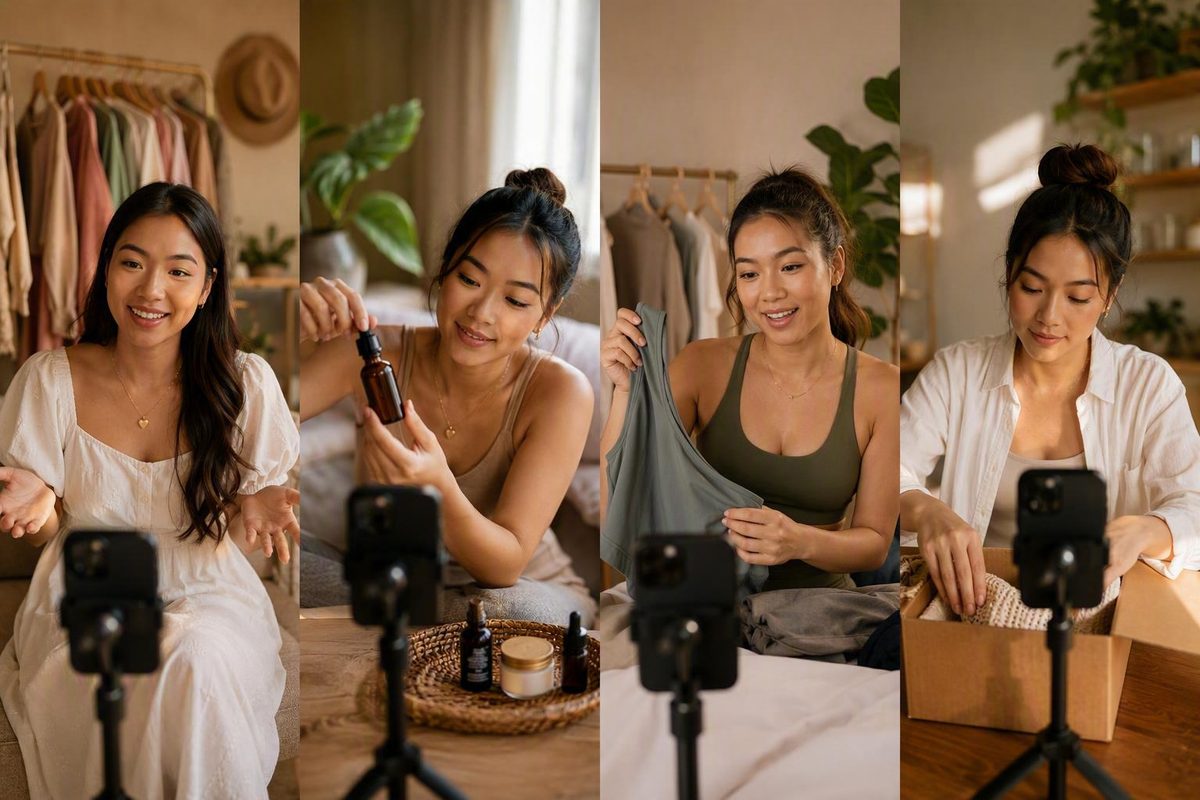
Choose among influencer, UGC, affiliate and seller paths, then use a four-week plan to match each video to revenue, metrics and usage rights.
A TikTok content creator produces content for or on TikTok, but that is not one fixed job. You can monetize audience attention, production skill, sales influence, expertise, products, or fan support. Start by deciding what each video is meant to build, match it to one revenue model, track the outcome that can produce income, and put commercial scope and rights in writing.
Start by choosing which creator role you are building
“TikTok content creator” is the broad category. Influencer, UGC creator, affiliate, and seller describe different commercial functions, not mutually exclusive identities.
| Role | Asset being monetized | Buyer or payer | Primary success measure |
|---|---|---|---|
| Influencer | Access to an audience | Brand or agency | Agreed campaign results |
| UGC creator | Production skill and licensed content | Brand or agency | Accepted, usable deliverables |
| Affiliate | Recommendations and sales influence | Seller or affiliate program | Attributed conversions |
| Seller | Inventory, product, or offer | Customer | Revenue, margin, and fulfilled sales |
An influencer is generally paid to distribute a message to their audience. A UGC creator may instead deliver footage for a brand to publish or advertise. An affiliate recommends products in exchange for commission on attributed transactions. A seller owns or controls the offer and earns from customer purchases.
One person can perform all four roles. What must remain distinct is the brief: who publishes the content, what triggers payment, which metric applies, and what rights the buyer receives.
This is also why a large following is not always necessary. When a brand is buying production rather than distribution, it can assess your scripting, presentation, filming, editing, and reliability instead of your reach. Manychat distinguishes sponsored posts from UGC arrangements: one uses the creator’s audience, while the other may involve producing content for the brand’s channels or advertising.
Match the income model to the outcome
TikTok does not generally pay someone merely for uploading. Income requires access to an eligible platform feature, action from a viewer or customer, or an external commercial agreement.
| Income route | What triggers revenue | What is monetized |
|---|---|---|
| Creator Rewards | Qualified performance on eligible videos | Original video performance |
| TikTok Shop Affiliate | Attributed sale that reaches settlement | Product recommendation |
| Sponsored posts | Negotiated campaign work | Audience access and content |
| UGC production | Delivery and licensing | Production skill |
| LIVE gifts | Eligible viewer support | Live audience support |
| Paid Series | Purchase of access | Structured premium content |
| Effect rewards | Eligible effect use or adoption | Effect development |
| Merchandise | Customer purchase | Owned products |
| External products or services | Purchase or booking | Expertise, service, or offer |
Published monetization guides describe Creator Rewards, Shop commissions, sponsorships, gifts, effects, merchandise, and external offers as possible routes. Their availability, account requirements, and names can vary by country and change over time, so confirm the current options shown in your own TikTok account before planning around them. Name.com’s monetization overview provides a broad description of these models but is not an official policy source.
Creator Rewards is intended to compensate eligible creators for qualified performance on qualifying original videos. Shop Affiliate connects shoppable content to commission-generating sales. Sponsorships and UGC are negotiated work, where the fee may cover production, distribution, licensing, or a defined combination.
There is no dependable universal earnings figure for these routes. No fixed Creator Rewards rate or typical creator income is established here, and negotiated fees vary with scope, rights, buyer, audience, and performance expectations.
Choose one primary model first. Add complementary streams only when you understand their workload and compatibility. Diversification can reduce dependence on one program, but it cannot guarantee income.
Use an eligibility and fit check before planning revenue
Before building a plan around any platform feature, check:
- Country: Is the feature available where you live?
- Age: Do you meet the current minimum?
- Account standing and type: Is your account eligible and compliant?
- Followers and recent views: Do you meet any stated thresholds?
- Video requirements: Does your work meet current length and originality rules?
- Production skill: Can you produce useful brand-ready content without relying on reach?
- Audience trust: Do viewers treat your recommendations as credible?
- Sales influence: Can you demonstrate clicks, enquiries, or purchases?
- Subject expertise: Could you package your knowledge into a product, service, or paid format?
Third-party guides commonly describe Creator Rewards eligibility as age 18 or older, residence in an eligible region, a Personal Account in good standing, at least 10,000 followers, at least 100,000 views during the preceding 30 days, and original qualifying videos longer than one minute. These descriptions are not a substitute for current TikTok rules, and meeting the thresholds does not guarantee approval. Manychat lists these commonly reported criteria, but creators should verify them in TikTok for their country.
For TikTok Shop, do not turn one market’s conditions into a worldwide rule. The official US TikTok Shop creator page lists four conditions: compliance with Community Guidelines, age 18 or older, at least 1,000 followers, and an account-risk evaluation. Third-party guides cite other thresholds and restrictions, so the US figure should not be generalized.
Being below a platform threshold does not mean all monetization must wait. You can develop an audience, create portfolio samples, explore external affiliate programs where available, pitch UGC production, or package an off-platform service. Choose the route that matches the asset you already have.
Give every video one primary commercial job
Treat this table as a planning screen, not a definitive eligibility matrix. Current program rules and in-account notices take priority.
| Video purpose | Primary measure | Possible companion use | Conflict to check |
|---|---|---|---|
| Organic audience growth | Retention and relevant follows | Portfolio evidence | Too many sales messages |
| Creator Rewards candidate | Qualified views | Audience growth | Promotion or ineligible format |
| Shop affiliate conversion | Settled commission | Product-led growth | Reward eligibility and returns |
| Sponsored distribution | Contracted result | Portfolio case study | Reward-program exclusions |
| Brand-delivered UGC | Approval and licensed use | Portfolio use if permitted | Publishing and reuse rights |
Creator Rewards uses qualified views rather than the public view total. Affiverse’s third-party summary says artificial or paid activity, repeat views from the same account, views under five seconds, and some negative-feedback views may be excluded. It also reports that sponsored posts, paid promotions, Duets, Stitches, and copied or lightly modified material may be ineligible under applicable rules. Because these details are volatile and region-dependent, confirm them against the current terms shown in your account. Affiverse summarizes the reported qualification and exclusion rules.
Do not assume one video can always stack rewards, affiliate commission, and sponsorship income. Decide its primary purpose before adding product tags, sponsorship obligations, or paid promotion.
For example, an original educational video might be designed for qualified-view performance. A separate product demonstration might be optimized for attributed Shop sales and judged by commission that ultimately settles. Separating those jobs makes both creative decisions and accounting clearer.
Measure money, not vanity totals
The largest number on a dashboard is rarely the most useful one.
| Model | Decision metric | What to check or subtract |
|---|---|---|
| Creator Rewards | Qualified views and actual reward | Public views that do not qualify |
| TikTok Shop | Settled commission and return rate | Refunds, cancellations, returns, disputes |
| Brand or UGC work | Effective fee after scope and rights | Revisions and production costs |
| All creator work | Effective hourly earnings | Pitching, admin, reporting, expenses |
Visible views can exceed qualified Creator Rewards views because qualification rules apply to traffic and viewer behavior. A public view count is therefore an audience metric, not a payout statement.
For Shop work, keep these figures separate:
- gross merchandise value, or GMV;
- estimated commission;
- settled commission;
- cancellations, refunds, returns, and disputes;
- production costs;
- fees or adjustments;
- taxes;
- take-home income.
GMV is merchandise value, not creator earnings. Treat estimated commission as provisional and confirm settlement and adjustment rules in your account terms. Affiverse reports that cancellations, refunds, returns, and disputes can reduce or remove Shop commission, making settled commission a more useful planning figure than attributed sales alone. Its monetization guide explains that distinction.
For planning purposes:
Net creator income = settled platform income + paid invoices − production costs − business expenses − applicable taxes
This is a management worksheet, not tax advice. Record unpaid pitching, revisions, reporting, bookkeeping, and administration too. Dividing net income by all hours worked gives a more honest effective hourly figure than dividing a fee by filming time alone.
Price brand work by what the buyer receives
A brand is not buying “a video” in the abstract. It may be buying:
- concept development and production;
- publication to your audience;
- a defined number of revisions;
- raw footage;
- usage for stated channels and a stated period;
- Spark Ads or other paid-ad authorization;
- category exclusivity;
- performance reporting;
- cancellation flexibility.
Do not let “one TikTok post” stand in for all those terms. Production, audience distribution, and content licensing solve different problems. If a buyer wants advertising use, cross-channel reuse, raw files, exclusivity, or extended usage, record that scope expressly rather than assuming it is included.
Before accepting a sponsorship or UGC deal, put these points in writing:
- deliverables and technical requirements;
- deadlines and approval stages;
- revision limits;
- fee and payment schedule;
- organic usage rights;
- paid-media and Spark Ads authorization;
- usage term, territory, and channels;
- exclusivity category and duration;
- reporting obligations;
- cancellation or postponement terms;
- ownership of final content and raw files.
A small creator can still be commercially useful when the buyer needs credible, platform-native production rather than broad reach. That is why follower count alone is a poor basis for pricing UGC.
Verify that the buyer and product are genuine before proceeding. Read the agreement carefully and seek qualified professional advice when ownership, exclusivity, liability, payment, or other legal stakes justify it. This checklist is practical preparation, not legal advice.
Build a focused first-month operating plan
A beginner does not need to chase every monetization feature or follow an arbitrary universal posting schedule. Use the first four weeks to identify which creator business is plausible.
Week 1: Choose the job. Pick one audience problem, three repeatable content pillars, and one primary role: audience builder, UGC producer, affiliate, seller, or expert. Give each pillar a metric such as retention, saves, enquiries, portfolio quality, or conversions.
Week 2: Produce a small test batch. Use the equipment already available and make simple, original videos. Test hooks, structures, explanations, demonstrations, and calls to action. Treat formats as experiments, not guaranteed formulas.
Week 3: Review signals. Examine retention, relevant engagement, qualified-view information where available, profile activity, enquiries, clicks, and conversion signals. Keep concepts you can repeat and improve; stop investing in weak ideas merely because they took time to make.
Week 4: Package the evidence. Put your strongest samples into a basic portfolio or media kit. Record production time and the role each sample demonstrates. Then choose the next suitable step: continue building reach, begin UGC outreach, explore Shop if eligible, or pitch a defined brand collaboration.
At month-end, compare effort, settled revenue, audience response, and rights granted—not follower growth alone. Decide whether the next 30 days are for building reach, proving production skill, generating attributed sales, or packaging expertise. Give each video one job, verify regional eligibility inside TikTok, track qualified or settled outcomes, and put scope and rights in writing before accepting commercial work.
Do you need a large following to become a TikTok content creator?
No. A large audience matters when selling distribution or meeting program thresholds, but UGC clients may buy production skill independently of reach. Portfolio quality, reliability, subject fit, and licensing terms can matter more for that work.
Why are Creator Rewards qualified views lower than visible views?
Public views include broader viewing activity. Creator Rewards applies separate qualification rules, so not every visible view necessarily contributes to a reward. Check the current rules and dashboard figures in your account.
Is TikTok Shop GMV the same as creator earnings?
No. GMV is the value of merchandise sold. It is not commission, profit, or take-home income. Use settled commission—after applicable adjustments—and subtract your own costs and taxes when assessing the work.
Should a brand receive permanent usage rights when it pays for one TikTok post?
Not by assumption. Define whether the agreement includes organic publication, paid advertising, cross-channel reuse, raw footage, Spark Ads authorization, or exclusivity. Record the duration, channels, territory, ownership, and renewal terms before publishing or delivering the content.