
Build a Brand-Deal Pipeline Without Waiting to Be Discovered
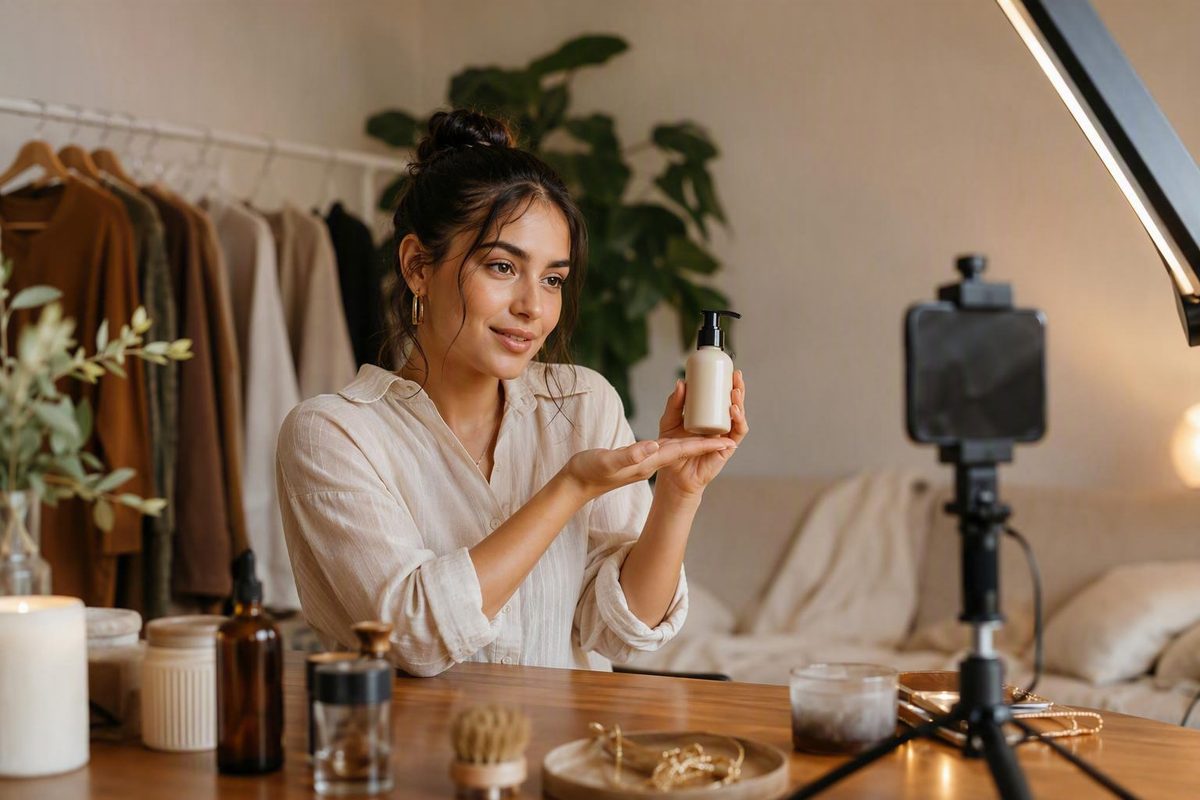
Use a brand-ready profile, representative analytics, targeted outreach, pitch templates, scoped quotes, rights checks, and written contracts.
Build a brand-deal pipeline without waiting to be discovered.
Getting brand deals on TikTok does not depend on reaching one magic follower count or building a perfect media kit. It depends on making a clear commercial offer, proving that you can execute it, finding brands with a credible reason to work with you, and agreeing on the work, payment, and rights before production begins.
This process applies both to audience-led influencers and to UGC creators who produce videos for brands without necessarily publishing them to a large personal following. It can improve your chances of finding suitable work, but it cannot guarantee a response, campaign acceptance, income, performance, or renewal.
Choose What Kind of TikTok Brand Deal You Are Selling
There is no universal follower count that guarantees—or categorically prevents—a TikTok brand deal. A brand may set its own campaign minimum, and a platform program may impose separate eligibility criteria, but brands do hire creators at different audience sizes, including nano creators with fewer than 10,000 followers.
Follower count can matter because it offers a rough indication of potential audience access. It is simply not the whole offer. A brand may also evaluate:
- Whether your niche matches the product
- Representative views rather than your best viral result
- Watch time, completion, shares, saves, comments, and other engagement
- Relevant audience demographics
- The quality and consistency of your videos
- Whether your creative style fits the campaign
- Your ability to communicate, follow a brief, and deliver on time
Before pitching, decide which service you are selling.
An influencer sponsorship combines content creation with access to your audience. You create the agreed video and publish it on your TikTok account. The brand is paying partly for production and partly for the opportunity to reach people who already watch you.
UGC production is different. You create a TikTok-style asset for the brand to publish on its account or use through specified marketing channels. Your scripting, presentation, filming, and editing skills are the primary value. A large personal audience may support your credibility, but it is not necessarily what the buyer is purchasing. This distinction reflects the broader working reality of UGC: content production, audience distribution, and advertising rights are separate sources of value.
That distinction affects the brief, price, approval process, reporting, and rights. A sponsored post might require account-level performance reporting after publication. A UGC assignment might end when approved files are delivered, unless the contract adds licensing, advertising authorization, exclusivity, or another continuing obligation.
Common compensation structures include:
- Cash sponsorship: A guaranteed fee for agreed content, posting, or both
- Gifted collaboration: A product or service is provided, but no cash fee is guaranteed
- Affiliate-only offer: Compensation depends on attributed sales, leads, or another defined action
- Hybrid deal: A guaranteed fee is combined with commission or a performance bonus
- UGC production: A fee is paid for producing assets, whether or not they appear on your account
- Ambassador agreement: A longer relationship involving recurring deliverables, affiliate activity, category exclusivity, appearances, or a combination of these
Do not treat a free product as equivalent to cash. Potential affiliate commission is also not guaranteed compensation.
Use this decision framework:
- Choose an audience-based sponsored post when the brand primarily wants to reach your viewers.
- Choose UGC when the brand primarily wants your production skill and a usable asset.
- Consider a hybrid when the guaranteed fee adequately covers the work and the variable-compensation terms are documented.
- Offer both when you can provide audience access and additional brand-controlled creative, but quote each deliverable and right separately.
For example, “one post on my TikTok account” and “one edited UGC video for the brand’s account” are two deliverables. If the brand wants to turn either video into advertising, obtain raw footage, create modified versions, or stop you from working with competitors, those requests should be separately defined rather than assumed to be part of the original production fee.
Your first objective is therefore not to get any deal. It is to decide whether you sell audience access, production, or a clearly scoped combination of the two.
Make Your TikTok Profile Easy for a Brand to Evaluate
A brand contact should be able to open your profile and quickly understand your subject, intended audience, and creative style. An unrelated collection of comedy clips, recipes, travel diaries, product reviews, and personal updates forces the buyer to guess what you can reliably deliver.
Start with a specific positioning statement. It does not need to trap you in an extremely narrow topic, but it should make your commercial relevance easy to understand.
Compare these descriptions:
- “Lifestyle creator”
- “Small-space cooking for first-time renters”
- “Affordable skincare routines for sensitive skin”
- “Beginner strength training for desk workers”
- “Product demonstrations and UGC for home-organization brands”
The more specific versions identify a subject, audience, problem, or recognizable format. They help a suitable company understand why your account might fit its buyers.
Your bio should reinforce that positioning. Include:
- A concise description of your topic or audience
- A recognizable format or point of view, where useful
- A visible business email
- A relevant portfolio or media-kit link
Use an email address you monitor and keep your portfolio mobile-friendly. Do not require a brand contact to send a direct message merely to discover how to reach you.
Next, pin three videos that demonstrate the work you want to sell. Suitable examples might include:
- A tutorial
- A product demonstration
- A comparison
- A story-led review
- A problem-and-solution video
- A direct-response-style UGC concept
- An educational video with a clear hook and payoff
Choose examples for commercial relevance, not just total views. A modestly viewed demonstration with strong scripting, clean product shots, and useful audience questions may be more persuasive for a product campaign than an unrelated viral joke.
Your recent public content should reinforce the same story. If you pitch a kitchen brand but your account contains no recent cooking, demonstrations, or product-led storytelling, the buyer must imagine that you can execute the proposed campaign. Make that inference unnecessary.
Consistent publishing helps because it creates current samples and analytics. There is no universal posting frequency that guarantees brand interest, so choose a sustainable schedule rather than copying an arbitrary quota. The purpose is to maintain a representative body of work, not to exhaust yourself by posting filler.
You can also create authentic content about products you already use. Explain the problem, show how you use the product, describe what you genuinely like, and acknowledge meaningful limitations. Tagging the company may make the post easier to find, but it does not guarantee discovery, payment, or permission for the company to reuse your video.
Brand-readiness checklist
Before pitching, confirm that you have:
- Clear niche, audience, or format positioning
- A visible and monitored business contact method
- Recent public content representative of the proposed work
- Three strong pinned or easily accessible samples
- Current native analytics you can document
- A portfolio or media-kit link that works on mobile
- No obvious mismatch between your account and the prospective sponsor
Fit matters after offers begin arriving, too. A mismatched sponsor can confuse your audience and produce content disconnected from the reason people followed you. Favor products that belong naturally within your subject, and maintain a meaningful balance of sponsored and unsponsored work. Audience trust is part of the value being sold.
Turn Your Analytics and Organic Posts Into Proof
You do not need to wait for a paid campaign before building a portfolio. Select three to five organic posts that resemble the work you want brands to buy.
For each example, record what is available and relevant:
- Format and concept
- Publication date
- Views
- Reach or impressions, if available
- Watch time
- Retention or completion data
- Shares and saves
- Comments
- Relevant audience reactions
- Attributable clicks or sales, if documented
Do not include every number merely because it exists. Match the evidence to the objective. A brand seeking awareness may care about representative views and watch time. A product team testing educational creative may pay more attention to retention, saves, and comments showing whether viewers understood the explanation. A conversion campaign may prioritize attributable clicks or sales.
Calculate a representative view baseline
A single viral result is not a dependable forecast. To build a more defensible baseline:
- Choose a disclosed sample, such as your last 30 relevant TikTok videos.
- Record the view count for each.
- Identify genuine outliers, such as an exceptional viral post or a video affected by an unusual publishing problem.
- Exclude an outlier only when you can explain the reason.
- Sort the remaining results and report the median.
- State the reporting window, subject matter, and exclusions.
For example:
Median views across my 30 most recent skincare videos published between
[date]and[date]:[median]. One viral giveaway and one removed-and-reuploaded post excluded.
The median is the middle observation after the results are ordered. It can reduce the distortion caused by one unusually high or low result. It is not a universal pricing formula, and you should not manipulate the sample until the output looks favorable.
Do not conceal weak data or present a cherry-picked period as normal performance. If recent performance has declined, show what is current and explain any relevant context. A credible baseline is more useful during negotiation than a spectacular number that cannot withstand scrutiny.
Your media kit can remain concise. Common elements include:
- A one-sentence positioning statement
- TikTok and other relevant platform metrics
- Audience demographics
- Representative recent performance
- Three to five linked content examples
- Previous campaign results, when available
- Offered services
- Optional starting packages or indicative scopes
- Contact details
Media-kit formats vary considerably. Examples reviewed by Business Insider ranged from one page to much longer presentations, so use the shortest format that communicates your offer and evidence clearly.
Use current native analytics rather than carrying old screenshots forward indefinitely. Update the document whenever your positioning, audience, performance, services, or campaign evidence changes materially.
Turn an organic mention into a mini case study
Suppose you independently make a video about a product you use. Build a simple case study around five points:
- Audience problem: What frustration or question did the video address?
- Content concept: What hook, format, or demonstration did you use?
- Actual result: What did the post achieve?
- Audience response: Which comments, saves, questions, or documented actions were useful?
- Paid follow-up: What sponsored post or licensed UGC variation logically follows?
Do not imply that the post caused sales unless you have attribution evidence. Comments such as “Where can I buy this?” demonstrate interest, not completed purchases.
Illustrative example only
- Creator niche:
[niche] - Audience problem:
[problem the viewers wanted solved] - Organic concept:
[hook and format] - Publication date:
[date] - Results:
[views],[watch-time or completion result],[shares],[saves] - Audience insight:
[summary of recurring questions or reactions] - Follow-up proposal:
[sponsored tutorial, comparison, series, or UGC concept]
Replace every placeholder with your real information. The point is not to imitate another creator’s performance. It is to connect an audience problem, a useful concept, an actual result, and a logical campaign proposal.
Build a Focused List of Brands and Legitimate Opportunities
Begin with products you genuinely use and companies whose likely buyers overlap with your audience. This gives you a stronger reason to pitch than choosing brands solely because they appear to have large budgets.
Then research companies already sponsoring creators with comparable:
- Niches
- Content formats
- Audience sizes
- Typical views
- Audience needs
- Production styles
A previous partnership shows that the company has used creator marketing before. It does not prove that the company offers fair terms, pays reliably, has an active budget, or would approve your concept. It also does not give you permission to copy another creator’s hook, script, visual treatment, or campaign idea.
Include smaller and niche companies in your research. Alignment may be stronger, and the route to a decision-maker may be shorter. However, a smaller company may have less cash available and may propose gifting or affiliate compensation instead of a guaranteed fee. Evaluate the actual offer rather than assuming company size predicts good or bad terms.
Look for an appropriate contact through:
- The company website
- Press or marketing pages
- Creator-program portals
- Previous campaign emails
- Contacts from existing brand relationships
Roles containing “influencer marketing,” “creator partnerships,” “social,” “PR,” “brand,” or “partnerships” may be relevant. A generic customer-service inbox or social-media DM can work when no better route exists, but a named business contact is preferable.
Use four acquisition channels rather than relying on one.
1. Personalized direct email
Direct outreach gives you room to present a tailored concept, relevant evidence, and a proposed next step. It also creates a durable record of the conversation.
2. Existing brand relationships
If you have delivered strong work for a company on Instagram, YouTube, Pinterest, a blog, or another channel, ask whether its team is commissioning TikTok content. Existing trust can make the conversation easier, although adding TikTok does not guarantee approval or a larger budget.
3. TikTok’s native creator-brand environment
Third-party reporting describes TikTok’s current collaboration environment as TikTok One and says Creator Marketplace functions have been incorporated into it. Terminology, regional availability, account access, eligibility, and project requirements can change, so verify what appears in your account and in TikTok’s current official documentation. A comparison of TikTok One’s marketplace functions also cautions that discovery does not necessarily settle cross-platform payment, unified contracts, sales attribution, or separate advertising authorization.
Marketplace discovery is an introduction, not a complete agreement. Confirm who contracts with you, who pays, how results are attributed, which disclosures apply, and whether advertising authorization is requested.
4. Third-party creator marketplaces
Creator roundups mention platforms such as Aspire, Shopify Collabs, Impact, Later Influence, Creator.co, and Afluencer. These are examples, not endorsements, and their features or availability may change. The roundup in which several appear is a creator-authored list rather than an independent safety or payment audit.
Before joining any marketplace, verify:
- Creator fees or commissions
- Geographic availability
- Eligibility requirements
- Typical campaign types
- Whether opportunities are paid, gifted, affiliate, or mixed
- Payment process and protections
- Dispute support
- Required rights
- Whether brands may contact you outside the platform
Track every prospect in a spreadsheet or simple customer-relationship system:
| Field | What to record |
|---|---|
| Brand and product | The exact company and relevant product line |
| Fit reason | Why its buyers overlap with your audience |
| Contact | Name, role, email, and source |
| Creator activity | Evidence that the brand has used creators |
| Proposed concept | Your specific TikTok idea |
| Outreach date | When the pitch was sent |
| Follow-up | Date and result |
| Reply | No reply, decline, question, or call |
| Offer type | Cash, gifted, affiliate, hybrid, UGC, or ambassador |
| Quoted scope | Deliverables, rights, timing, and fee |
| Outcome | Declined, negotiating, signed, completed, or renewed |
This turns outreach from random messaging into a pipeline you can evaluate and improve.
Write a Pitch That Gives the Brand a Usable Idea
A pitch is a short business proposal, not a request for free products or a generic declaration that you love the company.
A strong first message has six parts:
- Personalized opening: Show that you know the product, campaign, or current content.
- Creator positioning: State what you make and for whom.
- Audience-brand fit: Explain why your viewers or production style suit the brand.
- Concrete concept: Propose one usable TikTok idea.
- Verifiable proof: Include one representative metric or relevant result.
- Next step: Ask a direct, low-friction question.
Keep the message easy to scan. Link to a compact media kit and one or two live examples instead of attaching an unnecessarily large presentation.
Adaptable first-pitch template
Subject: TikTok concept for [brand or product]
Hi [name],
I noticed [specific product, launch, campaign, or creator initiative]. I create [content type] for [audience], and the fit stood out because [specific audience-brand connection].
I would like to create a TikTok built around [brief concept: hook, demonstration, or story]. Across [disclosed recent sample], my relevant videos have a median of [verified metric].
Examples and current audience data: [portfolio or media-kit link]
Is your team commissioning [sponsored TikTok posts / UGC / both] for [campaign or period]? If so, I can send a scoped concept and availability.
Best,
[name]
[email]
[TikTok link]
Do not fill the template with empty compliments. “I love your brand and would love to collaborate” creates work for the recipient because it does not explain the audience, concept, service, evidence, or next step.
Organic-to-paid template
Subject: Follow-up concept from my organic [product] TikTok
Hi [name],
I recently published an independent TikTok about [product]: [live link].
The post received [actual result], and viewers repeatedly asked or commented about [accurate audience response]. That response suggests a useful follow-up: [specific sponsored concept].
I can produce this as [a post for my account / UGC for your channels / both]. My portfolio and current analytics are here: [link].
Would you be open to discussing the campaign objective, deliverables, intended usage, and budget?
Best,
[name]
If the organic post did not perform well, do not force it into a success story. You may still pitch a better concept based on what you learned, but describe the evidence honestly.
You can also approach an existing partner:
We have worked together on
[platform or campaign], and I would like to propose an additional TikTok deliverable for[objective]. The concept is[idea], adapted to my TikTok audience and format rather than reposted unchanged. If TikTok is in scope, I can provide current analytics and a separate quote for production, posting, and requested usage.
Cross-platform history is useful evidence of reliability, but bundling does not automatically increase acceptance. The company may have separate teams, budgets, contracts, or objectives for each platform.
After the initial pitch, send one concise follow-up after a reasonable interval. Restate the idea and your strongest relevant proof point, then ask whether the opportunity is current. If there is no reply, return the prospect to your pipeline rather than repeatedly messaging.
Track:
- Qualified brands researched
- Personalized pitches sent
- Replies
- Calls
- Offers
- Signed projects
- Effective hourly earnings
- Renewals
These measures help you distinguish a targeting problem from a portfolio, pricing, or proposal problem. No wording, channel, or follow-up schedule guarantees a response.
Build a Quote From Scope, Performance, and Rights
Published follower-tier rate tables conflict significantly and often lack transparent methodology. Do not present one as a universal TikTok price list.
Follower count, representative views, audience relevance, and prior results may all inform negotiation, but none produces a universally valid formula. Build your quote from what the brand is actually buying.
Production and delivery components
- Concept development
- Research or scripting
- Filming
- Editing
- Captions, voiceover, graphics, or alternate hooks
- Posting to your account
- Number and format of deliverables
- Revision limit
- Turnaround time
- Raw footage
- Reporting or a campaign wrap-up
Rights and restrictions
- Organic reposting
- License duration
- Permitted platforms and placements
- Geographic territory
- Paid-media use
- Spark Ads authorization
- Modification, cropping, or derivative versions
- Category exclusivity
- Ownership or assignment
The precise legal effect depends on the agreement and applicable law, so these options should not be treated as economically interchangeable.
Be cautious when a proposal uses broad terms such as “unlimited,” “worldwide,” “all media,” or “perpetual” without explaining what uses are permitted. Treat those words as prompts to clarify scope, duration, control, and compensation rather than as harmless boilerplate.
Use this worksheet:
Production fee + posting or audience-access fee + licensing and advertising permissions + exclusivity, complexity, or accelerated-turnaround adjustments = quoted campaign fee
You may ask for the campaign budget before quoting, offer tiered scopes, or include starting packages in your media kit. There is no universally superior approach. Choose a process that lets you understand the objective and requested rights before committing to a number.
A tiered proposal might look like this:
- Option A: One edited UGC video, one revision round, and brand-account organic use for a defined period
- Option B: Two edited UGC videos with alternate hooks and a longer defined organic license
- Option C: One sponsored account post plus one separate UGC asset, with paid-media authorization quoted for a defined period
Avoid writing “usage included” without defining what that means.
Low-budget negotiation example
Suppose the brand requests two videos, raw footage, multiple revision rounds, paid advertising, and category exclusivity but says your quote exceeds its budget. Do not automatically discount the unchanged package.
You could respond:
Thanks for sharing the budget. I cannot include the full requested scope at that figure, but I can adapt the package. We could reduce it to one edited video, one revision round, no raw footage, a shorter advertising authorization, and no category exclusivity. Alternatively, I can retain the two videos if paid usage is removed.
A lower budget then buys a narrower package rather than the same package at an unexplained discount.
Common payment structures include:
- Flat fee: Guaranteed compensation for defined work and rights
- Affiliate: Compensation tied to attributed outcomes
- Hybrid: Guaranteed fee plus commission
- Performance bonus: Additional compensation after a defined result
- Retainer or ambassador fee: Ongoing compensation for recurring work
For variable compensation, define the attribution method, qualifying action, rate, reporting access, treatment of returns or cancellations, and payment timing. A hybrid arrangement can create upside, but the guaranteed portion should still be evaluated against the production work and rights.
Set a private minimum before negotiating. Consider:
- Production and administrative time
- Equipment, software, props, travel, and other overhead
- Revision and reshoot risk
- Rights being granted
- Payment delay or nonpayment risk
- Exclusivity and lost competing work
- Taxes and professional costs
- Opportunity cost
That minimum is a business decision, not an unsupported public benchmark.
Screen the Offer and Put Every Material Term in Writing
Move substantive negotiations from TikTok direct messages to email. Email creates a more durable record of the sender, proposed scope, revisions, and negotiated changes.
Verify:
- The sender’s full name and role
- The company website
- The email domain
- The brand’s business and social presence
- The sender’s claimed relationship to the company
- Whether an agency is authorized to represent the brand
A consumer email address alone does not prove fraud, particularly for a small company. An address inconsistent with a major company’s domain should, however, prompt additional verification. Creator Modern Millie’s experience-based guidance similarly recommends checking the sender, website, and social presence and moving informal inquiries to email; the original video was sponsored and should be treated as creator guidance rather than official fraud-prevention advice.
Warning signs that justify additional scrutiny include:
- Upfront fees to access a supposed campaign
- Mandatory unreimbursed product purchases or shipping payments
- Pressure to act immediately
- Vague promises of later paid work
- Unsolicited requests for sensitive identity or financial information
- Refusal to provide written terms
- A contract that differs materially from the negotiated offer
- “Test” work that gives the company useful deliverables without clear compensation or limits
- Unexpected perpetual rights or broad exclusivity
Before signing, use a contract checklist. Contract guidance for creators emphasizes naming the real legal entity, payer, approver, exact deliverables, review deadlines, revision limits, and payment trigger rather than relying on general language. It also recommends defining advertising, usage, and exclusivity expressly in the written agreement.
Parties and authority
- Correct legal names
- Brand, agency, and creator roles
- Who approves the work
- Who is responsible for payment
- Contact details for formal notices
Deliverables and process
- Exact number and type of videos or files
- Accounts and platforms
- Required style, claims, talking points, or calls to action
- Draft, approval, delivery, and posting dates
- Product-delivery deadline
- Brand feedback window
- Revision and reshoot limits
- File format and delivery method
Compensation
- Total fee
- Commission or bonus terms
- Invoice requirements
- Payment trigger
- Payment deadline
- Currency
- Transfer or processing costs
- Applicable tax-document requirements
Rights
- Organic use
- License period
- Platforms and placements
- Territory
- Paid advertising
- TikTok Spark Ads authorization
- Broader account-level advertising or whitelisting arrangements
- Raw footage
- Editing and modification
- Exclusivity
- Ownership
- Renewal process
Spark Ads authorization is TikTok-specific permission associated with promoting eligible TikTok content. “Whitelisting” is a broader industry term that may describe other account-level advertising arrangements. Do not assume that either permission is included merely because the brand commissioned a video.
Risk and exit terms
- Cancellation
- Termination
- Delayed products or feedback
- Content takedown
- Liability
- Indemnity
- Dispute venue and governing law
- AI-generated or synthetic use of your image, voice, or likeness
These are issue-spotting topics, not universal contract instructions. Their significance and enforceability can depend on the contract and jurisdiction.
The agreement should not prevent you from using sponsored-content disclosures or platform labels that apply to the campaign.
Compare the proposed contract line by line with the negotiated email. If it introduces additional videos, raw footage, broader usage, longer exclusivity, or a different payment trigger, ask for clarification or revision before signing. Contract checklists also identify usage, AI-likeness, termination, liability, indemnity, and dispute provisions as terms requiring deliberate review rather than automatic acceptance.
This checklist is general educational information, not jurisdiction-specific legal, tax, or financial advice. Consequential ownership, exclusivity, indemnity, liability, AI-likeness, tax, and dispute terms may justify review by a qualified professional. Larping Agency likewise characterizes its discussion of rates, licensing, and platform policies as general information, not individualized advice.
Treat the First Campaign as the Start of the Next Deal
Once the agreement is signed, restate the operational details before production:
- Approved scope
- Deliverables and formats
- Deadlines
- Main contact
- Review process
- Revision limit
- File requirements
- Posting instructions
- Disclosure responsibilities
- Reporting expectations
Follow the agreed brief while preserving the creator voice and format the brand selected you to provide. A brand may reasonably require accurate product information, prohibited-claim controls, and brand-safety compliance. That does not mean every collaboration should become an unnatural script unless that level of control was part of the agreed scope.
Communicate delays early. Keep versions, approvals, source files, invoices, and correspondence organized. If the brand requests an additional cut, reshoot, raw footage, platform, or right, pause and confirm the added scope, fee, and timing in writing.
After publication or delivery, prepare a concise report matched to the campaign objective. Depending on what is available, include:
- Views or reach
- Watch time
- Completion or retention
- Shares and saves
- Comments and audience response
- Link clicks
- Attributed conversions
- UGC delivery and approval status
- Lessons for the next creative iteration
Do not report estimated sales as conversions or present incomplete data without labeling it. If the brand controls advertising reports or sales attribution, ask which results it can share.
Add the completed project and documented results to your portfolio only when confidentiality, embargo, and usage terms allow it. A short case study should explain the objective, concept, deliverables, and actual outcome without exposing private campaign information.
Renewal email template
Subject: Results and next TikTok concept for [brand]
Hi [name],
Thank you for the opportunity to create [deliverables] for [campaign].
The campaign produced [relevant documented result]. One useful audience insight was [recurring question, reaction, retention observation, or conversion insight].
For a follow-up, I recommend [specific next concept] because [brief reason tied to the result]. I can scope this as [single deliverable or multi-video package], with usage and advertising permissions defined separately.
Would you like me to send a proposal for [time period or campaign]?
Best,
[name]
Reliable execution and useful reporting can strengthen the case for recurring work, but they cannot guarantee renewal. The brand’s budget, inventory, creative strategy, internal approvals, and campaign results also affect the decision.
Close the operational loop by reviewing:
- Your effective hourly earnings
- Revisions and reshoots consumed
- Actual payment timing
- Administrative burden
- Rights granted
- Performance against the objective
- Whether the company respected the agreement
- Whether the partnership still fits your audience
A campaign that looks attractive as a headline fee may be weak after extensive revisions, delayed payment, broad usage, and exclusivity are considered.
For the next 30 days:
- Define your service and niche.
- Optimize your profile and contact path.
- Select three to five portfolio posts.
- Calculate representative recent performance.
- Assemble a compact media kit.
- Research a small list of well-matched brands.
- Send tailored pitches with specific concepts.
- Follow up once.
- Evaluate every offer by compensation, scope, risk, and rights.
The goal is not to chase every collaboration. It is to build documented proof, a qualified outreach pipeline, and agreements in which the work, payment, usage, and advertising permissions are clear before filming begins.
Can I get TikTok brand deals with fewer than 10,000 followers?
Yes. There is no universal 10,000-follower minimum for all independent TikTok brand deals. Individual campaigns and platform programs may set their own criteria, but brands have worked with creators below that audience size.
Make the rest of your case easy to evaluate: show a clear niche, representative views, relevant audience data, strong examples, and a suitable concept. You can also offer UGC production when your production skill is more important to the buyer than access to a large personal audience.
What should a beginner put in a TikTok media kit without previous sponsorships?
Include a concise positioning statement, contact details, current audience information, representative recent performance, three to five relevant organic posts, actual post-level metrics, offered services, and optional starting packages.
Do not invent campaign results or label organic work as sponsored. Use real examples to demonstrate your hooks, structure, product presentation, production skill, and understanding of your audience.
Should I offer sponsored posts, UGC for the brand, or both?
Offer sponsored posts when the brand wants content plus access to your audience. Offer UGC when it primarily wants your production skill and an asset for its own channels.
You can offer both, but separate the scope. Define which video appears on your account, which files go to the brand, and what usage, advertising, modification, raw-footage, and exclusivity terms apply to each.
How do I find my current TikTok One eligibility requirements?
Check the tools available inside your TikTok account and TikTok’s current official help or business documentation for your country or region. Review account-level eligibility, age requirements, account standing, regional availability, and project-specific criteria.
Do not rely on a fixed follower threshold quoted in an older third-party article. Requirements may change or differ by project. Also confirm what the opportunity includes, because marketplace discovery may not settle contracts, payment, attribution, disclosure, or Spark Ads authorization.
What are the biggest red flags in a TikTok brand offer?
Watch for upfront fees, mandatory unreimbursed purchases, intense pressure, refusal to provide written terms, vague promises of future payment, requests for sensitive information before identity is verified, unlimited revisions, unexpected raw-footage demands, broad perpetual rights, undisclosed advertising permissions, excessive exclusivity, and contracts that differ from the negotiated email.
Verify the sender and company, define the work and rights in writing, and do not begin production solely because a message appears to come from a recognizable brand.